A recent surge in coordinated media narratives from Belgrade suggests that Serbia is actively seeking to exploit shifting transatlantic dynamics to reopen the “security file” in Kosovo. Following the Pentagon’s May 2 announcement regarding the withdrawal of 5,000 U.S. troops from Germany, analysts warn that state-aligned outlets, led by Sputnik Srbija, are converting a routine force posture adjustment into a strategic signal of Western abandonment.
The Anatomy of a Narrative
In an analytical report published by Fatos Kabashi on May 7, 2026, the reaction from Belgrade is described as a “performed disagreement” designed to mask a singular message: the potential collapse of the 27-year security deterrent in the Balkans.
The synchronized narrative within the Belgrade-Moscow media axis centers on four primary objectives:
- Manufacturing Panic: Presenting the drawdown as a direct threat to Pristina’s security.
- Delegitimizing the KSF: Framing the Kosovo Security Force (KSF) as an “illegal” and “destabilizing” factor that necessitates a continued, yet failing, international presence.
- Reviving the Kumanovo Framework: Attempting to revert Kosovo’s security legalities back to the 1999 Kumanovo Agreement, thereby undermining its current statehood.
- Targeting Turkey: Characterizing Ankara, rather than Moscow, as the aggressive actor ready to fill any geopolitical “vacuum” left by the Americans.
The “Russian Omission”
One of the most striking elements of this discourse is the complete absence of Russia from the analytical frame. Despite Serbia remaining the only European nation to refuse sanctions against Russia and maintaining deep operational ties between the BIA (Serbian Intelligence) and Moscow’s services, Sputnik’s analysts ignore Russia’s influence in the region.
According to Kabashi, this omission is a tactical move to present Belgrade’s objectives as neutral regional concerns while quietly maintaining Russia’s seat at the regional security table through a manufactured power vacuum.
Facts vs. Friction: The Reality at Camp Bondsteel
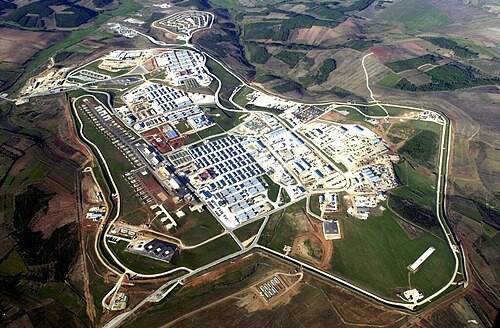
While the Belgrade ecosystem prepares its public to imagine an American departure, the institutional reality at Camp Bondsteel suggests the opposite.
- Institutional Continuity: In February 2026, the Florida National Guard’s 53rd Infantry Brigade Combat Team took authority at Bondsteel in a standard, pre-planned rotation.
- KFOR Expansion: German engineers within KFOR’s Regional Command East are currently expanding infrastructure within the German camp at Bondsteel.
- U.S. Posture: Despite the withdrawal from Germany, over 30,000 U.S. troops remain stationed across Europe, with no formal orders issued for a KFOR drawdown.
The Deterrence Equation
The piece argues that peace in the Western Balkans has held not because of intrinsic stability, but because of a precise mathematical calculation: the cost of testing the NATO deterrent has always exceeded the potential gain.
The author warns that by hoping for an American withdrawal, Belgrade is signaling a desire to recalculate this equation. If the “cost” of a kinetic or hybrid test falls, the temptation to challenge the status quo rises. This was evidenced by the failed Banjska attack in September 2023, which served as a kinetic test of KFOR’s resolve.
Strategic Implications
For policymakers in Washington and Brussels, the message is clear: Belgrade’s reaction to the Pentagon’s force adjustment is not merely a media spin but a reflection of its underlying security policy. By refusing to “close the file” on Kosovo, the Belgrade-Moscow axis continues to wait for a moment of Western fatigue.
Kabashi concludes that the current “hope” for a weakened deterrent is fundamentally incompatible with the long-term peace of the Western Balkans. As long as Belgrade prepares its public for an American exit, it remains a state that has not fully accepted the post-1999 regional reality.