The United States is significantly increasing its strategic footprint in the Western Balkans to fortify regional energy security and permanently decouple European allies from Russian energy supplies.
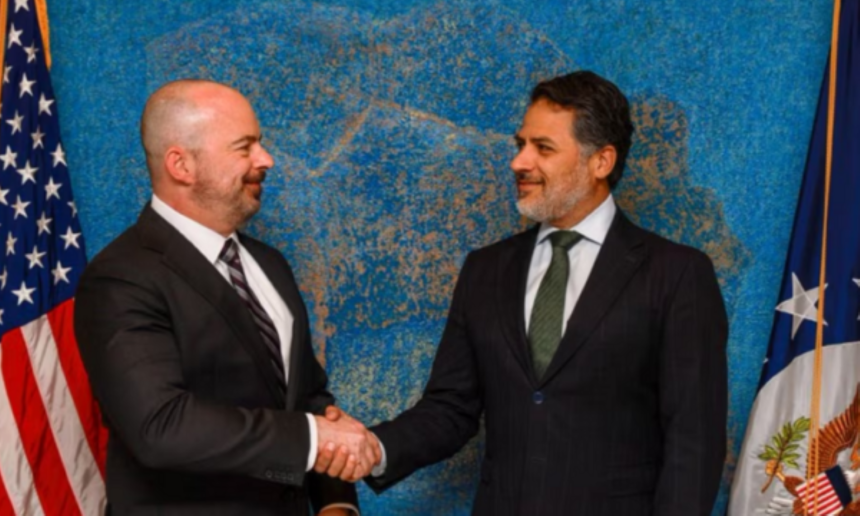
In a comprehensive interview with Radio Free Europe, Joshua Volz, the U.S. Department of Energy’s Special Envoy for Energy Integration, outlined a vision that places Kosovo at the heart of a modernized regional energy corridor. Volz emphasized that Washington is moving aggressively to replace “Russian molecules” with reliable U.S. energy resources through a massive expansion of infrastructure across Southeast Europe.
Energy as National Security
The U.S. strategy is built on the principle that energy security is inseparable from national security. Volz noted that the Kremlin’s historical use of energy as a geopolitical weapon has made diversification an urgent priority for the stability of the Balkans.
“Energy is the foundation of everything we do… it is fundamental for economic growth, job creation, and building budgets that can finance defense and border security,” Volz stated.
A primary goal of the coordinated effort between the White House and the European Commission is the total elimination of Russian energy from the European system by the end of 2027.
Kosovo’s Path to Modernization
While Kosovo currently lacks natural gas infrastructure, the U.S. views the nation as a “very important ally” in need of immediate systemic upgrades. Volz identified Kosovo as a prime market for American industry and technology to intervene and modernize aging production facilities.
Strategic Integration Plans:
- The Vertical Corridor: Plans are underway to connect Kosovo to the “Vertical Corridor,” which utilizes entry points in Greece and floating LNG (Liquefied Natural Gas) terminals.
- Regional Interconnectors: New pipelines, such as the proposed interconnector between Bosnia and Herzegovina and Croatia (Krk island terminal), are expected to create the “arteries” necessary for U.S. gas to reach Pristina.
- Industrial Partnerships: The U.S. Department of Energy stands ready to facilitate direct cooperation between American industry leaders and Kosovar partners once market conditions and the business environment are optimized.
Balancing the Green Transition
Addressing concerns regarding the European Union’s “Green Agenda” and decarbonization goals, Volz argued for a pragmatic sequence of reforms. He cautioned that attempting to eliminate traditional energy sources before securing reliable alternatives has historically led to industrial contraction in Europe.
“You cannot ask someone to replace something with nothing,” Volz remarked, suggesting that securing reliable U.S. energy is a prerequisite for a successful long-term green transition.
Call for Economic Reform
For Kosovo to fully benefit from these multi-billion dollar regional initiatives, Volz noted that the government in Pristina must focus on:
- Private Sector Incentives: Creating a more attractive environment for U.S. private investment.
- Market Transparency: Aligning with international financial standards to secure large-scale funding.
- Modernization Readiness: Preparing the domestic grid to integrate with new regional high-capacity corridors.
As the U.S. continues to promote “energy dominance” as a tool for global stability, Kosovo’s inclusion in these regional corridors marks a significant shift in the strategic importance of the young republic within the broader European energy architecture.