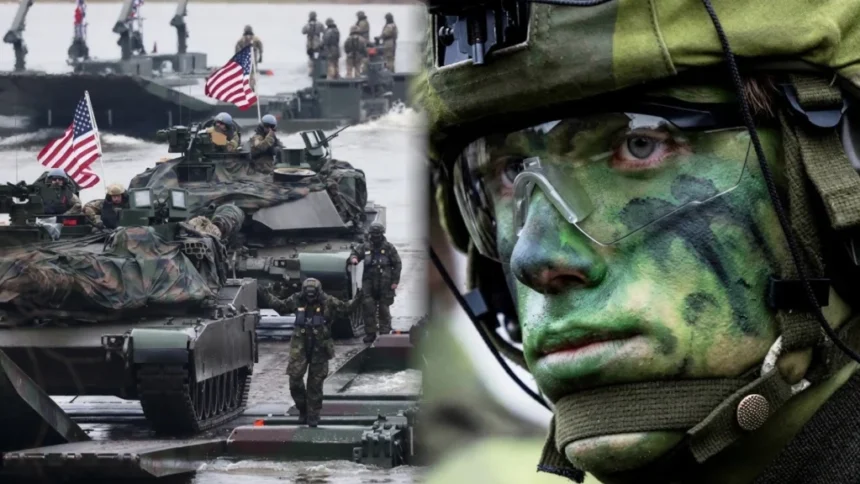
NATO has officially commenced its largest-ever dedicated special operations exercise in Europe, mobilizing approximately 3,000 elite troops from the United States, the United Kingdom, and 22 other nations.
The intensive 10-day drills will span across 10 different host countries. The exercise is specifically designed to test alliance readiness against gray-zone tactics and hybrid warfare perpetrated by an unnamed adversary—widely understood to be Russia. Scenarios focus heavily on countering enemy attempts to infiltrate NATO territory, conduct asymmetric sabotage, launch sophisticated cyberattacks, and execute sub-threshold provocations designed to evade a conventional, full-scale military response.
The significant contribution of American elite units to these drills underscores Washington’s continuing, vital role in the defense and deterrence architecture of the European continent.
Inclusion of Non-NATO Partner Nations
Reflecting a broader strategy of regional security cooperation, participation in the drills extends beyond full NATO members. Elite units from key partner nations, including Switzerland and Georgia, are fully integrated into the joint special operations command structure for the duration of the exercise.
Pentagon Scales Back Conventional Deployments in Europe
While special forces exercises are expanding, the Pentagon has simultaneously enacted a series of strategic drawdowns regarding its conventional footprint in Europe:
- Poland & the Baltics: The Pentagon officially canceled a planned temporary rotation that would have deployed 4,000 U.S. soldiers across Poland, Romania, and the Baltic states.
- Germany Drawdown: A separate, smaller deployment bound for Germany has also been scrapped.
These cancellations follow an explicit directive from the Trump administration announcing the planned withdrawal of 5,000 American military personnel stationed in Germany over the next 12 months, signaling a shifting alignment in U.S. forward-deployed forces in Europe.