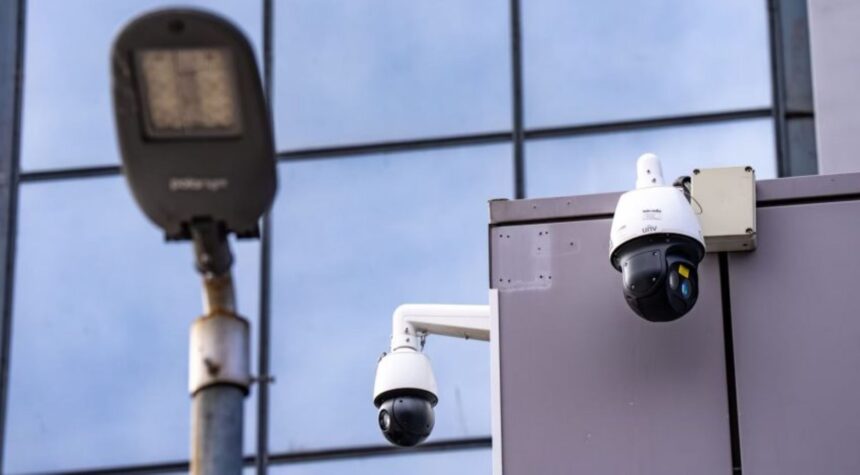
Pristina’s Information and Privacy Agency (AIP) has issued a stern advisory warning private employers and public institutions that installing security cameras with audio recording capabilities in the workplace constitutes a serious breach of privacy laws.
While video surveillance is legally permissible under strict security guidelines, the agency clarified that capturing, storing, or monitoring employee conversations crosses a definitive legal boundary.
“The processing of personal data through audio recording represents a deeper, more intrusive violation into the privacy of employees and visitors,” the AIP stated in its formal declaration. “Continuous audio monitoring without absolute transparency compromises the dignity, personal privacy, and freedom of communication guaranteed to workers.”
Low Formal Complaint Rates vs. Hidden Violations
Despite widespread, anecdotal reports of invasive surveillance practices in regional businesses, formal legal complaints remain exceptionally low. The AIP confirmed it has received only five official citizen complaints specifically targeting cameras equipped with microphone capabilities.
Regulators attribute the low number of formal filings to a lack of public awareness regarding digital data protection rights and a fear of professional retaliation among employees.
[Workplace Surveillance Framework]
├── Legally Permissible --> Standard CCTV video for asset protection & general security.
└── Legally Prohibited  --> Continuous audio recording & mic surveillance (Violates Law No. 06/L-082).
The Cyber Risk: Default Passwords and Global Exposures
Beyond the immediate legal and ethical violations, cybersecurity professionals warn that audio-enabled cameras create severe data security vulnerabilities.
Halil Berisha, a prominent regional cybersecurity analyst, noted that many newly installed systems are left exposed due to basic negligence during initial installation.
- Factory Credentials: Installers routinely fail to change factory configurations, leaving devices protected by easily guessable default credentials (such as
admin/admin). - Malicious Scanning: Exploiting these weak parameters, hackers can effortlessly scan network ranges to hijack feeds.
- Third-Party Repositories: Cheap online applications and dark web directories continuously index unconfigured webcams, broadcasting raw audio and video feeds worldwide to anyone willing to pay a nominal subscription fee.
Berisha added that due to persistent backdoor vulnerabilities and firmware exploits, an increasing number of countries have blacklisted certain uncertified security hardware manufacturers, primarily those originating from China. The AIP has urged organizations using security systems to immediately audit their digital defenses, modify default router and camera access codes, and disable built-in microphone components to align with local data protection acts.