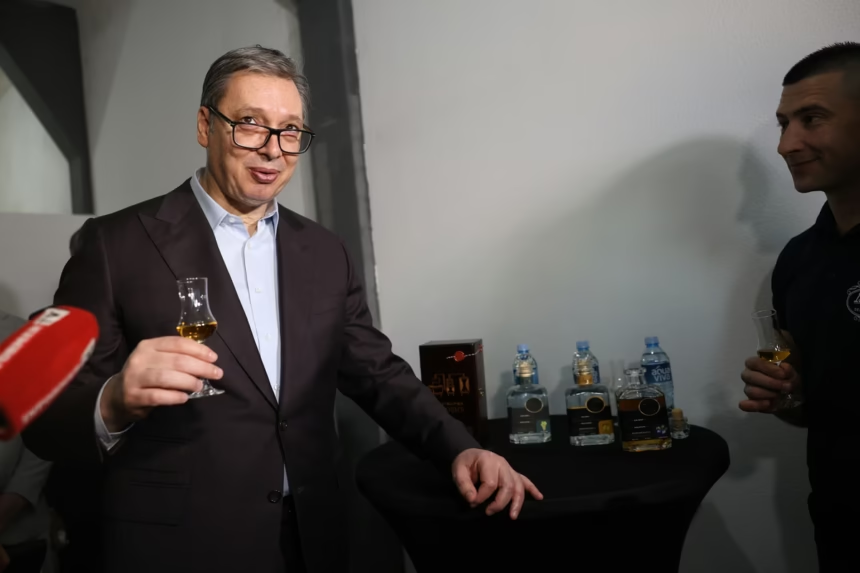
Speaking at the conclusion of his official state visit to China, Serbian President Aleksandar Vučić issued a sharp response to the operations conducted by Kosovo authorities at the train stations in Zveçan and Leposaviq.
Vučić warned that the Serbian population in Kosovo faces an era of “immense hardship,” but urged citizens not to abandon their homes, promising that Belgrade would find pathways to provide structural support despite highly restrictive conditions.
Deep Skepticism Toward Western and European Mediators
The Serbian president fiercely criticized the international community, particularly European policymakers, stating he has zero confidence in Western willingness to intervene or halt Pristina’s institutional expansion into the northern municipalities.
According to Vučić, if the collective West genuinely desired regional stability, it would have long ago compelled Kosovo to implement the Association of Serb Municipalities (ZSO)—a core element of the 2013 Brussels Agreement that remains unfulfilled.
“If they wanted a different relationship, they wouldn’t have appointed the individuals they did to be rapporteurs and make decisions regarding them,” Vučić told reporters. “They didn’t want that; instead, they wanted the escalation of tensions and the persecution of the Serbian people. They enjoy it.”
Double Standards and the Collective “Burden”
Invoking the historical memory of NATO’s 1999 military intervention, Vučić claimed that international reaction is inherently biased against Belgrade. He asserted that if the roles were reversed and Serbia had taken unilateral institutional steps, the country “would have been bombed long ago,” noting that the West previously executed air campaigns for “far less.”
[Vučić's Strategic Outlook for Northern Kosovo]
  Immediate Term ───► Absolute non-abandonment of homes despite "immense hardship."
  Mid-Term       ───► Continued financial/humanitarian backing from Belgrade.
  Long-Term      ───► Waiting for a shift in global power dynamics to enforce the UN Charter.
The Serbian leader concluded by framing the current status quo as a structural burden that the nation must endure. He emphasized that Belgrade is systematically waiting for a more favorable shift in the international balance of power to ensure that the original tenets of the Brussels Agreement are respected and that international relations align once more with the principles of the United Nations Charter.