The United States has said it will closely monitor those in Bosnia and Herzegovina who “prioritize political gain over energy security, supported by reliable American energy and the elimination of dependence on Russian gas.”
The statement came in response to a question from Radio Free Europe/Radio Liberty regarding recent meetings between officials from Republika Srpska and representatives of the Russian energy giant Gazprom, at a time when the European Union is moving toward a gradual phase-out of Russian gas imports.
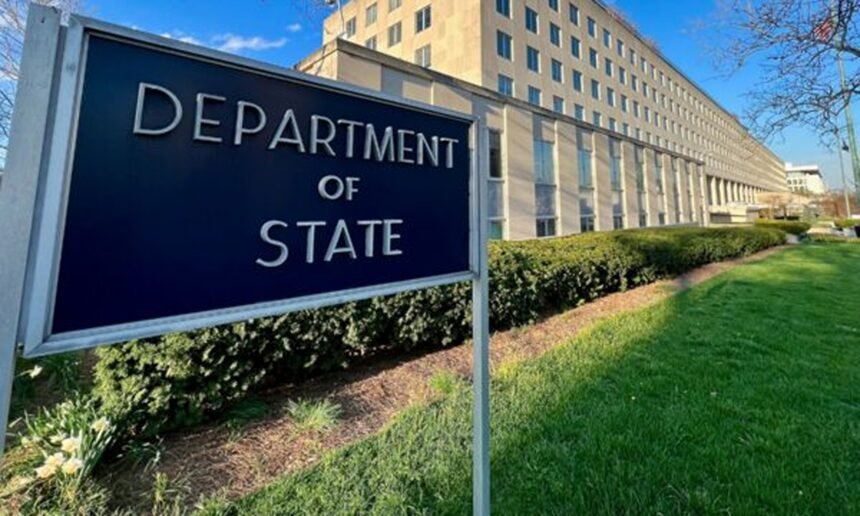
“Given that the EU is phasing out Russian gas by the fall of 2027, Bosnia and Herzegovina cannot afford delays,” the U.S. State Department said.
Officials from Republika Srpska, including members of the entity’s government and ruling-party leader Milorad Dodik, recently held talks with Gazprom executives in Saint Petersburg.
The visit comes as Republika Srpska authorities continue preparations for the construction of the New Eastern Interconnection gas pipeline, a project estimated to cost €500 million.
The pipeline is expected to connect the entity to the gas network in Serbia, through which Bosnia and Herzegovina currently receives all of its Russian gas supplies.
Following a meeting in late May, Republika Srpska’s Minister of Energy and Mining, Petar Djokic, confirmed that the entity remains an important partner of Gazprom in the development of gas infrastructure.
Bosnia and Herzegovina is currently fully dependent on Russian gas, which reaches the country through Serbia via the TurkStream pipeline.
Meanwhile, authorities in the Federation of Bosnia and Herzegovina are planning the construction of the Southern Interconnection pipeline, which would bring gas from the LNG terminal on the Croatian island of Krk. American investors are also involved in the project.
The U.S. State Department emphasized that the United States remains committed to partnering with Bosnia and Herzegovina in diversifying its energy sector.
It also noted that the Southern Interconnection pipeline has been a priority for three consecutive U.S. administrations and would help expand and diversify Bosnia and Herzegovina’s energy infrastructure.
“It would give the country greater control over its energy supply by providing access to natural gas and reducing dependence on a single, unreliable source,” the State Department said.
According to the department, U.S. energy exports remain a central pillar of economic cooperation between the United States and its European partners.
“The United States has the resources to support European efforts to move away from Russian energy and promote economic growth. American companies are reliable partners and stand ready to provide support,” the statement added.
Bosnia and Herzegovina consumes up to 250 million cubic meters of gas annually. The gas enters the country through Sepak in the east and is transported through a pipeline built nearly 50 years ago to Sarajevo, which has the largest concentration of consumers, before continuing into central Bosnia.