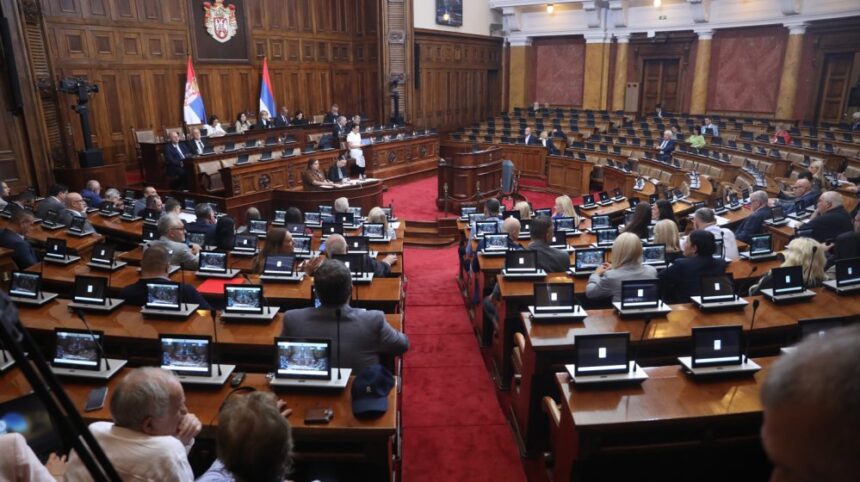
Serbia’s National Assembly is set to convene on Monday for a long-awaited debate on a motion of no confidence in the government of Prime Minister Đuro Macut, with lawmakers from both the ruling coalition and the opposition presenting sharply different expectations ahead of the session.
The debate was announced by National Assembly Speaker Ana Brnabić after opposition lawmakers submitted a request for a vote of confidence in the government. The session will determine whether the parliamentary majority continues to support Macut’s cabinet.
Ruling Serbian Progressive Party (SNS) lawmaker Miroslav Petrašinović said the governing majority was prepared to debate the motion, arguing that the session demonstrates the coalition’s democratic credentials.
“We do not avoid any topic,” Petrašinović said, adding that SNS lawmakers would use the debate to highlight what they consider the government’s achievements. He accused the opposition of intending to use the session to attack President Aleksandar Vučić and cabinet members rather than engage in substantive discussion.
Edis Durgutović, an MP from the Social Democratic Party of Serbia (SDPS), called for a constructive parliamentary debate focused on lowering political tensions.
He said lawmakers from both the government and opposition should present their views on the current political situation through dialogue, stressing that parliamentary debate remains the appropriate institutional forum for resolving political disputes.
Opposition lawmaker Dalibor Jekić of the Freedom and Justice Party (SSP) argued that the debate comes more than four months after the opposition submitted the motion and should serve as a broader assessment of the Serbian Progressive Party’s years in power rather than solely the tenure of Prime Minister Macut.
Jekić described Macut as a largely ceremonial prime minister, claiming that key political decisions continue to be made by President Vučić. He outlined two possible outcomes: either the ruling SNS rejects the no-confidence motion, preserving flexibility over the timing of future elections, or it supports the motion, which would trigger early parliamentary elections within the constitutional deadline.
According to Jekić, the first scenario is the more likely, as it would allow the ruling party to choose the most politically advantageous date for elections.
The parliamentary session is expected to focus exclusively on the confidence vote and comes amid growing speculation that Serbia could hold early parliamentary elections before the end of the year.