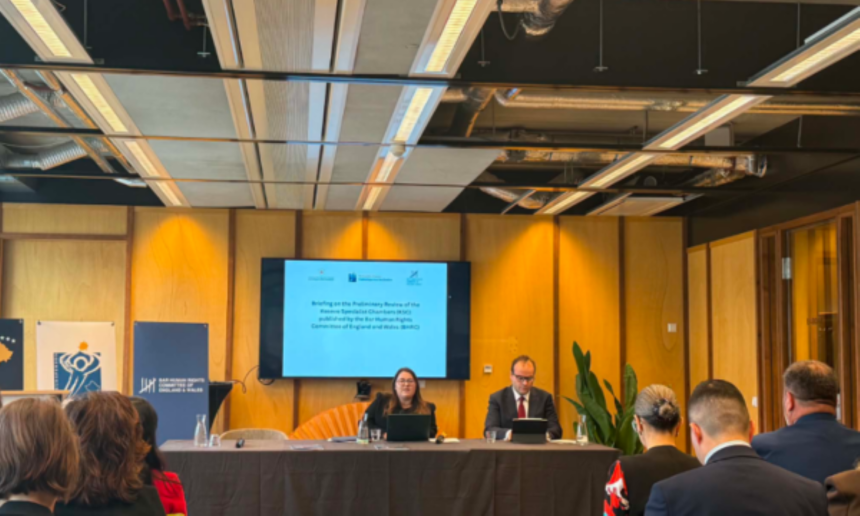
THE HAGUE, Netherlands — The Kosovo Specialist Chambers (KSC) have boycotted a high-level diplomatic presentation in The Hague detailing severe systemic failures within the court. The event, organized to brief the diplomatic corps on a highly critical report by the Bar Human Rights Committee of England and Wales (BHRC), proceeded today without a single representative from the tribunal.
The Hague Standoff: Diplomatic Forum Met with Silence
The briefing, facilitated by the Kosovo Embassy in The Hague and opened officially by Kosovo Ambassador Dren Doli, brought together foreign diplomats, legal scholars, and institutional actors. Despite receiving formal invitations, the Specialist Chambers—located in the exact same host city—opted to entirely skip the proceedings.
Institutional Dispute Breakdown
[ Kosovo Ombudsperson ] ──► (Requested Independent Review) ──► [ British Bar (BHRC) Report ]
                                                                             │
         ┌───────────────────────────────────────────────────────────────────┘
         ▼ (Key Human Rights Concerns Presented to Diplomats)
• Systemic, 24/7 video recording of legal/official visits
• Total judicial control over panel formations by KSC President
• Admissibility of unverified state evidence supplied by Serbia
• Deficit of democratic, institutional, and judicial oversight
Expressing deep dissatisfaction at the courtroom’s empty chairs, Kosovo Ombudsperson Naim Qelaj addressed the gathered diplomats:
“I would have liked the Specialist Chambers to be present here today, and I do not know why they chose not to attend.”
Qelaj strictly reiterated that the BHRC report was drafted with absolute autonomy, completely free from any influence or pressure by his office.
The Core Findings: Systemic Rights Violations Exposed
The presentation follows a media briefing held by Qelaj in April 2026, where he systematically itemized the British legal experts’ alarming conclusions regarding human rights and fair trial standards in the ongoing Hague trials against former Kosovo Liberation Army (KLA) leaders.
| Core Area of Concern | Specific Infringement Identified by BHRC | Institutional & Legal Impact |
| Detention Conditions | Extended pre-trial detention with a near-total lack of realistic pathways for interim release. | Severe restriction of family contact and professional defense communications. |
| Invasive Surveillance | Intrusive, systematic monitoring of confidential communications. | Violates Article 8 of the ECHR. Qelaj confirmed that during his own official 2025 inspection, he was subjected to permanent, continuous tracking by two cameras recording his entire visit. |
| Judicial Bias | The KSC President holds sweeping, unchecked discretion to select and form specific judicial panels. | Directly compromises the structural perception of judicial impartiality and fairness. |
| Oversight Deficit | Total absence of independent democratic monitoring mechanisms or domestic judicial inclusion. | The tribunal operates completely insulated from standard constitutional or institutional checks and balances, with an absolute lack of judges from Kosovo. |
Prejudicial Diplomatic Meetings and Serbian Evidence
The report targets major procedural breaches and highly problematic out-of-court conduct by top tribunal officials:
- The Secret Diplomatic Briefing: Former Chief Prosecutor Jack Smith and the current KSC President held a private briefing with international diplomats to argue that releasing the KLA defendants would present an immediate threat, effectively pushing for life imprisonment. The defense counsel was barred from the meeting entirely, a move the report notes severely compromised the presumption of innocence and the overall integrity of the judicial process.
- The Serbian Evidence Pipeline: The BHRC report warns of a critical deficit of transparency regarding evidence provided directly by Serbia. The court has repeatedly left defense motions challenging the origin, chain of custody, and authenticity of Serbian state materials completely unaddressed by public decisions, clouding the proceedings in secrecy.
The independent British legal experts concluded their report with an urgent structural recommendation: the immediate establishment of a fully independent, external international mechanism to monitor the court’s judicial operations and halt unchecked human rights violations within the facility.