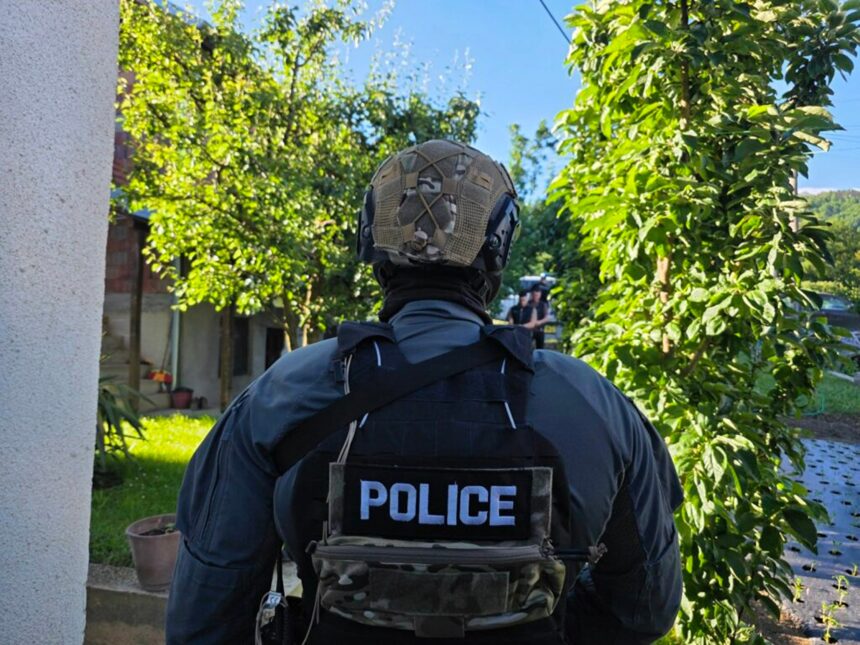
The Basic Court of Prishtina has ordered a one-month mandatory detention for five individuals arrested on Sunday during a major anti-war-crimes dragnet code-named “Reçak II.” The suspects are accused of directly participating in the notorious January 1999 Reçak Massacre.
The Special Prosecution of the Republic of Kosovo (PSRK) presented its urgent request before a pre-trial judge, securing the immediate removal of the defendants—identified by their initials as N.P., S.J., B.P., S.M., and S.S.—from public circulation. Given the gravity of the war crimes charges and the defendants’ dual citizenships, judicial authorities ruled that releasing them posed an immediate threat to the structural integrity of the ongoing trial.
1. The Judicial Mandate: Mitigating the Risk of Flight
In its official press release, the Basic Court of Prishtina outlined that traditional alternative measures, such as house arrest or bail, were entirely insufficient for this profile of war crime suspects.
The Judicial Detention Rationale

 [ EXTRADITION FLIGHT RISK ] ──► EXTREMELY HIGH
 • Because all five defendants hold formal citizenship in the Republic of Serbia,
   the court notes a real, immediate danger of escape across the border to evade prosecution.

 [ STRUCTURAL INTERFERENCE ] ──► WITNESS TAMPING
 • Judicial investigators stressed that if left at liberty, the defendants possess
   the networks required to destroy active evidence and intimidate vulnerable war crime witnesses.

 [ DURATION OF REMAND ] ──► ONE MONTH INITIAL WINDOW
 • Each of the five individuals will remain in maximum-security detention facilities
   for an initial 30 days while the Special Prosecution prepares its official indictment.
2. Inside the “Reçak II” Operation: Who are the Suspects?
The joint action, coordinated tightly between the Kosovo Police, the Special Prosecution, and the Kosovo Intelligence Agency (AKI), targeted former state structures operating within localized regions.
According to details made public by Special Prosecutor Ilir Morina during a high-profile press conference, the five captured individuals were not low-level lookouts, but formal operatives integrated into the Serbian state apparatus during the 1999 counter-insurgency operations.
Profiles and Confiscations Under Operation Reçak II
┌────────────────────────────────────────────────────────────────────────┐
│                                                                        │
│  [ PROFESSIONAL INSTITUTIONAL ROLES ] ─────────────────────────────┐   │
│  • Four of the arrested suspects are retired, pension-receiving        │   │
│    former personnel of the Ministry of Internal Affairs of Serbia (MUP)│   │
│  • One suspect was explicitly mobilized into auxiliary combat police   │   │
│    units directly deployed in the field during the war.                │
│                                                                        │   │
│  [ EVIDENCE AND SEIZED ASSETS ] ───────────────────────────────────┤   │
│  • Official MUP service logs, state identification stamps, uniforms,   │   │
│    tactical equipment, masks, and handcuffs.                           │
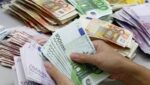
│  • Over €30,000 and 438,000 Serbian Dinars in unaccounted cash reserves.│
│                                                                        │   │
│  [ THE DISBURSED GEOGRAPHY ] ──────────────────────────────────────┘   │
│  • The arrests were executed simultaneously across multiple strategic  │
│    points, including Shtërpcë and localized border entry zones.        │
└────────────────────────────────────────────────────────────────────────┘
“This operation proves that Kosovo’s justice system acts independently and strictly on verified evidence. War crimes do not expire, and those who planned, ordered, or executed the terror in Reçak will face accountability.”
— Xhelal Sveçla, Minister of Internal Affairs
3. Historical Redress: Transitioning to In-Absentia Trials
The timing of these high-profile detentions intersects with a broader, institutional overhaul of how the Kosovo judicial system handles the legacies of the 1998–1999 conflict.
| Prosecution Method | Target Demographic | Expected Timeline |
| Active Local Detention | Caught suspects with local footprints, such as the “Reçak II” detainees (e.g., N.P., 58, and S.J., 59). | Undergoing immediate pre-trial processing and evidence verification within the 30-day remand window. |
| In-Absentia Indictments | Fugitive commanders, tactical leads, and senior leadership insulated inside mainland Serbia. | Full trials against 21 specifically accused individuals associated with the Reçak Massacre are slated to begin next month. |
The Reçak Massacre, which resulted in the executions of over 40 ethnic Albanian civilians by Serbian forces in January 1999, served as the ultimate catalyst for the international diplomatic and military intervention that reshaped the Balkans. With these arrests, prosecutors have signaled that despite a quarter-century delay, local tracking mechanisms remain fully active.