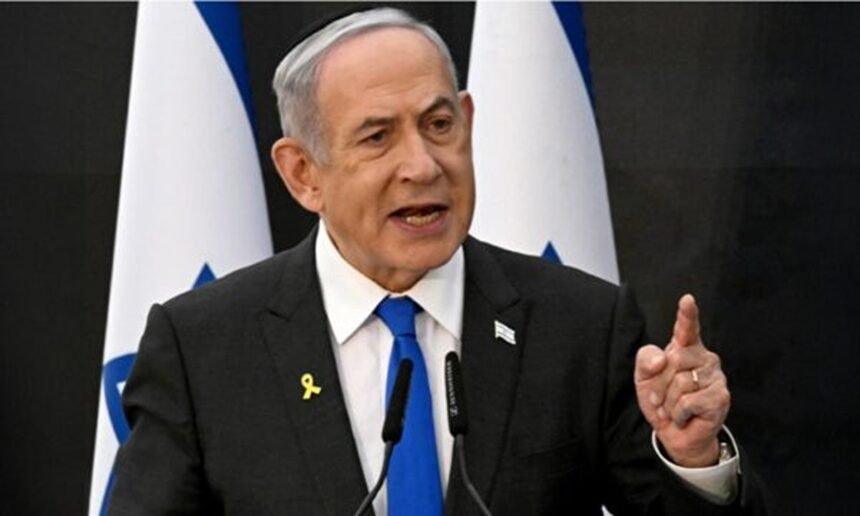
A deep political chasm has broken out within Israel’s political establishment following the announcement of a monumental security memorandum of understanding between the United States and Iran.
Yair Golan, leader of Israel’s opposition party, the Democrats, launched a blistering attack on Prime Minister Benjamin Netanyahu, characterizing the diplomatic agreement between Washington and Tehran as a “bad deal for Israel” and labeling it the culmination of a structural political failure. Golan accused the Prime Minister of rendering Israel isolated and toothless on the global stage, allowing a historic geopolitical shift to take place without Israeli influence.
1. The Domestic Backlash: “Total Victory” vs. Strategic Isolation
The opposition’s critique targets the core of Netanyahu’s wartime rhetoric, arguing that his promised milestones have been hollowed out by the fast-moving diplomatic framework engineered by the United States.
Domestic Political Fault Lines in Israel

 [ THE OPPOSITION COMPLAINT ] ──► WEAKENED DETERRENCE
 • Yair Golan claims Netanyahu has effectively erased the "great military achievements
   won by the courage of pilots and sacrifice of soldiers," leaving behind stronger
   adversaries and a fragile Israeli deterrence posture.

 [ THE FAR-RIGHT POSITION ] ──► REJECTION OF THE ACCORD
 • National Security Minister Itamar Ben-Gvir declared that Israel is not bound by
   the Washington-Tehran memorandum, demanding uninterrupted, high-intensity military
   pressure against Hezbollah in Lebanon.

 [ THE PRIME MINISTERIAL POSTURE ] ──► INSTITUTIONAL SILENCE
 • While Israel has yet to release a definitive, formal state response, the early
   fractures reveal profound anxiety over being sidelined by its primary superpower ally.
2. The Critical Blind Spot: The Lebanon Question and Hezbollah
The single most explosive variable within the memorandum remains its application to the northern front. While Washington pushes for a comprehensive regional cooling, regional stakeholders are operating on contradictory interpretations.
The Geopolitical Friction Matrix
┌────────────────────────────────────────────────────────────────────────┐
│                                                                        │
│  [ THE TEHRAN-ISLAMABAD CLAIMS ] ──────────────────────────────────┐   │
│  • Iranian diplomats and Pakistani mediators assert that the cessation │   │
│    of military operations legally encompasses the Lebanese theater.     │
│                                                                        │   │
│  [ THE TRUMP AMBIGUITY ] ──────────────────────────────────────────┤   │
│  • US President Donald Trump has conspicuously avoided explicit        │   │
│    confirmation on whether Lebanon is tethered to the main cessation   │
│    clauses, leaving a strategic grey zone.                             │
│                                                                        │   │
│  [ THE ANALYTICAL WARNING ] ───────────────────────────────────────┘   │
│  • Security analysts universally warn that fresh, localized skirmishes │
│    between Israel and Hezbollah could completely collapse the entire accord.│
└────────────────────────────────────────────────────────────────────────┘
“Netanyahu stood aside—weak, isolated, and without influence. He promised ‘total victory’ but leaves behind stronger enemies, a weaker Israel, and a diminished deterrent.”
— Yair Golan, Leader of the Democrats Opposition Party
3. Inside the 60-Day Textual Fine-Tuning
As Qatari mediators wrap up a grueling 15-hour marathon negotiation loop in Tehran, the baseline memorandum is giving way to a high-stakes, 60-day diplomatic race to finalize the technical annexes.
| Official / Stakeholder | Strategic Perspective on the Accord | Key Operational Hurdle |
| Vice President JD Vance | Hails the deal as a masterstroke that will “fundamentally reshape the Middle East for the next 50 years” toward prosperity. | Managing domestic skepticism while preserving the core architecture of the regional security realignment. |
| Dep. FM Kazem Gharibabadi | Assures that Tehran’s final amendments were accepted; frames the next 60 days of talks as the definitive window. | Demanding the absolute, immediate removal of all economic and financial sanctions targeting Iran. |
| Senator Lindsey Graham | Welcomes the baseline memorandum as a positive step but issues sharp structural warnings. | Reconciling the stark, contradictory interpretations of the text between Washington and Tehran. |
With the definitive text still withheld from public view, the upcoming two-month negotiation cycle will have to resolve heavily fortified issues. The exact thresholds of Iran’s nuclear infrastructure enrichment, the operational status of the vital Strait of Hormuz shipping lanes, and the long-term, multi-lateral security balances remain entirely open. For Israel, the immediate challenge is no longer just managing fluid fronts in Gaza and Lebanon, but navigating an incoming regional order designed by its closest ally and its fiercest adversary.