A fragile sigh of relief has rippled through global markets after the White House and the Iranian regime finalized a long-term framework agreement to halt active hostilites. The breakthrough follows a devastating two-month direct war involving the United States, Israel, and Iran, which threw international energy sectors into chaos.
However, while U.S. President Donald Trump has loudly declared a return to baseline operations with his social media mandate to “Let the oil flow!”, maritime data and supply chain economists offer a sober corrective. The impact of the conflict—which effectively shuttered the vital Strait of Hormuz—will choke the global economy for months to come. Reopening a war zone to mega-tankers is not a matter of turning on a switch; it is a logistical, structural, and insurance-driven nightmare.
1. The Ghost Strait: Why Shipping Traffic Remains Paralyzed
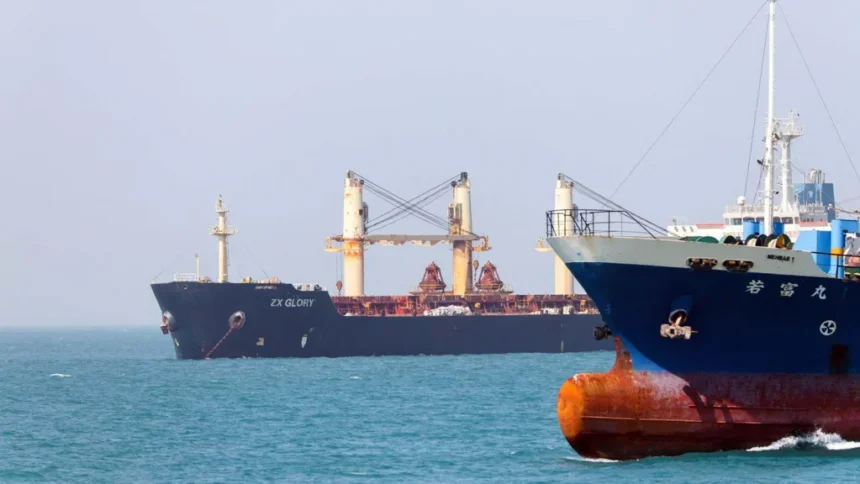
The Strait of Hormuz traditionally funnels 20% of the world’s petroleum and Liquified Natural Gas (LNG). Since February 28, it has been sealed off to nearly all commercial traffic, isolating the Persian Gulf.
The Shipping Logjam Inside the Persian Gulf

 [ THE GULF EMBARGO ] ──► STAGNATION SINCE FEB 28
 • The shipping corridor has been entirely closed to normal commercial traffic,
   excepting a marginal handful of vessels explicitly cleared by Tehran.

 [ STRANDED FLEETS ] ──► 200 VESSELS TRAPPED
 • Approximately 200 massive merchant ships remain stranded inside the Persian Gulf basin,
   unable to safely exit due to systemic naval hazards.

 [ ACTIVE RISK PROFILES ] ──► DRONES & NAVAL MINES
 • Maritime security firms warn that unexploded naval mines and dormant loitering
   munitions mean insurance underwriters are refusing to issue immediate transit clearances.
Despite the political fanfare, BBC Verify and tracking data from MarineTraffic show that the bottleneck has barely nudged. Since the weekend framework announcement, only two vessels with active transponders have risked traversing the strait: a single bulk carrier and an isolated oil tanker.
Former Maersk executive and CEO of Vespucci Maritime, Lars Jensen, warns that shipping conglomerates will deploy an extremely hesitant strategy, prioritizing getting their trapped assets out of the Gulf rather than risking new fleets inside an unpredictable geopolitical environment.
2. Market Adjustments: Crude Volatility and the Shock Buffer
While the diplomatic breakthrough triggered an immediate pullback on speculative pricing on Monday, energy baselines remain elevated compared to their pre-war normal.
The Post-Conflict Energy Pricing Spectrum
┌────────────────────────────────────────────────────────────────────────┐
│                                                                        │
│  [ BRENT CRUDE GLOBAL BENCHMARK ] ─────────────────────────────────┐   │
│  • Slid 4.3% down to $83.55 per barrel on Monday following news of     │   │
│    the truce, but remains far above the pre-war baseline of ~$70.      │
│                                                                        │   │
│  [ US WEST TEXAS INTERMEDIATE ] ───────────────────────────────────┤   │
│  • Dropped 4.9% to hover at $80.74, reflecting immediate relief but     │   │
│    accounting for refinery startup friction and damaged equipment.    │
│                                                                        │   │
│  [ STRUCTURAL DIVERSIFICATION ] ───────────────────────────────────┘   │
│  • Economies are actively pivoting; the UAE is expanding bypass pipelines │
│    while building out strategic energy emergency storage reserves in India.│
└────────────────────────────────────────────────────────────────────────┘
“Even if ships now have safe passage, tankers are in the wrong place, production/refining plants must reach full capacity, and questions over the cost and availability of insurance for ships crossing the Strait will remain.”
— Neil Shearing, Group Chief Economist, Capital Economics
3. The Macroeconomic Ripple Effect: Interest Rates and Agriculture
The fallout from the two-month war has reset the domestic policies of Western central banks. In the United Kingdom, inflation spiked due to fuel costs, forcing the Bank of England to pivot from an expected cycle of rate cuts to holding or potentially increasing borrowing costs later this year.
| Economic Indicator / Sector | Peak Conflict Distortion | Post-Agreement Outlook & Trajectory |
| Central Bank Interest Rates | Markets priced in two separate interest rate hikes extending out to early 2027 to fight energy-driven inflation. | Shifted to a single projected hike by December, potentially freezing rates through 2027 to allow consumer markets to stabilize. |
| Aviation Fuel (NWE) | Exploded to a historic ceiling of $1,840 per ton, crippling commercial airline margins. | Receded down to $1,033 per ton, though still higher than the pre-war baseline of $831. |
| Agricultural Fertilizers | Petrochemical blockades caused fertilizer costs to skyrocket, trapping arable and vegetable farmers in a financial squeeze. | Delayed normalization. As a byproduct of crude processing, consumer-level fertilizer prices will take months to slide downward. |
Renowned economist Mohamed El-Erian notes that even with the diplomatic path cleared, global markets face structural challenges. Ramping extraction infrastructure back up to capacity, clearing the maritime lanes of physical war remnants, and renegotiating international insurance premiums mean the real-world road back to normal will be measured in quarters, not days.