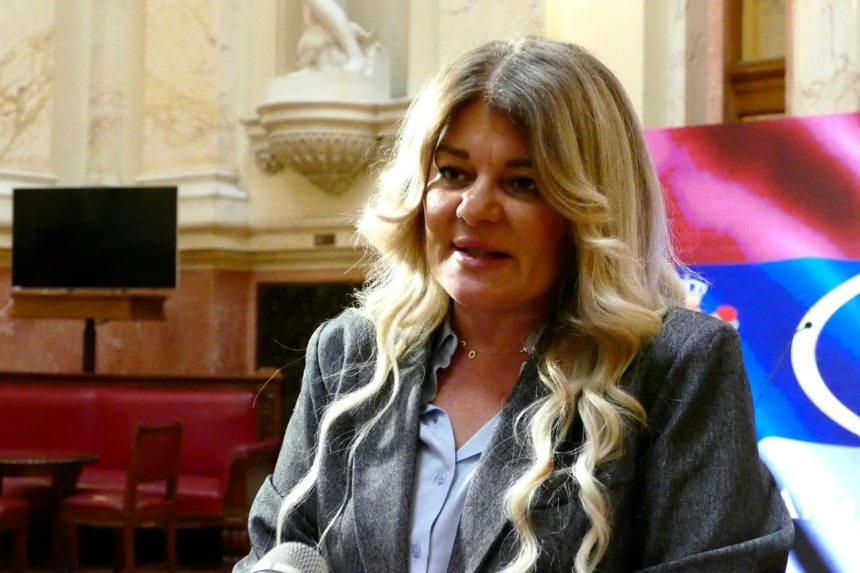
Member of Parliament Danijela Nestorović, representing the opposition Ecological Uprising (Ekološki ustanak), launched a scathing critique during Wednesday’s National Assembly parliamentary session, demanding strict accountability for a highly controversial package of judicial reforms that has plunged Serbia into a sharp diplomatic and constitutional crisis.
The dispute focuses on five sweeping pieces of judicial legislation—colloquially branded by critics and legal experts as “Mrdić’s Laws” after SNS Member of Parliament and Judicial Committee Chairman Uglješa Mrdić—which were pushed through and enacted in January 2026.
After only four months of domestic application, the ruling majority has been forced to abruptly return to parliament to pass emergency amendments. Opponents point out that this is a humiliating retreat, proving that Belgrade knowingly enacted unconstitutional laws that deliberately gutted judicial independence to halt high-profile criminal investigations.
1. The Venice Commission Overhaul: “Correction, Not Alignment”
While the ruling coalition has framed the current emergency sessions as a routine effort to “align national laws with European institutions,” legal professionals and opposition leaders reject this explanation. They emphasize that the Venice Commission’s urgent April 24 opinion read more like a strict legal ultimatum.
The Strategic Backtrack on "Mrdić's Laws"

 [ THE JANUARY ENACTMENT ] ──► MASSIVE INSTITUTIONAL NAZADOVANJE
 • Pushed through without open public debate, effectively stripping away
   pre-existing constitutional protections for prosecutors and courts.

 [ THE €1.5 BILLION RISK ] ──► INTERNATIONAL REPERCUSSIONS
 • The President of the Judicial Authority Trade Union warned that the laws
   compromised over €1.5 billion in EU pre-accession (IPA) funds by directly
   violating fundamental rule-of-law benchmarks.

 [ THE VENICE ULTIMATUM ]   ──► AN UNPRECEDENTED ORDER
 • The Council of Europe's advisory body issued an explicit recommendation:
   Srbija had no choice but to completely scrap the revisions and return to
   the legal status quo.
“If you do the wrong thing and violate the Constitution, what you get is called a correction, not a routine alignment. It is an absolute embarrassment for this state and its citizens that something completely incompatible with our Constitution and European standards was actively applied for four months. Someone must bear the responsibility for this legal vandalism.”
— Danijela Nestorović, MP, Ecological Uprising
2. The Critical Unresolved Gaps: Executive Control Over Key Prosecution Sectors
The latest review published by the Venice Commission notes that while Belgrade has scrambled to fix seven out of nine outstanding technical recommendations, the ruling party has deliberately left two critical vulnerabilities unaddressed. These legal loopholes ensure that executive political figures maintain control over the most sensitive anti-corruption sectors.
Where the Judicial Amendments Fail Western Benchmarks
┌────────────────────────────────────────────────────────────────────────┐
│                                                                        │
│  [ CRITICAL PRECOGNITION 7: THE TOK EXCLUSIONS ] ──────────────────┐   │
│  • While capacity limits were adjusted, the government failed to       │   │
│    reinstate two out of eleven public prosecutors whose temporary      │   │
│    assignments inside the Prosecutor's Office for Organized Crime     │   │
│    (TOK) were abruptly and prematurely terminated under Mrdić's laws.  │   │
│                                                                        │   │
│  [ CRITICAL PRECOGNITION 8: CYBER-CRIME AUTONOMY ] ────────────────┤   │
│  • The state merely established a 'Working Group' to look into autonomy│   │
│    for the Special Department for High-Tech Crime, avoiding binding    │   │
│    statutory language that would insulate investigators from ministries.│
│                                                                        │   │
│  [ THE SYSTEMIC CONCLUSION ] ──────────────────────────────────────┘   │
│  • Opposition MPs note that independent prosecution of grand corruption │
│    and state-backed digital surveillance remains impossible as long as │
│    the executive branch maintains a hand in hiring and firing personnel.│
└────────────────────────────────────────────────────────────────────────┘
3. Political Stand-off: State Triumph vs. “International Shame”
The legislative floor has transformed into a proxy battle over whether Serbia is genuinely building an independent judiciary or executing a cosmetic public relations exercise to appease Brussels.
| Political Actor | Official Public Position | Hidden Operational Objective |
| Ana Brnabić & SNS Leadership | Celebrating the “rapid and diligent work” of the legislative drafting committees; claiming the Venice Commission’s final review is entirely positive. | Buying Political Time: Presenting structural retreats as compliance milestones to unfreeze delayed European development funds. |
| Former Supreme Court President (Vida Petrović Škero) | Labeling the rapid amendments an international humiliation; warning that the day-to-day damage inflicted during the four-month application window is irreversible. | Exposing Judicial Manipulation: Clarifying to the public that “Mrdić’s laws” functioned as private, targeted legislation designed to freeze specific, sensitive state court cases. |
| Danijela Nestorović (Opposition) | Filing formal criminal complaints against legislative officials; demanding transparency regarding what text was actually hidden from the Venice Commission. | Enforcing Accountability: Attempting to force the Constitutional Court and state oversight bodies to name the actors responsible for creating a short-lived, unconstitutional legal framework. |
As the parliamentary debate intensifies, the core question raised by Nestorović remains unanswered by the government bench. While the ruling party uses its legislative majority to patch the holes in “Mrdić’s Laws,” the long-term systemic impact of applying unconstitutional statutes for four months remains an unaddressed hazard for Serbia’s struggling judiciary.