Elmedin Konaković, the Foreign Minister of Bosnia and Herzegovina, spoke after a session of the Council of Ministers about the country’s path toward the European Union and other current political issues.
Discussing the topics addressed during the meeting, Konaković said that much of the session focused on correcting a conclusion related to the financing of Šćepan Polje.
“We reported on this individually. The Council of Ministers rejected reports from four agencies because SNSD representatives voted against them. Nothing particularly dramatic, but the Council of Ministers continues to function. There are no blockages, and it is especially important that these projects continue with the planned intensity,” Konaković said.
Speaking about the Moneyval process, he stressed that Bosnia and Herzegovina narrowly avoided being placed on a blacklist.
“Last week, we barely saved the entire process from ending up on that famous blacklist, preventing Bosnia and Herzegovina from being placed in an even worse situation,” he stated.
Regarding Bosnia’s EU integration path, Konaković called on Brussels to better understand the country’s internal political circumstances.
According to him, the main obstacle comes from internal political actors aligned with Milorad Dodik and his party, the SNSD.
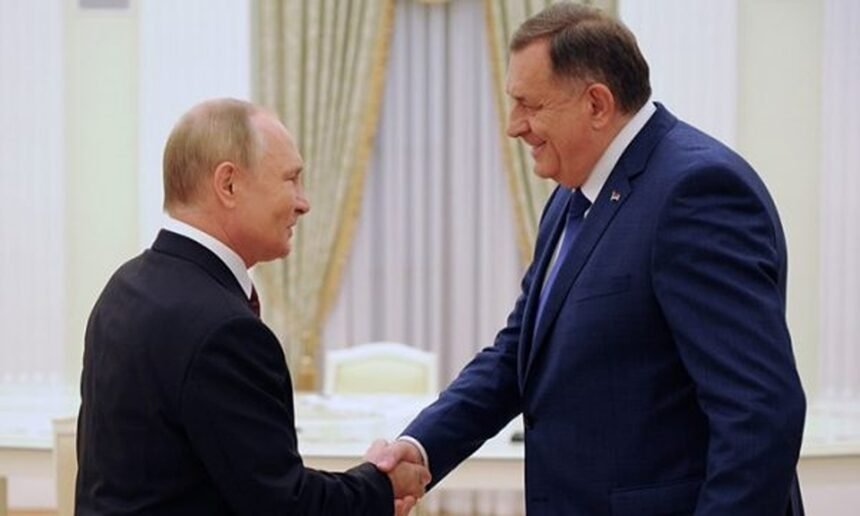
“We are counting on the European Union to understand this. Why is this happening? Because Dodik was once again at the parade in Moscow, because he received instructions there. We heard Putin’s message regarding Armenia, which is also a message for Bosnia and Herzegovina: do not move closer to the EU. That is exactly what Dodik and his followers are blindly doing,” Konaković said.
He argued that Bosnia and Herzegovina faces two major problems, with the primary one being internal political obstruction.
Konaković criticized the EU for not speaking more directly about the source of these obstacles.
“The EU keeps asking why progress is slow, but everyone knows where the brakes are. The problem is the Russian submarine of SNSD,” he said, using a metaphor to describe what he views as Russian influence within Bosnia and Herzegovina’s political system.
His remarks reflect ongoing tensions between pro-European political forces in Bosnia and Herzegovina and leaders who maintain close ties with Vladimir Putin and Russia, particularly over the country’s future integration into the European Union.