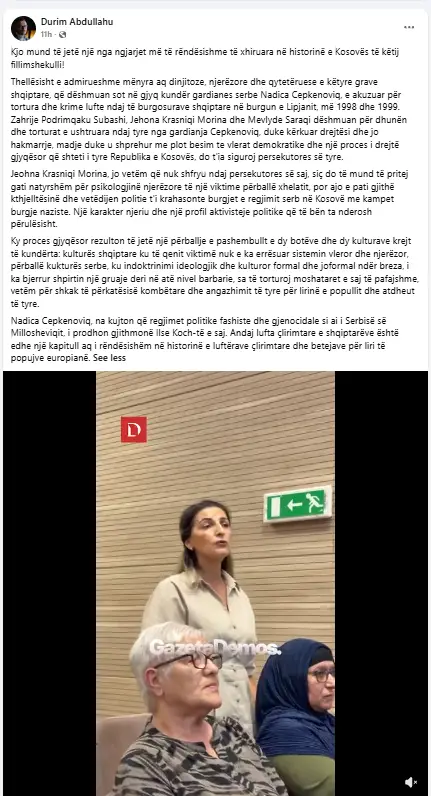
A war crimes trial in Kosovo has drawn significant attention after testimonies were heard against Nadica Cepkenović, a former Serbian prison guard accused of torture and abuse against Albanian women detained during the 1998–1999 war at Lipjan Prison.
During the proceedings, survivors Zahrije Podrimqaku Subashi, Jehona Krasniqi Morina, and Mevlyde Saraqi gave emotional but composed testimonies describing the violence and mistreatment they allegedly suffered while in detention. The women detailed their experiences before the court, contributing to what has become one of the most closely followed war crimes cases in recent months.
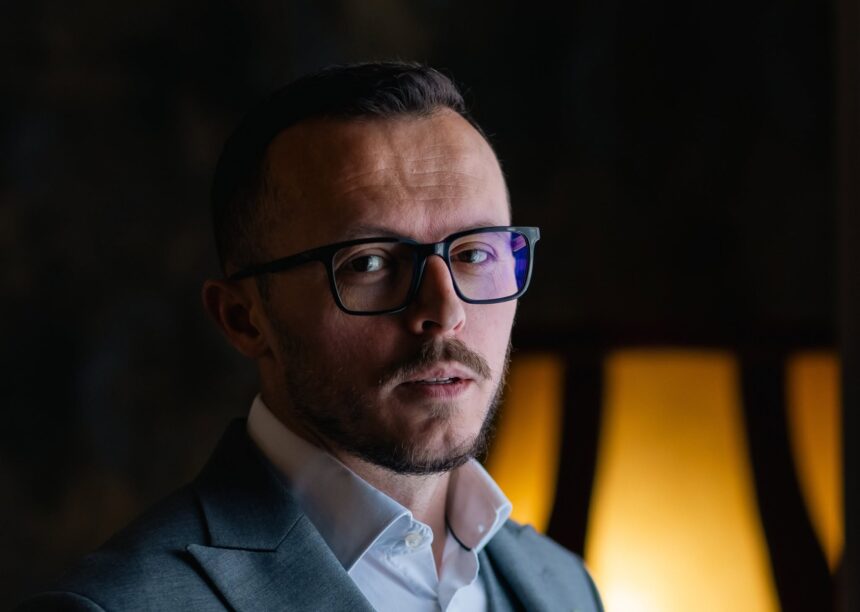
The case has also gained wider public and academic attention following a strong reaction from Kosovar historian and University of Pristina professor Durim Abdullahu, who described the developments as among the most significant documented events in Kosovo in this century.
In a Facebook post, Abdullahu emphasized the historical and moral weight of the testimony presented in court, highlighting not only the severity of the allegations but also the dignity and restraint shown by the survivors.
“This may be one of the most important events ever recorded in Kosovo’s history during this century,” he stated.
Abdullahu further praised the victims for seeking justice through institutional and legal channels rather than revenge, noting that their approach reflects a strong belief in the rule of law and democratic values in Kosovo.
He paid particular attention to the testimony of Jehona Krasniqi Morina, describing it as an expression of both political awareness and moral clarity. According to him, her comparison of Serbian-run prisons in Kosovo to Nazi camps underscored the seriousness of the abuses described, while still being delivered without hatred or calls for retaliation.
In his broader analysis, Abdullahu framed the courtroom proceedings as a confrontation between two contrasting realities: victims who maintained their humanity despite severe suffering, and a repressive system that, in his view, enabled and produced acts of brutality during the war.
The trial continues before Kosovo’s judicial authorities and remains part of the country’s broader efforts to address war crimes committed during the conflict and to provide justice for survivors more than two decades later.