A massive international emergency operation is underway as European nations deploy specialized search-and-rescue teams to Venezuela following the country’s most powerful earthquake sequence in over 125 years.
On the evening of June 24, 2026, northwestern and central Venezuela were hit by a catastrophic earthquake “doublet”—a shallow magnitude 7.2 foreshock closely followed just 39 seconds later by a violent magnitude 7.5 mainshock. The disasters have caused widespread structural collapses across the capital city of Caracas and neighboring regions, heavily damaging the main Simón Bolívar International Airport and triggering an immediate international appeal for aid.
Switzerland Mobilizes the “Swiss Rescue Chain”
In response to the humanitarian emergency, the Swiss Federal Council has officially authorized the immediate deployment of its elite disaster response unit to work alongside local authorities under the rubble:
- The Deployment Force: The specialized Swiss Rescue Chain consists of 80 expert members, including structural engineers, disaster specialists, and emergency medical personnel.
- Search and Recovery Assets: The team is accompanied by 8 trained rescue dogs specifically conditioned to detect signs of life beneath heavy debris, along with 18 tons of advanced rescue equipment.
- Logistical Hurdles: Because Venezuelan airspace remains closed to most commercial European airlines due to the airport infrastructure damage, Swiss authorities are coordinating an emergency flight corridor to insert the personnel directly into the disaster zone.
Germany Dispatches Federal Relief Teams
Simultaneously, Germany has activated its rapid-response network to assist with the overwhelming casualty and missing-person crisis:
- THW Deployment: Approximately 50 specialized members from the German Federal Agency for Technical Relief (THW) are preparing to depart for Venezuela.
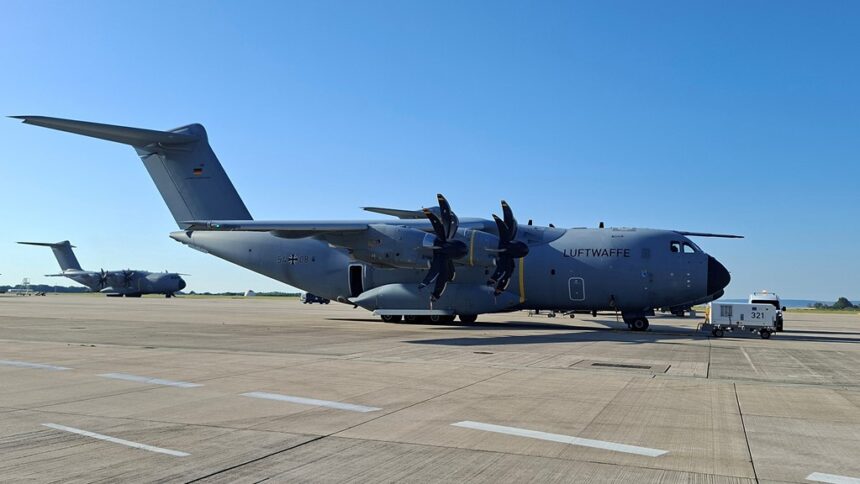
- Air Support Fleet: Operational preparations are concentrated at the Wunstorf Air Base in Lower Saxony, where the German military (Bundeswehr) is readying Airbus A400M transport aircraft to ferry the relief teams, vehicles, and heavy rescue tools directly to the South American nation.
The Scale of the Catastrophe
The situation on the ground remains highly fluid as rescue workers face continuous aftershocks and a collapsed local telecommunications network.
| Metric | Preliminary Disaster Assessment |
| Epicenter | Veroes municipality, Yaracuy State (shallow depth of 10 km) |
| Confirmed Casualties | At least 235 dead and over 4,300 injured, with toll expected to rise significantly |
| Missing Persons | Local reports estimate over 40,000 people unaccounted for or trapped |
| Worst Hit Urban Zones | The Los Palos Grandes and Altamira municipalities in Caracas, alongside massive collapses in La Guaira |
European Union Activation: The European Union’s Aid Commissioner, Hadja Lahbib, confirmed that the EU’s Copernicus satellite surveillance system has been fully activated to map the structural wreckage in real time, assuring that the bloc stands ready to step up further financial and material assistance.