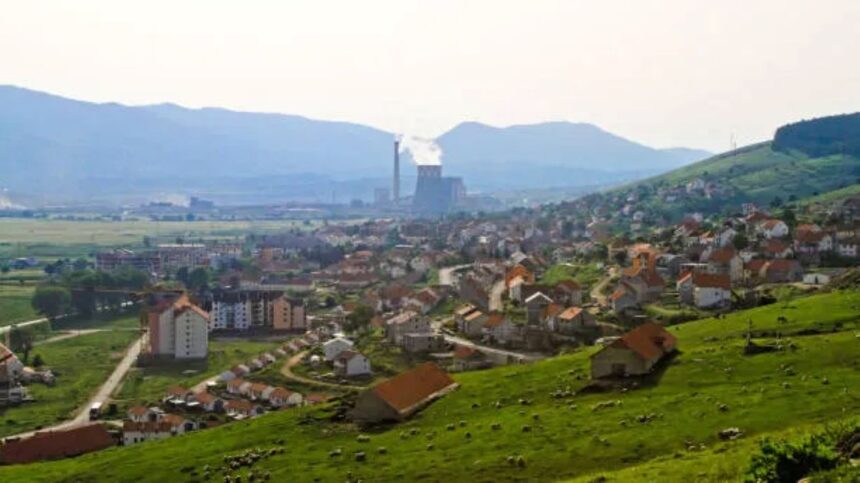
A fierce municipal clash in the northern city of Pljevlja has exposed the deep-seated ethnic and geopolitical polarization threatening Montenegro’s state policies. The local board of the pro-Serbian Democratic People’s Party (DNP) has launched a scathing political assault against the ruling Europe Now Movement (PES), using a local resolution to challenge the country’s national foreign policy.
The friction erupted after PES municipal councilors refused to back a DNP-led initiative aimed at scheduling an extraordinary assembly session to formally “void” Montenegro’s recognition of Kosovo at the local level.
The Demographics Fueling the Fire
Political analysts point out that the localized rebellion in Pljevlja is not happening in a vacuum. It is heavily fueled by the municipality’s distinct demographic profile:
- A Serbian Stronghold: According to the official results of the latest population census, Pljevlja holds a clear ethnic Serb majority (roughly 60%), with over 66% of the local population declaring Serbian as their mother tongue.
- Belgrade’s Sphere of Influence: The municipality—currently governed by Mayor Dario Vraneš of the pro-Serb New Serb Democracy (NSD)—has frequently become a focal point for political directives echoing from Belgrade. Local conservative parties leverage this cultural dominance to actively campaign against Kosovo’s sovereignty.
- The Anti-European Undercurrent: Beyond the immediate question of Kosovo, local hardline factions in the north use these initiatives to explicitly push back against Montenegro’s broader Euro-Atlantic alignment. For these factions, anchoring local institutions to pan-Serbian interests takes priority over Podgorica’s integration into the European Union.
DNP’s Scorched-Earth Accusations Against PES
The official press release from the DNP positions the debate as a baseline test of cultural and national loyalty, framing the mainstream pro-EU stance of PES as an ideological betrayal:
- Pivoting Away from the Base: The DNP claims that PES rode to power on a populist wave fueled by the defense of Serbian national identity and the Serbian Orthodox Church (SPC), only to systematically pivot into becoming “political servants” of pro-Western and minority-interest factions like the Bosniak Party (BS).
- Preserving the Old Regime’s Path: The statement explicitly accuses PES of mimicking the foreign policy playbook of former President Milo Đukanović’s Democratic Party of Socialists (DPS)—notably maintaining friendly diplomatic ties with Croatia and honoring the sovereign status of Pristina.
- Political Inconsistencies: The DNP slammed the ruling party for sharing state-level power with the Bosniak Party while simultaneously ignoring the anti-Kosovo sentiments of the local northern electorate that helped elect them.
An Ultimatum on the Brink of Elections
DNP Direct Threat to the Coalition: “We are giving PES and their councilors in Pljevlja a hard deadline until Monday to reconsider and re-examine their positions… There is absolutely no excuse for the blank line left under the names of PES councilors on this initiative. They will face the wrath of Pljevlja’s citizens at the ballot box.”
By forcing a vote on a symbolic yet highly flammable geopolitical issue, the DNP is intentionally forcing PES into a political corner: either vote with the pro-Serbian factions and derail Montenegro’s Western-backed state policies, or vote against the initiative and face a severe electoral backlash from Pljevlja’s conservative majority in the upcoming local and parliamentary cycles.