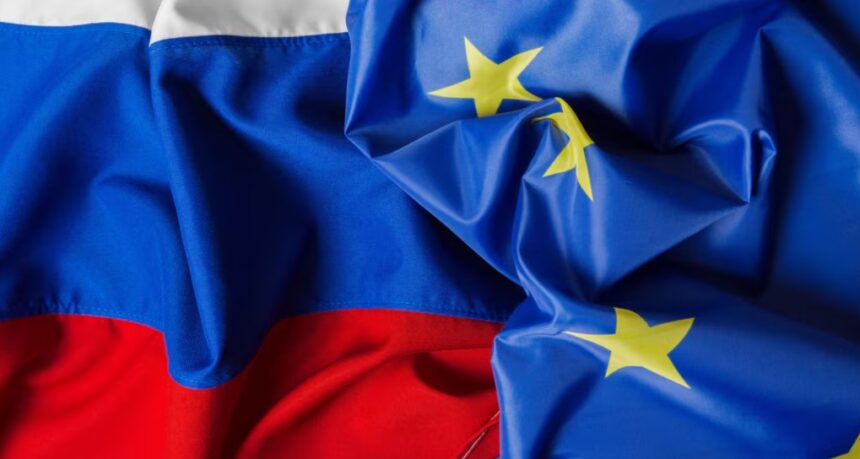
The European Union has issued a stern diplomatic rebuke to Bosnia and Herzegovina’s Serb-dominated entity, Republika Srpska (RS), explicitly demanding that its leadership distance itself from Moscow.
The European Commission made it clear that relations with Russia cannot proceed under a “business-as-usual” model while Vladimir Putin’s regime continues its aggressive war against Ukraine. The warning comes in response to reports that the RS Ministry of Internal Affairs has extended its formal security cooperation with sanctioned Russian state entities.
Constitutionality and the Moscow Memorandum
The friction peaked following a June 23, 2026 trip to Moscow by Željko Budimir, the RS Minister of Internal Affairs. While there, Budimir signed a fresh memorandum of cooperation with Oleg Baranov, the Chief of the Main Directorate of the Ministry of Internal Affairs of the Russian Federation for the City of Moscow. Baranov is currently blacklisted under European Union sanctions.
                     ┌── Signee: Oleg Baranov (Sanctioned by the European Union)
THE RS-MOSCOW PACT  ─┼── Operational Focus: Intelligence sharing, joint tactical training, counter-terrorism
                     └── Status: Terms kept hidden; RS Ministry refuses to publish the full text
Responding to inquiries from Radio Free Europe, the European Commission clarified the legal boundaries governing Bosnia’s administrative tiers:
“Foreign policy in Bosnia and Herzegovina is the exclusive competence of the state level. While entities have the right to develop international cooperation in areas of their domestic responsibility, they are constitutionally obligated to adhere fully to the Constitution of Bosnia and Herzegovina and the decisions of state institutions.” — Official Statement from the European Commission
Escalating Sanctions Resistance and Regional Risk
While the RS Ministry of Internal Affairs downplayed the agreement as a routine continuation of a decade-old technical training partnership, international bodies view the alignment as a major security threat.
The political divide within Bosnia continues to bottleneck the country’s strategic foreign policy:
- The European Parliament Resolution (June 17, 2026): Formally condemned the RS authorities for maintaining backchannels with blacklisted Russian officials, noting that these relationships directly jeopardize the stability and security of Bosnia and Herzegovina.
- The Sanctions Bottleneck: Although Bosnia and Herzegovina has officially signed onto EU sanctions packages against Moscow, implementation remains totally frozen on the ground due to political obstruction from RS politicians, led by RS President Milorad Dodik and his ruling Alliance of Independent Social Democrats (SNSD).
Brussels’ latest message serves as a blunt reminder that Republika Srpska’s ongoing diplomatic and security overtures toward Moscow run directly counter to Bosnia’s stated path toward European integration.