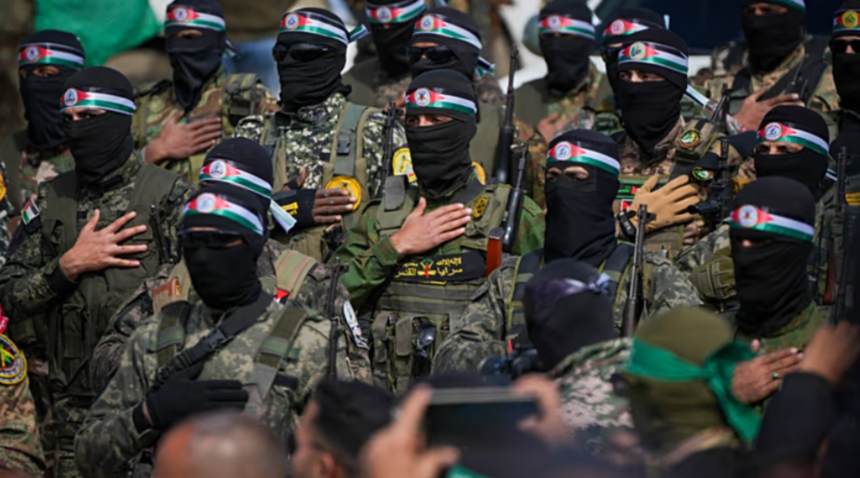
The Palestinian movement Hamas has announced the dissolution of the body that has governed the Gaza Strip for nearly two decades, signaling a major political shift and clearing the way for a technocratic committee to take over civilian administration.
According to the announcement, the decision follows the resignation of the head of the emergency governing committee, Mohammed al-Farra, and the dissolution of the existing governing structure to facilitate the transition to the National Committee for the Administration of Gaza (NCAG), which is expected to assume administrative responsibilities in the territory.
Hamas spokesperson Ismail al-Thawabta said that “the head of the emergency committee has officially submitted his resignation, and the committee has been dissolved to enable the administrative transition.”
Another Hamas spokesperson, Hazem Qassem, described the move as “a new step,” saying the group is withdrawing from the day-to-day administration of Gaza in an effort to facilitate the political and administrative process.
According to a Hamas official, the decision was also discussed with other Palestinian factions during a meeting in Cairo, where participants welcomed it as a serious step toward a political transition.
The new committee, headed by Palestinian technocrat Ali Shaath, is expected to operate from outside Gaza for the time being due to Israeli objections to its entry into the territory.
The development comes within the framework of the ceasefire agreement between Hamas and Israel. While the first phase of the agreement included the exchange of hostages and Palestinian prisoners, progress toward the second phase—which envisions the disarmament of Hamas and the gradual withdrawal of Israeli forces—has remained stalled.
Israel continues to oppose Hamas returning to power while also rejecting direct administration of Gaza by the Palestinian Authority at this stage, leaving the territory’s political future uncertain.