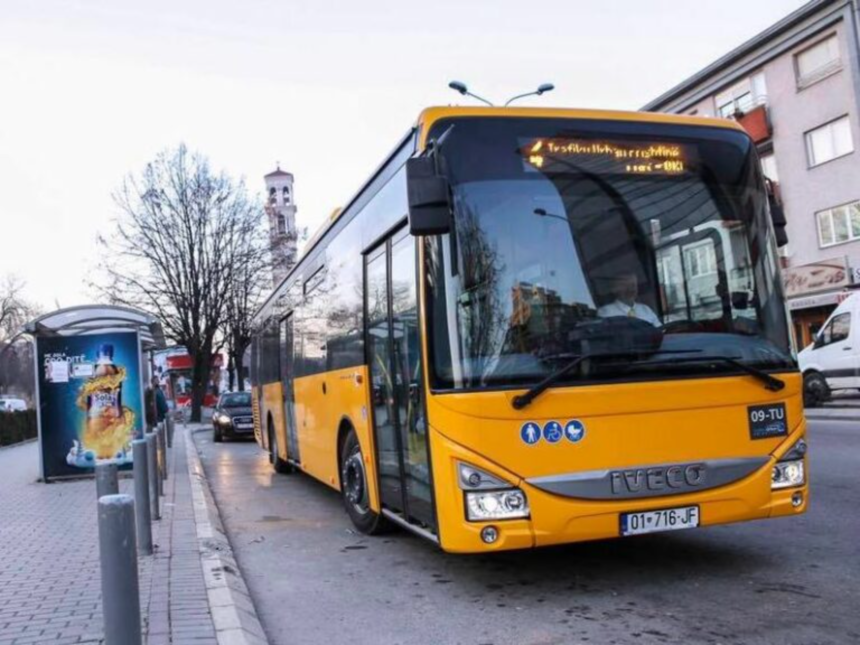
Vetëvendosje (VV) assembly members in the Pristina Municipal Assembly have announced that they have filed a lawsuit with the Supreme Court against the decision of the Mayor of Pristina, Përparim Rama, to increase public transport ticket prices.
Through the lawsuit, the group of assembly members is requesting the annulment of the decision and the immediate suspension of its implementation until the Court issues a final ruling.
The lawsuit argues that the Mayor of Pristina does not have the legal authority to determine public transport ticket prices, claiming that this competence belongs to the Municipal Assembly.
The complaint also alleges that the decision creates discriminatory treatment by setting different prices for the same public service depending on the payment method, without objective and proportionate justification.
According to the VV assembly members, the decision was adopted in violation of the principle of legality, failing to respect procedures and standards required by the applicable legislation, and lacking the legally required justification.
The Supreme Court has been asked to rule on the legality of the decision and suspend its implementation until the judicial proceedings are concluded.
In their statement, the VV assembly group said:
“NO ONE IS ABOVE THE LAW. NOT EVEN THE MAYOR OF PRISTINA.”
The Vetëvendosje Assembly Group in the Pristina Municipal Assembly has filed a lawsuit at the Supreme Court against the Mayor’s decision to increase public transport ticket prices.
Through this lawsuit, we are requesting the annulment of the decision and the immediate suspension of its implementation until the Court reaches a final decision.
Our lawsuit is based on several fundamental claims:
- The Mayor of Pristina does not have the legal authority to set public transport ticket prices. According to the law, this competence belongs to the Municipal Assembly.
- The decision creates discriminatory treatment, establishing different prices for the same public service solely based on the method of payment, without objective and proportional justification.
- The decision was adopted in violation of the principle of legality, failing to follow the procedures and standards required by current legislation. The decision also lacks the mandatory legal reasoning.
“In a state governed by the rule of law, no one is above the law, and no public authority can impose a financial burden on citizens by bypassing legal procedures.
Now it is up to the Supreme Court to protect legality and the public interest.”