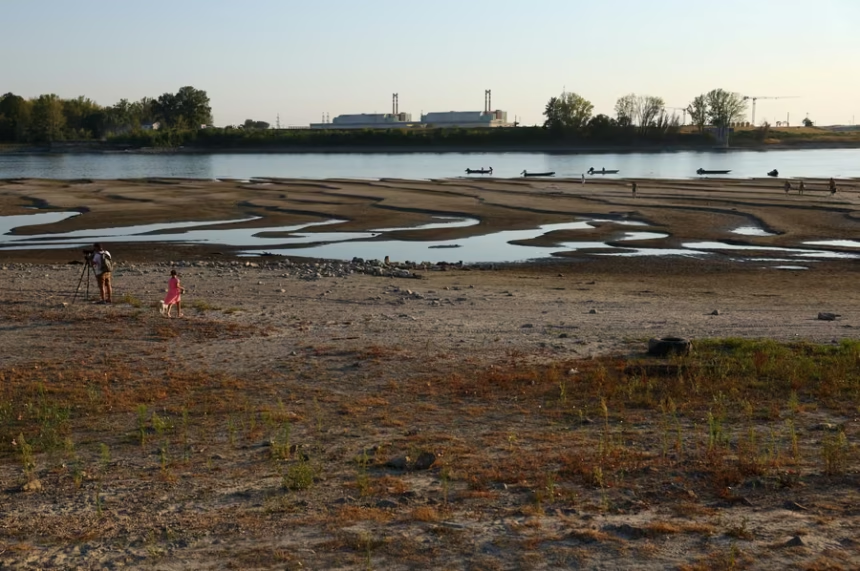
Hungary’s Paks nuclear power plant came within millimetres of a complete shutdown overnight after the Danube fell to critically low levels, Prime Minister Péter Magyar said on Tuesday.
Magyar said the water level around 1:30 a.m. was only a few millimetres above the threshold that would have required the country’s only nuclear power plant to shut down completely. The level subsequently stabilized and rose by around 1.5 centimetres by morning, allowing the plant’s final operating turbine to continue running safely.
“Last night we were just a few millimetres away from having to completely shut down the Paks plant, but then the water level stopped falling and had risen by 1.5 centimetres by morning,” Magyar said in a social media post, according to reports cited by The Guardian.
The plant has been operating at only slightly more than 10 percent of its normal capacity after exceptionally low Danube levels made it difficult to secure sufficient cooling water.
Hungarian authorities had previously warned that the remaining operating reactor units at Paks, located south of Budapest, could have to be shut down if the river fell further. A complete shutdown would be unprecedented in the plant’s 44-year history.
Energy Minister István Kapitány said authorities had introduced a series of energy-saving measures to reduce demand and maintain the stability and safety of the electricity grid.
Several companies have also adjusted their operations to reduce electricity consumption during peak periods. According to Hungarian media, supermarket chain Lidl changed the timing of its bakery operations and switched off beverage refrigerators, while electric vehicle chargers at parking facilities were restricted to use before 5 p.m.
The situation has been compounded by extreme summer temperatures, with parts of Hungary and neighboring Romania expected to experience temperatures approaching or exceeding 40 degrees Celsius.
In Romania, authorities have also been dealing with unusually low Danube levels near the Cernavodă nuclear power plant. A controlled explosion was carried out to alter the river’s flow and increase the amount of water reaching the facility for cooling.
Romanian officials said the intervention had raised the local water level by around two centimetres. Additional measures were reportedly planned, including the sinking of old barges to further redirect the river’s flow.
The developments at Paks and Cernavodă highlight the vulnerability of river-cooled nuclear facilities to extreme drought and record-low water levels, particularly as increasingly intense heatwaves put additional pressure on electricity systems across Central and Southeastern Europe.