Kosovo could face a significant constitutional and institutional dilemma if the Assembly fails to elect a new president before the six-month limit on the acting presidency expires on October 4.
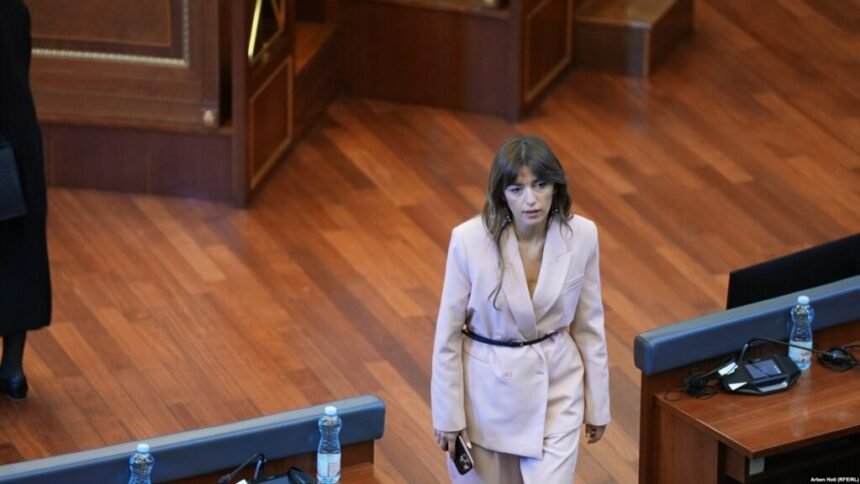
Assembly Speaker Albulena Haxhiu has been serving as acting president since April 4, when President Vjosa Osmani completed her five-year mandate. The Constitution stipulates that the office of acting president cannot be held for more than six months.
Haxhiu was re-elected as Speaker of the Assembly on September 9. The Presidency has maintained that she would continue serving as acting president until a new head of state is elected.
However, legal researcher Melos Kolshi of the Kosovo Law Institute (KLI) said the six-month period must be calculated from the end of the elected president’s mandate and the beginning of the acting presidency.
“The Constitution of the Republic of Kosovo and the jurisprudence of the Constitutional Court are clear regarding the duration of the acting presidency: it can last a maximum of six months,” Kolshi said.
According to Kolshi, once that period expires, continuing to exercise the functions of acting president would no longer have an explicit constitutional basis.
The Constitution itself states that the position of acting president may not be held for longer than six months.
What happens after six months?
Kolshi said the Constitution does not expressly establish what should happen if the Assembly has still failed to elect a new president once the six-month period ends.
“The problem is that the Constitution has not expressly provided what happens if, after the expiration of these six months, the Assembly has still not elected a new president,” he said, adding that existing Constitutional Court jurisprudence does not provide a direct solution to such a scenario.
The issue has also been raised by other constitutional and legal experts. In September, former Constitutional Court president Enver Hasani argued that Kosovo had already entered a serious constitutional dispute concerning the exercise of the acting presidency. His interpretation, however, differs from the position presented by other legal experts and institutions.
KLI has separately warned that the constitutional basis for Haxhiu’s role could become disputed and that decisions taken by her as acting president could potentially be challenged before the Constitutional Court.
Who would exercise the presidency?
Kolshi said the constitutional authority to serve as acting president is linked to the office of the Speaker of the Assembly, rather than permanently to the individual who previously held that position.
“In the moment when the Assembly is constituted and elects a new Speaker, it is the new Speaker of the Assembly who, according to the Constitution, should exercise the duties of president,” he said.
This interpretation is based on Article 90 of the Constitution, which assigns the acting presidency to the Speaker of the Assembly in the circumstances specified by the Constitution.
The six-month deadline is particularly significant because the Assembly’s presidential election timetable has itself been the subject of constitutional debate. Legal analyst Eugen Cakolli previously calculated that, following the Assembly’s constitution on August 6, the 60-day period for electing the president would run until October 5. He noted that this would come immediately after the six-month limit on the acting presidency.
If no president is elected within the applicable constitutional deadlines, Kosovo could therefore face an unprecedented institutional situation in which questions arise not only over who represents the state as head of state, but also over the exercise of powers constitutionally assigned to the president.
Kolshi described such a scenario as an exceptional constitutional and institutional complication, noting that the issue would extend beyond the identity of the acting head of state to the exercise of presidential powers.
The Constitution does not provide an explicit, comprehensive mechanism for resolving every aspect of such a situation, leaving the precise institutional consequences subject to constitutional interpretation and, potentially, review by the Constitutional Court.