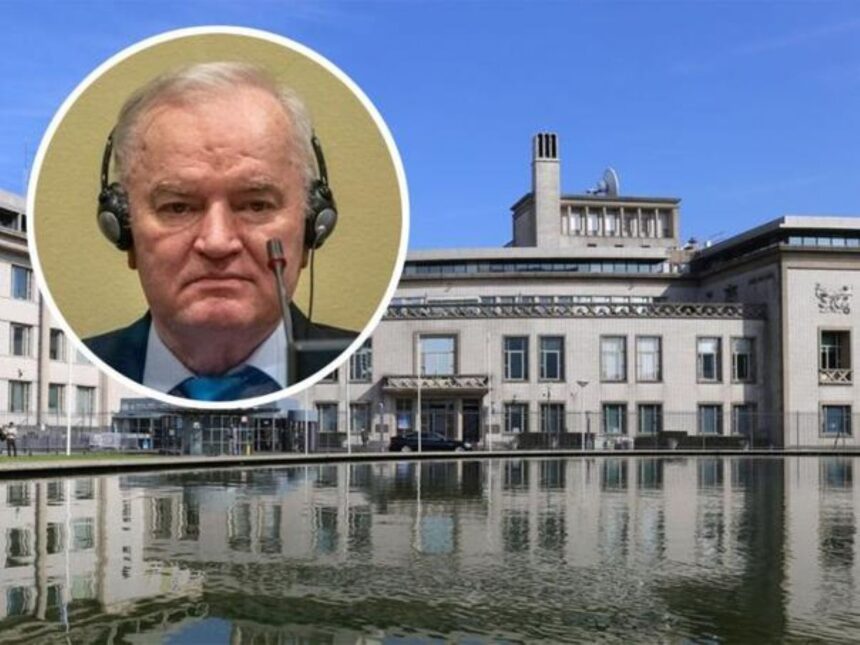
The European Parliament is set to debate today the funeral of convicted Bosnian Serb war criminal Ratko Mladić and the glorification of war crimes in Serbia, with lawmakers expected to discuss and subsequently vote on a resolution addressing the issue.
The debate is scheduled to begin at 2:15 p.m. in Strasbourg during the European Parliament’s plenary session.
Mladić, the former commander of the Army of Republika Srpska, was buried in Belgrade on September 7 in a ceremony featuring state and military honors. The decision to honor him in such a manner has drawn strong criticism from European Union officials and lawmakers.
European Commission President Ursula von der Leyen and European Council President António Costa have condemned what they described as the glorification of Mladić and the circumstances surrounding his burial.
EU Enlargement Commissioner Marta Kos also canceled a planned visit to Belgrade, raising questions about whether Serbia remains a suitable candidate for EU membership amid concerns over its approach to the legacy of the 1990s wars.
Tonino Picula, the Croatian member of the European Parliament serving as the institution’s rapporteur for Serbia, has likewise called for the EU to reconsider the continuation of accession negotiations with Belgrade over the treatment of Mladić’s legacy.
The debate comes amid broader scrutiny of Serbia’s commitment to European values, including accountability for war crimes and the rejection of their glorification.
Mladić was sentenced to life imprisonment by the International Criminal Tribunal for the former Yugoslavia after being convicted of genocide in Srebrenica, crimes against humanity, terrorizing civilians during the siege of Sarajevo and taking UN peacekeepers hostage.
He died on August 27 at the age of 85 in the detention hospital in The Hague.
The European Parliament’s expected resolution could add further political pressure on Belgrade as Serbia continues its EU accession process and faces demands for greater alignment with European standards on the rule of law, reconciliation and accountability for wartime crimes.