
Following the verdict by the Kosovo Specialist Chambers in The Hague against former Kosovo President Hashim Thaçi and KLA commanders for war crimes, questions have arisen over what message the court has sent to Kosovo, Serbia, and the Western Balkans, and whether the decision represents a new setback for peace in the region.
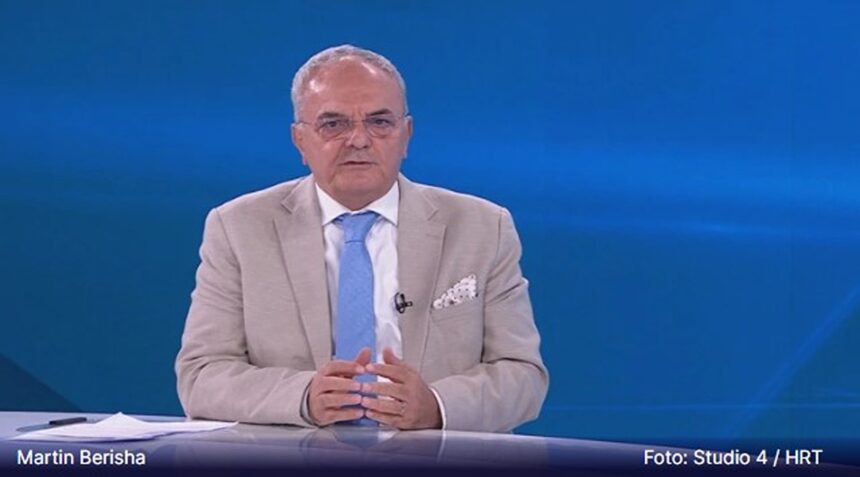
Martin Berishaj, Kosovo’s ambassador to Croatia, said in an interview with Croatian television HRT that the sentences were draconian. He also expressed doubts about the credibility of some of the evidence on which the verdict was based.
Ambassador Berishaj stressed that the International Criminal Tribunal for the former Yugoslavia (ICTY) should be distinguished from the Kosovo Specialist Chambers based in The Hague.
“The two have nothing in common. The Kosovo Specialist Chambers, based in The Hague, was established by the Kosovo Assembly with a three-quarters majority,” Berishaj said.
He also emphasized that this is a first-instance decision that is not yet final.
Speaking about reactions to the verdict, Berishaj said there is significant outrage in Kosovo.
“We should not underestimate the emotions that have emerged among citizens,” he said.
Berishaj rejected claims that the KLA was a criminalized structure and emphasized that the proceedings concerned individual, rather than collective, responsibility.
He also stressed that, in his view, the people of Kosovo have not forgotten the crimes committed during the war and the fate of the Albanians who were killed, whose bodies were transported to Serbia in an attempt to conceal the crimes.
“The Kosovo Liberation Army did not fight outside Kosovo. It defended its homes, its lives, and the lives of its families,” he said.
Berishaj believes that the verdict will not serve Serbian President Aleksandar Vučić’s political interests in the long term, although, he said, Vučić may use it during the election campaign.
“It is an attempt to relativize guilt or division. The wind that is now at the back of Serbian politics ahead of the elections will calm down very quickly,” Berishaj said, reiterating that this is a first-instance decision, not a final one.
He added that Kosovo will continue serious dialogue with its allies, primarily the United States, and will not allow the verdict to be used to strengthen such a policy in the long term.
Berishaj rejected the claim that the verdict calls into question the legitimacy of Kosovo’s independence.
“Factually and legally, this theory does not stand. Kosovo declared independence in 2008, and the International Court of Justice concluded that Kosovo’s declaration of independence was not in violation of international law,” Berishaj said.