The Ministry of Labour, Family and Values of the Liberation War has held the first meeting of the National Council for Occupational Safety and Health, focusing on strengthening measures to protect workers, prevent workplace accidents and increase the capacity of responsible institutions.
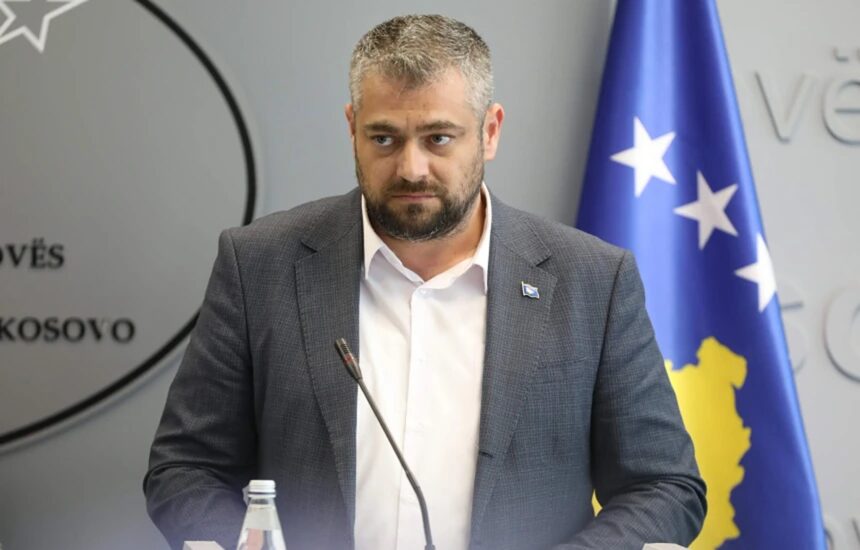
Minister of Labour Andin Hoti said workers’ safety and health must remain a guiding principle in institutional decision-making, stressing that economic interests and deadlines should not take precedence over people’s lives.
Hoti said emergency measures had been introduced in April to intensify inspections, particularly at high-risk workplaces. According to him, more than 290 work-stoppage measures were imposed due to identified violations during 8,608 inspections carried out over a seven-month period.
He also highlighted the digitalization of inspections, saying the Central Labour Inspectorate has now moved to a fully digital inspection system. The ministry has also approved the use of drones as a supporting tool for monitoring construction sites and other high-risk locations, with the aim of improving documentation, transparency and the speed of response to violations.
The ministry is also finalizing procedures to recruit 39 new labour inspectors. Hoti said the additional staff would strengthen the inspectorate’s ability to conduct broader and more effective field supervision.
A nationwide awareness campaign on occupational safety and health is also being prepared. The campaign will focus on informing employers about their legal obligations and workers about their rights and how to report abuses.
Hoti acknowledged the work of the Central Labour Inspectorate and its inspectors, while noting that workplace accidents, including fatal incidents, continue to occur despite the measures taken. He said each case should be carefully analyzed to establish responsibility and identify measures to prevent similar incidents from happening again.
Speaking about the National Council for Occupational Safety and Health, Hoti said its establishment represents an important step toward cooperation among public institutions, employers, workers’ representatives and experts. The council was established by the Kosovo Government under Article 4 of the Law on Safety and Health at Work, with a mandate to contribute to policy development and continuously monitor conditions in the field.
Hoti called on council members to produce concrete recommendations for improving working conditions, preventing accidents and addressing occupational diseases, with clear deadlines, responsibilities and mechanisms for monitoring implementation.
“Safety must be taken into account in every decision and at every stage of our work,” Hoti said.