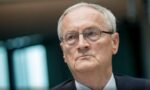
Croatian historian Hrvoje Klasić has warned of the potential for heightened political tensions in Serbia following the country’s October 25 parliamentary elections, saying he would not want to see a scenario in which Aleksandar Vučić declares victory and the aftermath is marked by political reprisals.
Speaking to N1 Zagreb, Klasić described Serbia as having faced prolonged political instability and said a potential victory by the student-backed electoral list could represent a “starting point” for broader political change.
Serbia’s parliamentary elections are scheduled for October 25. The electoral authorities have so far approved multiple lists, including the “Aleksandar Vučić – United Serbia” list led by the Serbian Progressive Party and the “Students’ List – Students Are Winning,” backed by the student movement.
Klasić said the electoral threshold is 3 percent and discussed the prospects of several political lists crossing it. He also raised concerns about voting by the Serbian diaspora and the broader electoral environment.
“Already, we are witnessing irregularities involving the diaspora, where around 20,000 people could be left without voting rights,” Klasić said, while also criticizing the way voting times are expected to be determined for citizens living abroad.
He said the election campaign was being closely followed through the media and described the political messaging as highly polarized.
“Someone studying propaganda, marketing or public relations should follow what is happening in Serbia,” Klasić said, arguing that the media environment deserved closer scrutiny.
The historian also addressed the student movement, which has entered the parliamentary election race. The student-backed list officially submitted its electoral list in September, entering the contest alongside the ruling SNS-backed list and other parties.
Klasić said the movement brings together people with different political backgrounds and argued that Serbia’s political and social environment has shaped the younger generation involved in the protests.
He also rejected the characterization that the Serbian student movement as a whole is aligned with the Chetnik movement, while acknowledging that individuals who support such views may be present within the broader political environment.
Klasić: Student victory could mark a “starting point”
Klasić said a potential victory by the student-backed movement could represent a “starting point” for changes in Serbia, although he cautioned that major political and social changes would take considerable time.
He argued that Serbia currently remains distant from what he described as European democratic standards and said the country would face continued challenges involving democracy, human rights, media freedoms and corruption.
At the same time, he warned against assuming what would happen after the election and said he did not want to see a scenario in which the election night was followed by a declaration of victory by Vučić and subsequent reprisals.
“I would not want Serbia to spend that night in such a way that Vučić declares victory and then we witness reprisals,” Klasić said.
Vučić has previously said he would accept the election results regardless of the outcome and congratulate his opponents if they win.
Klasić also comments on regional politics
In the interview, Klasić also discussed the political situation in Bosnia and Herzegovina and the debate surrounding director Lordan Zafranović’s film Children of Kozara.
On Bosnia and Herzegovina, he commented on the country’s elections and the use of new electoral technologies, while also offering his assessment of the political position of the Serb community.
Regarding Zafranović’s film, Klasić argued that historical subjects such as the Jasenovac concentration camp should continue to be addressed through film and public discussion, while saying that debates over the film’s financing should also consider why similar projects were not receiving comparable support in Croatia.