The German Embassy in Pristina told Radio Free Europe on Wednesday that it is “deeply concerned” about the amendments adopted by the Kosovo Assembly a day earlier to the Law on the Specialist Chambers of Kosovo in The Hague.
Kosovo lawmakers amended the law in a vote shortly before midnight on Tuesday, seeking to limit the powers of the Hague-based court.
In a response to Radio Free Europe, German Embassy spokesperson Catalina Heine said that the Kosovo Specialist Chambers are an independent judicial institution and that their independence must not be undermined.
“The Kosovo Specialist Chambers are an independent judicial institution, established under Kosovo law and based on the Constitution of Kosovo. Their purpose is to ensure accountability and justice for victims from all communities in Kosovo. To fulfill this purpose, their independence must be fully respected,” the embassy said.
The German Embassy also said it supports the European Union’s position opposing the amendments to the law.
Earlier, the EU said the amendments run counter to Kosovo’s international obligations toward the bloc.
“We call on Kosovo to uphold its international obligations to guarantee the judicial independence of the Kosovo Specialist Chambers, as well as its commitment to ensuring accountability and delivering justice to victims and their families from all communities in Kosovo,” EU spokesperson Christian Wiegand told Radio Free Europe.
Radio Free Europe contacted the Government of Kosovo for comment on the concerns raised by international partners, but had not received a response at the time of publication.
Përparim Gruda, an official of the main opposition party that initiated the amendments, the Democratic Party of Kosovo (PDK), insisted that Kosovo “is not violating” its international obligations.
The approved amendments narrow the Specialist Chambers’ jurisdiction in terms of offenses, time period and territory, limit sentences to 15 years and provide for the transfer of cases or sentences to Kosovo.
The amendments come after the court sentenced four former Kosovo Liberation Army leaders—Hashim Thaçi, Kadri Veseli, Jakup Krasniqi and Rexhep Selimi—to a combined 81 years in prison on September 16 for war crimes committed during the Kosovo war.
All four have denied the charges and said they will appeal the verdicts.
The legal basis for establishing the Specialist Chambers was the 2014 exchange of letters between then-Kosovo President Atifete Jahjaga and then-EU High Representative Catherine Ashton.
Among Kosovo’s commitments at the time was to consult with the EU on any initiative to amend laws affecting the court’s mandate or judicial proceedings arising from investigations by the Special Investigative Task Force (SITF).
Kosovo also committed to ensuring the continued work of the Specialist Chambers and the Specialist Prosecutor’s Office until the completion of the relevant investigations and proceedings.
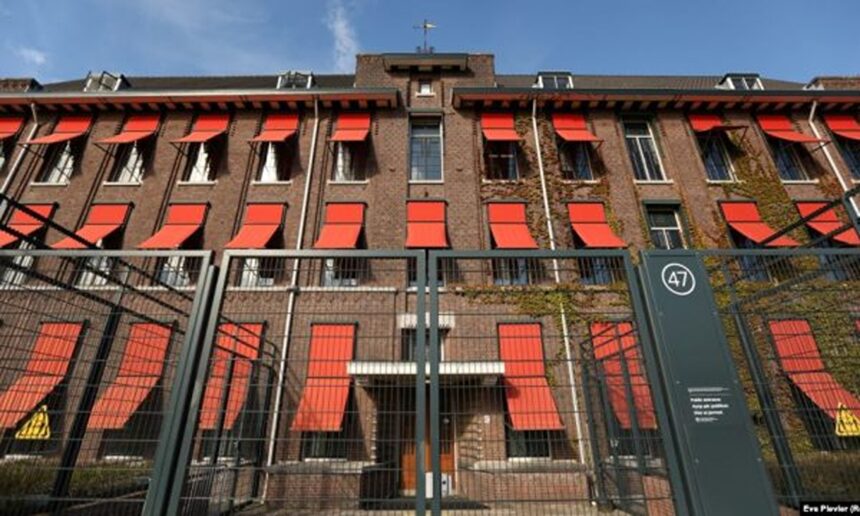
The Chambers are based in The Hague and consist of international judges and prosecutors, although they are part of Kosovo’s judicial system.
The European Union is their main financial supporter, providing nearly €400 million since their establishment.