The European Commission is proposing earlier access to EU markets for candidate countries, new voting rules to limit veto powers, and safeguards designed to prepare the Union for future enlargement.
The European Commission wants to give new momentum to the enlargement process, in which some candidate countries have been waiting for decades to join the EU.
Albania, Montenegro, Moldova and Ukraine are currently among the countries making the most progress toward EU membership. European officials have expressed hope that Montenegro could become an EU member as early as 2028.
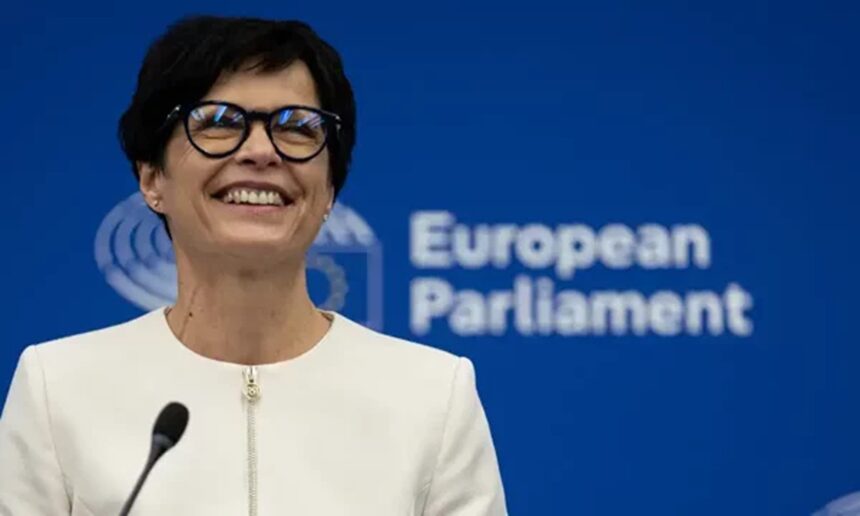
“A larger Union is a long-term investment in Europe’s peace, security and prosperity,” Enlargement Commissioner Marta Kos told reporters in Strasbourg on October 6, 2026.
One of the key questions is how the EU can admit more countries in the near future without making the Union more difficult to govern or risking democratic backsliding in new member states.
The Commission’s answer is for candidate countries to continue meeting EU standards while the EU itself reforms by removing obstacles in the accession process and protecting its democratic values.
Less Unanimity, More Qualified Majority Voting
One of the main obstacles in accession negotiations so far has been the requirement for unanimous decisions by all 27 member states. In the past, individual countries have blocked the progress of candidate countries because of bilateral disputes.
One prominent example is the delays caused by Hungary in Ukraine’s negotiating process.
Now, and not for the first time, the Commission is recommending that member states move away from unanimity for decisions such as opening negotiating clusters and replace it with qualified majority voting.
The Unanimity Dilemma
“Every negotiating cluster that is opened is subject to three separate decisions, and each decision requires unanimity. This is incredible, and I think it clearly needs to change,” a Commission official, who wished to remain anonymous, said.
The problem is that moving to qualified majority voting would itself require a unanimous decision.
“I have reservations about whether the member states would unanimously agree to this change,” said Tinatin Akhvlediani, head of the enlargement programme at the Centre for European Policy Studies (CEPS), recalling previous unsuccessful attempts to change voting rules.
Gradual Access to the Benefits of Membership
To encourage reforms in candidate countries, the Commission is proposing gradual integration. This would allow candidate countries to benefit from some advantages of membership before becoming full members, provided they meet EU criteria.
“Gradual integration is not a substitute for full membership. It is the accelerator of enlargement,” Marta Kos said, stressing that the process would remain merit-based.
According to Nina Vujanovic, a researcher at the Brussels-based Bruegel think tank, this could have a motivating effect on candidate countries.
“Reforms are important, but it is equally important that this process is rewarded in some way earlier, before membership,” she said.
Earlier access to EU benefits is not entirely new. Montenegro, for example, already participates in the Single Euro Payments Area (SEPA), despite not yet being an EU member.
Addressing Geopolitical Realities
The Commission now wants to make this approach more systematic and link it to strategic alignment.
“This will not be available to candidate countries if they are not clearly oriented toward the EU,” a Commission official said.
The condition of strategic alignment is a new element and reflects the EU’s efforts to adapt to the geopolitical tensions facing both member and candidate countries.
Choosing Between Russia and the EU
“The EU is trying to keep candidate countries away from Russian influence,” said Heather Grabbe, a senior fellow at Bruegel. “The requirement for strategic alignment is aimed particularly at politicians such as Aleksandar Vučić in Serbia, who has clearly promoted Russian interests,” she added.
The new procedures would require alignment not only with the EU’s foreign and security policy, but also with its economic security standards.
“Trading gas with Russia is simply not something that builds trust with the European Union,” Nina Vujanovic said.
Lessons the EU Learned From Hungary and Poland
To prevent violations of democratic rules by new members, the Commission is proposing a 15-year period during which it would be easier to sanction new member states by restricting financial funds or voting rights.
In an interview with The Guardian and other European media, Marta Kos made clear that the EU had drawn lessons from democratic backsliding observed in countries such as Poland and Hungary.
“No more Viktor Orbán. We need faster mechanisms than just Article 7,” she said.
Double Standard or Necessary Safeguard?
Critics argue that this safeguard would create unequal conditions within the Union.
“It is fundamentally unfair,” Heather Grabbe said. “Why should Montenegro in the 2040s face different conditions from, for example, Slovenia?”
However, many current candidate countries have fragile records when it comes to democratic norms.
“They are, in fact, fragile democracies. Therefore, this approach toward them can be justified,” Tinatin Akhvlediani said.
Experts say that although it would be desirable for similar rules to apply to all member states, this is not realistically achievable because it would require unanimous approval.
As Heather Grabbe put it: “It is very difficult to persuade turkeys to vote for Christmas.”
Although the Commission’s initiative on new enlargement rules is likely to advance the debate, it will ultimately be up to the member states to decide how many of the proposals become reality.
The European Council, comprising the heads of state or government of the 27 member states, the President of the European Council and the President of the European Commission, is expected to discuss the proposals at its next meeting on October 15–16.
The outcome of those discussions will determine how quickly the Commission’s new enlargement agenda can move forward.