The Mayor of Presheva, Ardita Sinani, announced that Serbian authorities had refused entry to three members of the Kosovo Assembly—Arbërie Nagavci, Fatmire Mullhaxha, and Liza Gashi—who were travelling to visit her and offer their condolences.
The three MPs were accompanied by Kosovo Ambassador to Serbia Jetish Jashari and Ragmi Mustafi, an adviser to Prime Minister Albin Kurti. However, they were not permitted to enter Serbia.
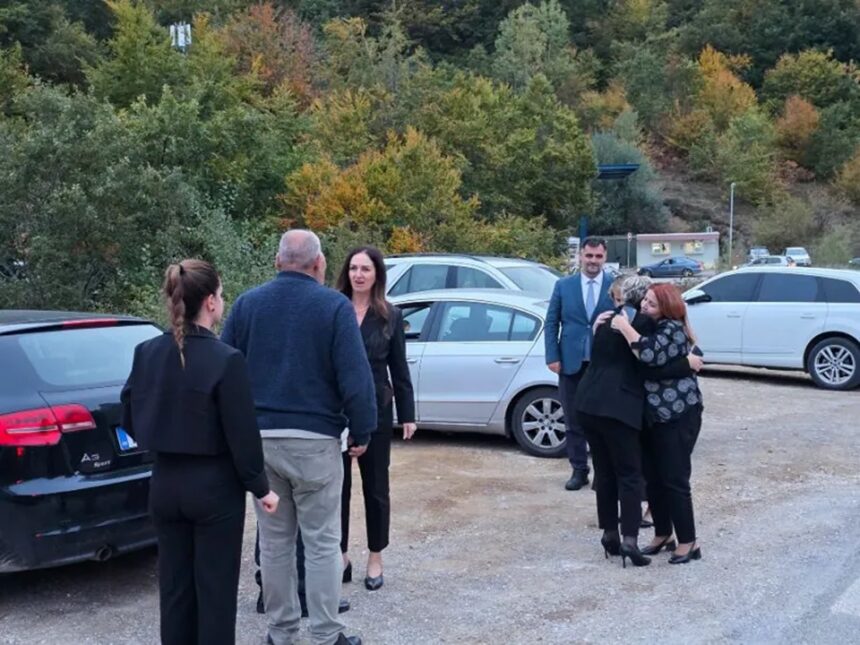
Sinani said that, faced with this situation, she travelled to the Kosovo side of the border, where she met the delegation.
She stated that Serbia was demonstrating its discriminatory policies even in cases of bereavement.
Ardita Sinani’s full statement:
“Even when it comes to human relations, the Serbian authorities seem to take satisfaction in refusing permission to visit the Presheva Valley simply because officials of the Republic of Kosovo are involved.
Following the death of my father, a delegation from the Republic of Kosovo, consisting of Members of Parliament Arbërie Nagavci, Fatmire Mullhaxha Kollçaku, and Liza Gashi, had planned to visit my parents’ home in Presheva to offer me their condolences.
In accordance with protocol, the MPs were accompanied by the Ambassador of the Republic of Kosovo to Belgrade, His Excellency Jetish Jashari, who had also expressed his wish to join the MPs in visiting me to offer his condolences.
The delegation also included Ragmi Mustafi, Prime Minister Kurti’s adviser on Presheva, Medvegjë, and Bujanoc, who on this occasion was conveying the Prime Minister of the Republic of Kosovo, Albin Kurti’s, personal condolences to me and my family following the loss of my father.
Although they had not planned an official visit to Presheva, and their visit was purely personal—indeed, motivated by compassion and the desire to uphold our longstanding tradition of offering condolences to those who have lost loved ones—Serbia shamelessly chose to politicise even this occasion.
After being held for several hours at the border crossing with Kosovo in Depcë, the delegation from the Republic of Kosovo was informed by the border authorities that they would not be allowed to visit Presheva.
Left with no alternative under these circumstances, I travelled with my brothers and family members to meet them at the Depcë border crossing, on the territory of the Republic of Kosovo. I was deeply moved by the MPs’ and the Ambassador’s intention to stand by me in my grief following my father’s death.
Even under these inhumane circumstances, and deeply distressed by what had happened, I was honoured to receive, together with my family, the heartfelt condolences conveyed by MPs Nagavci, Mullhaxha Kollçaku, and Gashi. They also conveyed the condolences of the Speaker of the Assembly of the Republic of Kosovo, my friend, Ms Albulena Haxhiu.
This is an incident that will be remembered for all the wrong reasons, as Serbia once again reveals its discriminatory policies in every sphere of life, even in times of bereavement, when visits are intended solely to share in someone’s grief.
Nevertheless, as in every other instance, I hope more than ever today that Serbia has received a clear message: even under the most difficult circumstances, it will not succeed in severing either our political coordination or, even less so, our spiritual bonds.
Once again, on behalf of myself and my family, I extend my heartfelt gratitude to the MPs and Ambassador Jashari for setting aside time from their demanding schedules to stand by me in my grief. At the same time, I express my regret to them that, through no fault of mine or my family’s, we were prevented from welcoming them as they deserved and as guests have traditionally been received in Presheva.
Furthermore, having witnessed their determination to stand by me in any way possible, I assure them of my own willingness to stand by Kosovo in whatever way I can.”