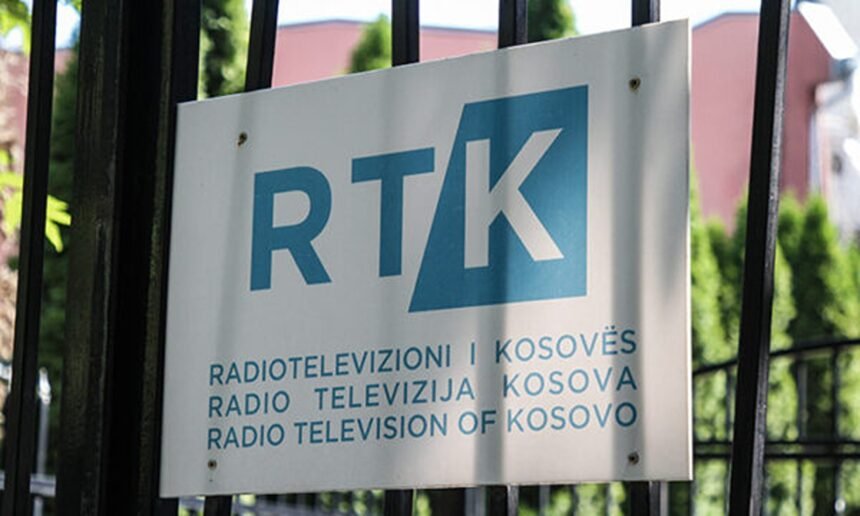
The European Union has called on Kosovo to accelerate reforms in employment, social protection, education, cybersecurity and cultural heritage, while emphasizing the need for a sustainable funding solution for the country’s public broadcaster, Radio Television of Kosovo (RTK), in line with EU legislation.
The issues were discussed at the eighth meeting of the Stabilisation and Association Agreement (SAA) Subcommittee on Innovation, Information Society and Social Policy, held in Brussels on October 8 between representatives of Kosovo and the European Commission.
Employment and Social Protection Reforms
In the area of employment, the European Commission urged Kosovo to finalize and adopt long-delayed legislation on employment, work-life balance, and occupational health and safety.
It also called for the completion of the Employment Agency’s restructuring and stronger institutional capacity to implement measures aimed at reducing unemployment and economic inactivity, particularly among working-age women.
The EU stressed the importance of providing adequate financial and human resources to the Labour Inspectorate and improving transparency in reporting workplace accidents. It welcomed the pilot implementation of the Youth Guarantee scheme and encouraged Kosovo to establish the conditions needed for its full rollout.
Regarding social protection, the Commission acknowledged progress in reforming social assistance schemes but stressed that further steps were necessary, including the adoption of legislation on social assistance and social benefits.
It also called for regular monitoring of social services and urged municipalities to prioritize their funding through a dedicated grant.
Digitalization and Cybersecurity
The EU encouraged Kosovo to continue implementing its 2023–2028 E-Government Strategy and Digital Agenda 2023, while expanding the range of services available to citizens and businesses through the eKosova platform.
The European Commission also called for sufficient resources to implement Kosovo’s National Cybersecurity Strategy and its action plan.
In addition, it stressed the need to align Kosovo’s legislation fully with relevant EU directives and regulations covering cybersecurity, electronic identification and electronic communications.
Sustainable Funding for Public Broadcasting
In the audiovisual policy sector, Kosovo and the European Commission agreed on the need to continue aligning national legislation with the Audiovisual Media Services Directive and the European Media Freedom Act.
The Commission also highlighted the importance of finding a sustainable funding mechanism for RTK, in accordance with EU legislation.
Education and Vocational Training
The EU welcomed progress in expanding access to early childhood education, developing vocational education and training, and adopting a new curriculum for children aged zero to six.
However, the Commission stressed that basic skills, science, technology, engineering, mathematics and digitalization should remain priorities in Kosovo’s education policies.
Kosovo’s authorities presented measures aimed at improving student performance in reading, mathematics and science following the country’s results in the Programme for International Student Assessment (PISA).
Both sides also emphasized the need to better align vocational education and training with labour market demands, revise curricula and training profiles, and reorganize the system’s funding arrangements.
Cultural Heritage, Research and Innovation
The European Commission called on Kosovo to adopt a Cultural Heritage Law and continue efforts to protect the country’s cultural heritage.
In research and innovation, the EU highlighted the need for increased investment and adequate funding, with the objective of raising budget allocations for the sector to approximately one percent of gross domestic product.
The Commission also encouraged Kosovo to continue work on finalizing its National Smart Specialisation Strategy.
Monitoring Kosovo’s European Integration
SAA subcommittee meetings serve to monitor Kosovo’s progress in implementing reforms linked to European integration and identify areas where the EU can provide support.
The recommendations agreed upon during these meetings provide a basis for further action by Kosovo’s institutions as the country continues its efforts to align legislation and policies with European standards.