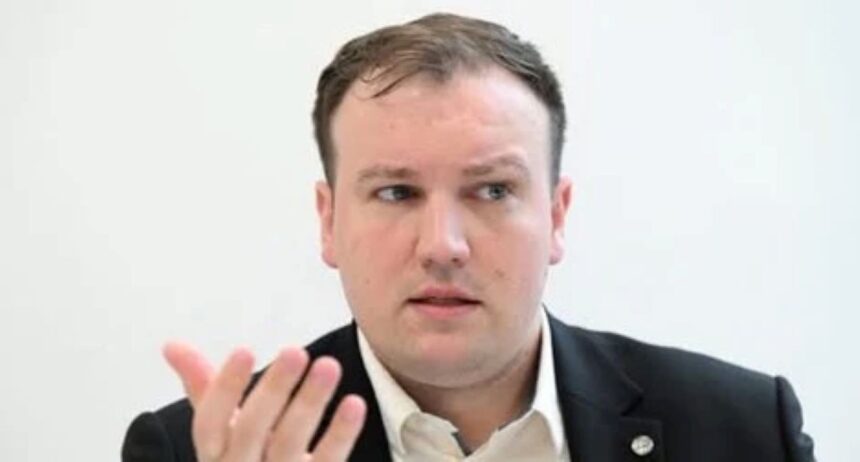
Russian blogger Mikhail Zvinchuk, founder of the Rybar Telegram channel, has returned to Russia via Serbia after being expelled from Montenegro alongside his wife, Valeria, and three associates, Radio Free Europe/Radio Liberty (RFE/RL) reported on Monday.
Upon arriving in Moscow from Belgrade, Zvinchuk told Russian media that Russian state institutions, including the Foreign Ministry and the country’s diplomatic network, had been involved in securing his release and return.
He also said that equipment confiscated during his detention in Montenegro had not yet been returned. The items reportedly included cameras and a drone, and the Russian embassy was assisting in efforts to resolve the matter.
Zvinchuk and his associates were detained on Friday, October 9, in the municipality of Kotor. Police reportedly seized various digital devices and recording equipment, including high-resolution equipment, a drone, cameras, a GoPro camera and several mobile phones.
Montenegrin police said the equipment would undergo forensic examination and analysis to establish its intended purpose and how it had been used in the country.
The decision to expel the group was made by Montenegrin police on national and internal security grounds.
According to RFE/RL, Zvinchuk had visited Bosnia and Herzegovina and Serbia in the days before his detention in Montenegro. Videos posted on his social media accounts reportedly show that he was in Serbia from September 27 and later appeared outside the National Assembly in Belgrade.
Rybar is a Russian media and information network founded by Zvinchuk in 2018. He previously worked in the press service of Russia’s Defence Ministry. During Russia’s war against Ukraine, Rybar became one of the most influential pro-Russian military channels on Telegram.
Zvinchuk has been under European Union sanctions since 2023 over his alleged support for Russia’s war against Ukraine and the dissemination of propaganda. The EU has also identified him as a member of a working group established by Russian President Vladimir Putin to coordinate mobilisation efforts related to the war.
The United States and the United Kingdom have linked Rybar to foreign influence and information-warfare operations. In 2024, the US State Department’s Rewards for Justice programme offered up to $10 million for information on individuals associated with the Rybar project, citing suspicions of involvement in foreign influence operations.