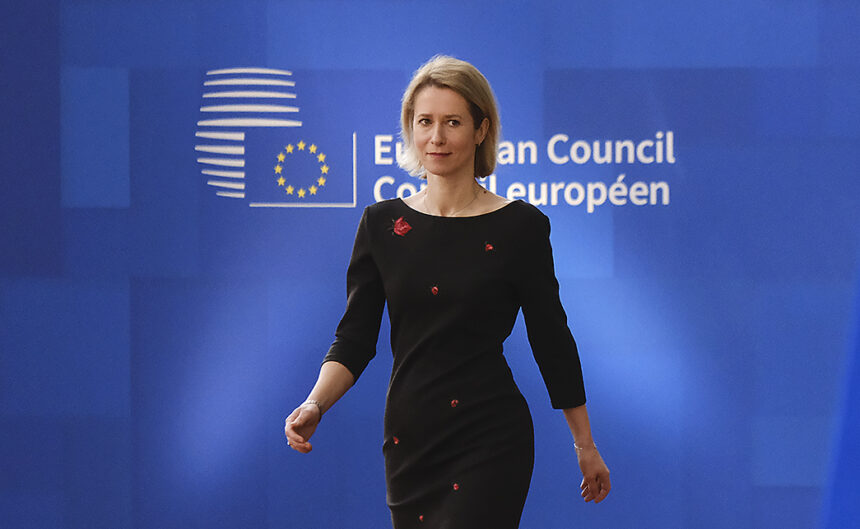
European Union foreign policy chief Kaja Kallas has warned that Russia will not succeed in forcing Ukraine to surrender through a deal with Washington, stressing that Europe will continue supporting Kyiv.
In an interview with Euronews, Kallas, the EU’s High Representative for Foreign Affairs and Security Policy, said Moscow had miscalculated since last year’s summit in Anchorage by attempting to pressure Ukraine into submission through negotiations with the United States.
“The Russians want to discuss and negotiate with the United States so that the US gives them what they are asking for. But we have our own demands of Russia,” Kallas said.
“The message is that you need to talk to the Europeans,” she added.
Asked about an oil and diesel arrangement and a proposed “energy ceasefire” announced by US President Donald Trump, under which Russia would reportedly supply 300,000 tonnes of oil to the United States and global markets, Kallas described the deal as a gift to Russian President Vladimir Putin.
“The question is: what has he given in return?” she said, arguing that Russia had instead intensified attacks on civilians and civilian infrastructure. According to Kallas, the announced ceasefire was not being implemented by the Russian side.
Ukrainian President Volodymyr Zelenskyy told the Financial Times that Kyiv would resume attacks on Russian oil refineries despite pressure from Washington. The reported pressure includes restrictions on intelligence sharing and the weakening of Starlink signals during heavy Russian attacks.
Kallas said the central issue was that Russia must end its war of aggression against Ukraine, which would also bring an end to Ukrainian attacks on Russian refineries.
“If we look at the situation as a whole, most of the funding for this war comes from oil,” she said. “That is precisely why Ukraine targets those facilities, while Russia is striking energy infrastructure inside Ukraine to cause as much suffering as possible for the Ukrainian people during the coming winter.”
The EU’s foreign policy chief argued that international pressure should be directed at Russia to end its invasion, rather than at Ukraine to accept Moscow’s demands. She said this had been Europe’s consistent position.
“If we did this together with the United States, the message to Russia would be clear: stop this war, and all your concerns, whether about oil refineries or anything else, would also come to an end,” Kallas said.
Asked whether upcoming elections in key EU countries—including the possibility of Marine Le Pen becoming president of France—signalled weakening support for Ukraine, Kallas acknowledged that public attitudes had changed during the four years of war.
However, she stressed that Europe needed to remain united to ensure its foreign policy was effective.
“That is precisely what the Russians want: for Europeans to become tired, allowing them to achieve what they want,” Kallas said. “What I want to emphasize is that, in that case, their appetite will grow even further.”