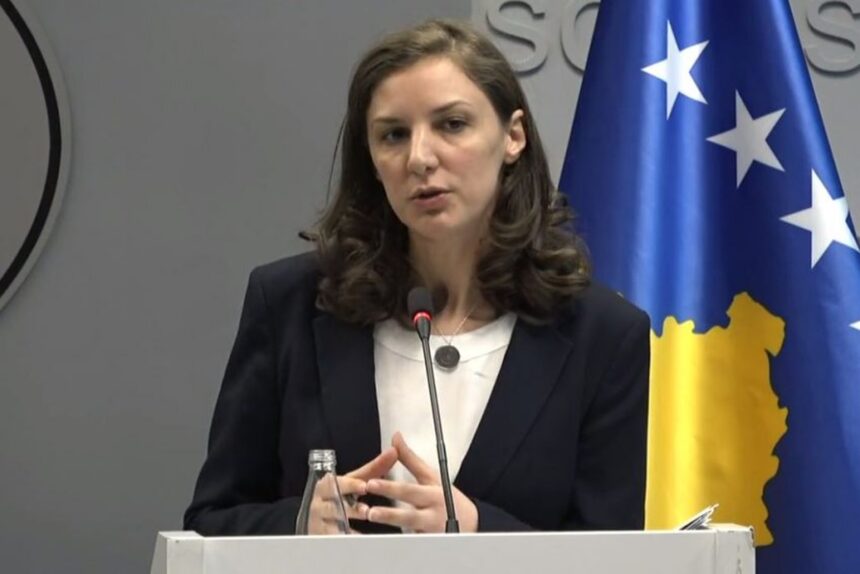
Minister of Economy Artane Rizvanolli reported to the Committee on Economy, Industry and Entrepreneurship on the Draft Law on the Energy Regulatory Office (ERO), which was added to the agenda following a proposal by Vetëvendosje Movement member Taulant Kelmendi.
During her presentation, Rizvanolli outlined the main changes envisaged by the new draft law, emphasizing that one of its key objectives is to strengthen consumer protection by expanding the powers of the Energy Regulatory Office (ERO) to monitor the quality of supply, electricity outages, billing practices and compliance with consumer rights.
“One issue I consider very important is that the new draft law strengthens consumer protection. More specifically, it defines in greater detail the regulator’s responsibilities for monitoring supply quality, electricity outages, billing and respect for consumer rights.
“Based on our experience, both as ministers and, I believe, yours as members of parliament, the main complaints we receive from citizens concern precisely these issues. These are not political matters, but rather issues of market regulation and market oversight.
“That is why the aim is to give the regulator greater and more clearly defined powers in the future, not only to monitor these issues but also to address consumer complaints relating specifically to supply, billing and the matters about which we receive the most complaints,” Rizvanolli said.
Another change envisaged by the draft law, according to the minister, is stronger oversight of the energy market and the protection of competition.
Rizvanolli said the proposed changes reflect recent developments in the European energy market and are also important for Kosovo, particularly in light of several suspicious cases identified in recent years.
“Another important area is the prevention of market abuse in the energy sector and the protection of competition. In particular, what is new is that the draft law regulates the monitoring and prevention of market manipulation and insider trading, while also providing for the registration and supervision of market participants.
“This reflects the latest developments in Europe’s electricity market and the regulations introduced there to combat market manipulation. However, I believe these measures are also important for Kosovo, particularly in light of several suspicious cases identified in recent years,” the minister added.
Rizvanolli also addressed changes concerning the licensing and supervision of energy companies. According to her, the draft law would simplify licensing procedures for smaller capacities by exempting certain energy storage systems and self-generation installations that are not connected to the grid from licensing and authorization requirements, provided their capacity does not exceed one megawatt.
She said this would make procedures easier for citizens and businesses, noting that, until now, a licence and authorization had been required even for the installation of solar panels on residential rooftops.
“Another important aspect is the changes concerning the licensing and supervision of energy companies. On the one hand, the draft law introduces certain simplifications to licensing procedures by exempting, among other things, energy storage systems and self-generation installations that are not connected to the grid, with a capacity of up to one megawatt, from the requirement to obtain permits.
“Until now, our legislation has even required a licence and authorization from the ERO Board for the installation of certain rooftop solar panels. Under the new provisions, such permits will no longer be required for installations of up to one megawatt, including batteries with a capacity of up to one megawatt. This will make the process considerably easier for citizens and businesses,” she said.
However, the minister noted that while procedures would be simplified for smaller energy capacities, the draft law would also introduce stricter checks on applicants seeking licences and permits in cases where there are reasonable grounds to suspect risks to national security, security of supply or the functioning of the energy market.
In such cases, the regulator would be able to request additional information and documentation regarding beneficial owners, ownership structures, individuals exercising control over the company and sources of financing.
Rizvanolli said this mechanism had been lacking until now and stressed that, given the crises and developments affecting the energy market, it was important for the ERO to have greater powers to scrutinize the ownership and financing sources of applicants.
“On the other hand, while the draft law introduces these facilitations for smaller capacities, it also provides for stronger scrutiny of applicants seeking permits.
“Where there are reasonable grounds to suspect risks to national security, security of supply or the functioning of the energy market, the regulator will be able to request additional information and documentation concerning beneficial owners, ownership structures, individuals exercising control over the company and sources of financing.
“This is a mechanism that has been missing until now. Particularly considering all the crises that have affected us and the developments taking place in the energy market, we believe it is important for the regulator to have the legal authority to exercise greater scrutiny over both the sources of financing and the ownership of applicants seeking permits,” Rizvanolli emphasized.
Following the presentation, the committee members voted in favour of the draft law.