Kosovo Serbs are hoping that Serbia’s new leadership, following the electoral victory of the Student List, will bring practical improvements to their daily lives rather than relying on political statements and promises, according to political analyst Ivan Tomić.
Feđa Dimović, a candidate for parliament on the Student List, recently reiterated that Kosovo and Metohija is an integral part of Serbia, a position also reflected in the group’s political programme. His remarks followed a visit by a delegation of students to Serbian Orthodox monasteries in Kosovo.
However, many Kosovo Serbs remain cautious about what the new government might deliver, having received promises from successive Serbian administrations, from the period before Slobodan Milošević to the governments of Vojislav Koštunica, Zoran Đinđić and Aleksandar Vučić.
According to Euronews Serbia, local Serbs are particularly concerned about preserving the healthcare and education systems that continue to operate under Serbian structures. They also want an end to political party affiliation being used as a condition for receiving financial assistance or securing employment.
Tomić believes the new authorities should initially be given time to understand the situation on the ground, including existing resources, institutional capacities and the problems that previous policies have failed to resolve.
“It is important to give them some time to familiarise themselves with the actual situation, existing capacities, human resources and pressing problems, as well as the reasons why certain measures have not produced results so far,” Tomić said.
He identified establishing direct communication with Kosovo Serbs as one of the new government’s first priorities, suggesting that the Student List could open local offices or introduce another mechanism for maintaining contact with communities.
“The most important thing is for people to feel that the state is still standing by them and will continue to be there for them,” he stressed.
Tomić also called for a clearer strategy towards Kosovo, arguing that Serbs should understand decisions made in Belgrade and have a role in decisions directly affecting their lives.
Relations with the Serbian List and decisions made in Prishtina
The Serbian List has traditionally represented Kosovo Serbs in local institutions and parliamentary structures. However, the Student List has indicated that it does not intend to cooperate with the party.
Tomić considers that position legitimate but argues that the new authorities must explain how they intend to continue supporting Kosovo Serbs and representing their interests.
Representatives of the Serbian List currently hold power in all ten municipalities with a Serb majority and also occupy seats in the Kosovo Assembly.
Many decisions affecting the daily lives of Kosovo Serbs are made in Prishtina, including legislation concerning foreigners, vehicle registration and decentralisation.
Tomić expects the new government in Belgrade to maintain its influence through the remaining Serbian institutions and temporary bodies operating in Kosovo, while potentially changing personnel responsible for implementing its policies.
Social justice, employment and support for young people
Beyond reviewing political agreements such as the Brussels, Washington and Ohrid arrangements, Tomić says Kosovo Serbs are primarily concerned with social justice and fair distribution of state assistance.
He called for greater transparency in the allocation of financial support, claiming that some people had been excluded from benefits and had not even been informed about available public competitions, potentially for political reasons.
“Many people were unable to receive even the 20,000 dinars in assistance, while others were not informed about numerous public calls, most likely for political reasons,” he said, calling for possible abuses to be investigated.
Tomić also proposed reviewing employment positions financed by Serbia, claiming that some people listed on public payrolls neither live nor work in Kosovo. He argued that identifying such cases could create opportunities for young people to find employment based on qualifications and merit rather than political affiliation.
He further stressed the need to address the departure of young people, many of whom leave because they see limited prospects for their future.
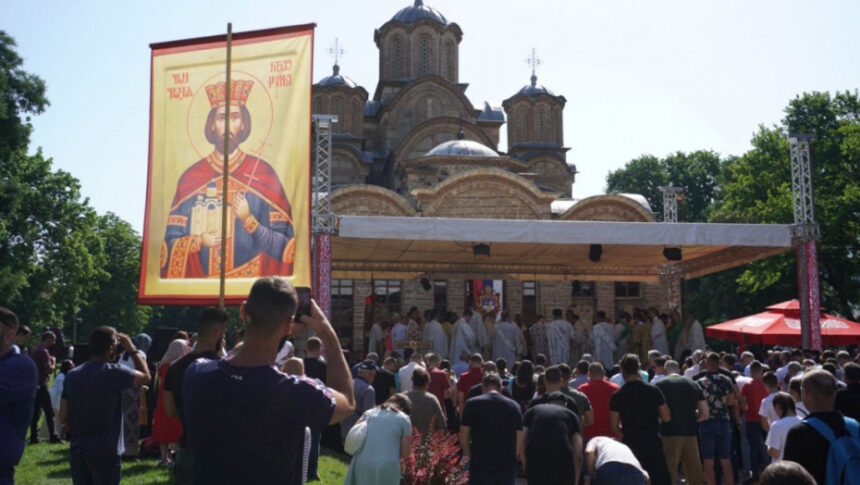
Another concern raised by the analyst is the sale of Serbian-owned property in strategically important locations. He cited Gračanica as an example, where two large plots opposite the Cultural Centre and approximately 500 metres from the monastery were reportedly sold to Albanians, with commercial developments planned or underway.
“It is necessary to stop these developments so that the people can become more united and more opportunities can be created for their survival,” Tomić concluded.
Despite their hopes for improvements under Serbia’s new leadership, Kosovo Serbs continue to face uncertainty. According to Euronews Serbia’s reporting, residents are also concerned about misinformation in traditional media and on social networks, and want to be able to express their views freely without fear.