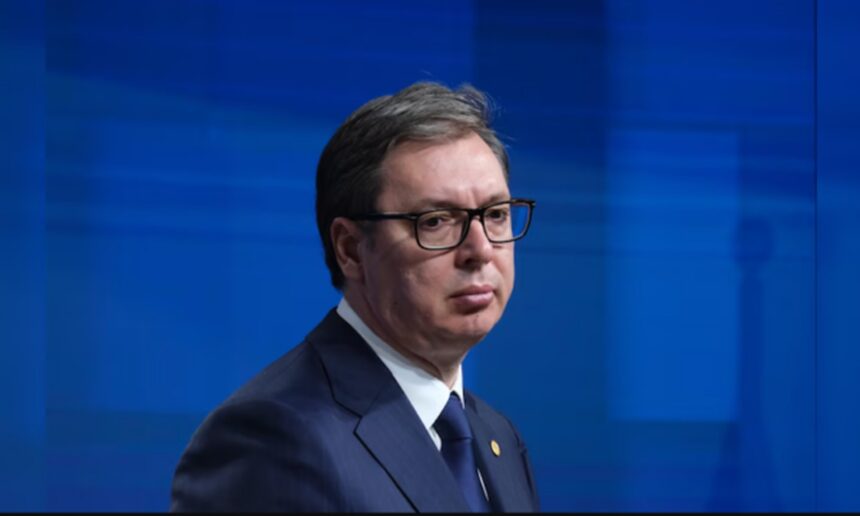
Serbian President-turned-opposition MP Aleksandar Vučić has suffered another major political setback, according to an editorial by Vesna Mališić, editor-in-chief of Radar, who describes his behaviour during the new parliament’s inaugural session as a public display of frustration following the loss of power.
In the editorial published on November 26, Mališić argues that the constitutive session of Serbia’s National Assembly symbolically marked the end of Vučić’s rule after nearly 15 years of political dominance and two years of civic protests.
The session, attended by numerous journalists, photographers and television crews, became a defining moment in Serbia’s political transition.
According to Mališić, representatives of the Serbian Progressive Party (SNS), struggling to adapt to the new political reality, attempted to turn the parliamentary session into a confrontation through insults, aggressive rhetoric and verbal attacks against MPs from the Student List.
However, she notes that the newly elected representatives of the Student List remained largely composed despite the provocations, refusing to engage in the confrontational atmosphere.
The newly elected Speaker of Parliament, Aleksandar Čupić, also maintained his composure, allowing the proceedings to continue without responding to the provocations. Mališić interprets his conduct as a symbolic indication of a possible change in parliamentary culture.
Vučić’s behaviour in parliament was another central focus of the editorial.
The former president’s decision to take a seat in parliament is described as an attempt to confront the reality of losing power while seeking to intimidate those who defeated him at the polls.
Mališić argues that Vučić used lengthy parliamentary speeches to express resentment towards the Student List, whose electoral victory represented a major challenge to his political influence.
During one of his interventions, Vučić told the opposition MPs: “I will make you happy by resigning at some point… because I cannot stand looking at you. You are so repulsive to me because you are the living image of my defeat.”
The editorial describes these remarks as evidence of a political leader struggling to adapt to his new position and the loss of authority he once exercised.
Mališić also highlights another statement by Vučić, in which he said: “I am guilty for allowing them to win.”
She interprets the remark as particularly troubling, suggesting it raises questions about whether Vučić regrets not using state security structures and other forces to prevent the opposition’s victory.
The editorial further recalls his references to revolutionary justice and the French Revolution, including his comparison of opposition MPs to Louis XVI’s executioner, Saint-Just.
According to Mališić, these statements reflect Vučić’s growing hostility towards his political opponents and his fears about potential accountability following the change in power.
She concludes that the former president’s remaining political hopes appear to rest on a possible split within the Student List, which he could seek to exploit to regain influence.
The editorial portrays the parliamentary session as more than a routine institutional transition: it was a public demonstration of the collapse of Vučić’s once-dominant political position.