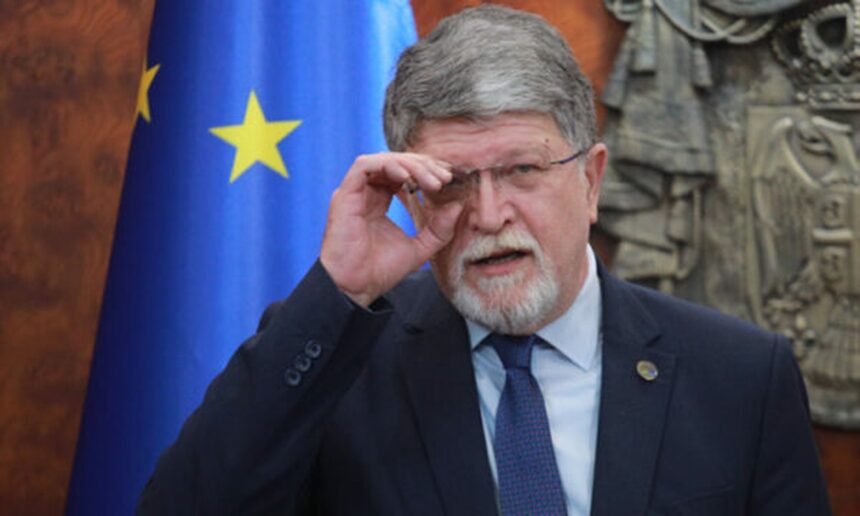
Tonino Picula, the European Parliament’s rapporteur for Serbia, has said that Belgrade’s reactions to the resolution on Vukovar offer no hope that Serbia will change its position on the events of the wars of the 1990s.
Picula said the objections to the resolution, voiced by a student group in Serbia, were particularly significant because they reflected the positions of the political camp that won the elections and is now forming the country’s new government.
The students opposing the resolution argued that its text failed to take into account the suffering of the Serbian people.
According to Picula, the reactions coming from Belgrade are no different from the familiar interpretations of the events of the 1990s that have been repeated for years.
“What we have heard leaves little hope that there will soon be a change in the way the events that took place in Croatia, Bosnia and Herzegovina, and Kosovo are interpreted,” Picula said.
He added that it remains to be seen whether Serbia’s new government will have the capacity to break away from a political approach whose roots date back to the 1980s.
Speaking about the resolution itself, Picula said it sends a clear message against aggressive and authoritarian policies which, through projects aimed at creating “Greater States”, threaten peace and cooperation.
He also highlighted the importance of including Ukraine in the resolution, saying that it is easy to draw parallels between those defending their country against aggression and occupation.
“It is important to identify these policies in time,” Picula concluded.