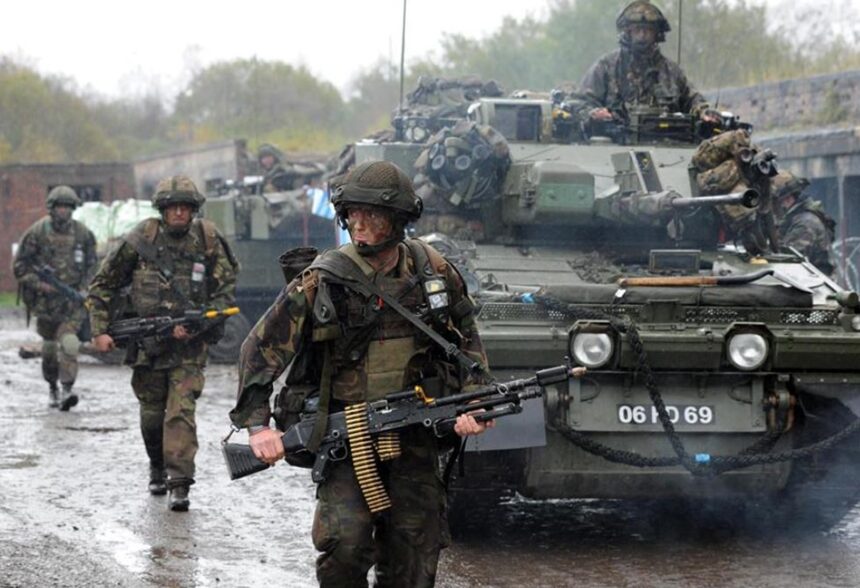
The United Kingdom has launched an initiative to contact around 100,000 former members of its Armed Forces to verify their personal details, contact information and professional skills that could be called upon in the event of a national emergency or armed conflict.
The initiative was announced by UK Defence Secretary Wes Streeting, who confirmed that the Ministry of Defence had sent letters to former military personnel as part of an effort to update the country’s strategic reserve.
The move comes amid growing security concerns across Europe, driven by the war in Ukraine, tensions with Russia and security incidents involving NATO member states. According to reports by British newspapers The Times and The Telegraph, some former service members have received letters asking them to be prepared for the possibility of being called back into service in the event of war.
Speaking on BBC Radio 4’s Today programme, Streeting explained that the purpose of the initiative was to establish where former military personnel are located and what skills they possess, so they could be mobilised if necessary.
He said the reserve could be needed in the event of a national emergency within the UK or in response to a more serious threat or conflict abroad.
“I want the country to be vigilant, not alarmed,” Streeting said.
The minister stressed that the government could not ignore developments across Europe and the deterioration of the security situation in recent years.
“You cannot look at what is happening in Europe and not be concerned about a threat environment that has worsened in recent years and is, unfortunately, becoming increasingly serious,” he told the BBC.
Explaining the reasons behind the initiative, Streeting pointed to several recent developments which, he said, demonstrated the growing security risks facing Europe.
“Last Friday, we saw a very serious incident — the violation of Polish airspace by Russian missiles. We have also seen Russian state-sponsored terrorism across Europe and, of course, incidents involving Iran near Royal Air Force bases here in the United Kingdom,” the minister said.
He added that, given the current situation, both the government and the country must be prepared to face potential risks.
“The better prepared we are, the less likely we are to find ourselves facing a conflict or a war. That is my objective and the objective of this government,” Streeting said.
In a separate interview with BBC Breakfast, he argued that the Ministry of Defence would face criticism if the UK became involved in a war and a subsequent investigation revealed that the government had failed to keep records of potentially mobilisable personnel up to date.
Why is the UK updating the records of 100,000 former service members?
According to BBC analysis, the initiative does not signal an imminent war but rather represents an effort to prevent problems encountered in the past.
When the UK became involved in the Iraq War in 2003, the Ministry of Defence struggled to identify which former service members might be available for duty, what skills they possessed and whether their contact details were still accurate.
Now, 23 years later, the war in Ukraine has significantly changed how modern warfare is understood. In addition to traditionally trained soldiers, today’s conflicts increasingly rely on expertise in technology, communications, electronics, radio systems and drone operations.
People who have never handled weapons during their civilian lives may possess valuable skills for operating drones, while electronics and communications specialists can play an important role in electronic warfare.
For this reason, according to the BBC, the initiative aims to identify who could contribute, what skills they possess and how they can be contacted.
Justin Crump, a former British Army officer and chief executive of business intelligence company Sibylline, described the move as a long-overdue but important step.
“The war in Ukraine has shown us the importance of mobilising civilian skills and approaches in modern warfare,” he told the BBC.
According to Crump, this is only the first phase, and efforts could intensify in early 2027. He stressed that the initiative is primarily about deterrence and strengthening defence capabilities, rather than any immediate plan to reactivate former military personnel.
Crump also said that veterans he had spoken to had generally welcomed the initiative, expressing a desire for their experience and skills to be recognised.
The outreach to former service members also comes after the signing of an £8 billion contract to modernise Britain’s nuclear submarine fleet.
The Defence Secretary has described this investment as part of broader efforts to make the country better prepared for a potential conflict. It forms part of a wider strategy to strengthen Britain’s military and defence capabilities.
Through this initiative, the UK aims to improve its readiness amid an increasingly unstable international security environment. However, the government maintains that updating reservist records does not mean military mobilisation is imminent, but rather that the country must be prepared should such a situation arise.