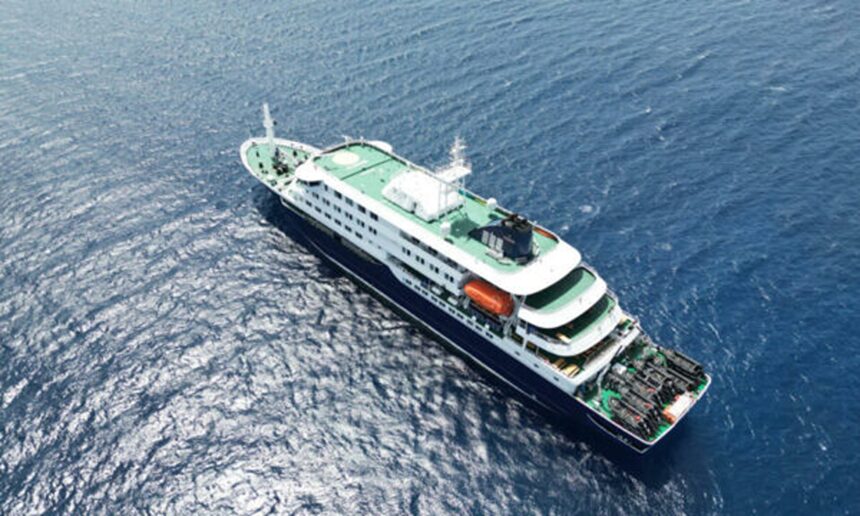
The hantavirus outbreak on a tourist vessel carrying passengers from around the world is being taken “extremely seriously” by authorities, BBC reports.
Three passengers have either died onboard or after travelling on the ship, which departed from Argentina a month ago.
Four others have been evacuated from the vessel for medical treatment.
A large-scale operation is underway to trace potentially exposed individuals who have already travelled home to multiple countries, including the United Kingdom, South Africa, the Netherlands, the United States, and Switzerland.
Health experts stress that the risk to the general public remains low. So how concerned should we be?
“This is not Covid”
In an update on Thursday, Dr. Maria Van Kerkhove of the World Health Organization (WHO) emphasized that this is not the start of a pandemic, stating: “This is not Covid, this is not influenza; it spreads very, very differently.”
Unlike diseases such as measles, which are highly contagious and spread easily, the Andes strain of hantavirus behind this outbreak is not as transmissible.
Human-to-human transmission is possible, but the global risk of infection remains low, according to the WHO.
In its latest update, the organization said eight cases — three confirmed and five suspected — have been identified among people who were on board the ship.
It is still unclear how the outbreak began.
Hantavirus is usually spread by rodents, with humans becoming infected by inhaling air contaminated with viral particles from rodent urine, droppings, or saliva.
The cruise ship had visited remote wildlife areas, meaning a passenger may have been exposed there or before boarding.
Experts have previously observed human-to-human transmission of the Andes strain in close-contact outbreaks, and health officials believe some infections aboard the MV Hondius may have spread between passengers.
Even luxury cruise ships have relatively confined living conditions, with passengers sharing cabins and dining areas environments where infections can spread.