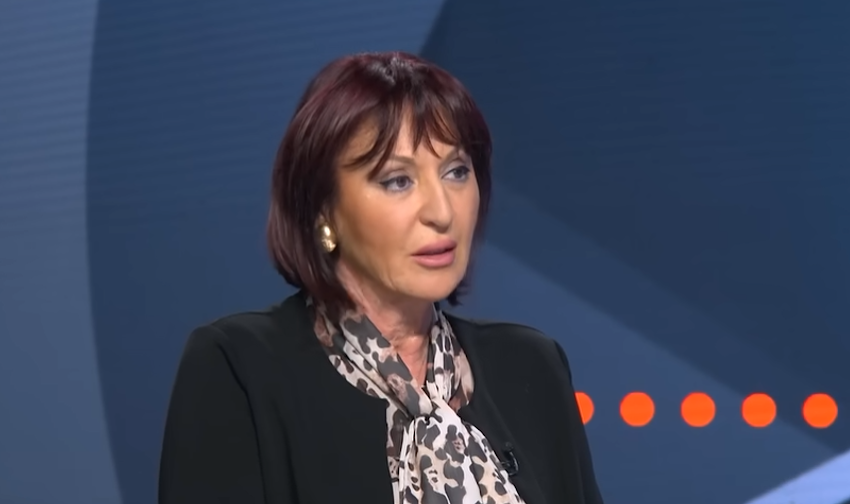
Former Higher Public Prosecutor (VJT) Jasmina Paunović launched an aggressive critique against Belgrade’s justice apparatus on Tuesday, June 23, 2026, declaring there are zero legal grounds to investigate students and citizens for allegedly “simulating” the use of a sonic weapon during last year’s massive mass protests.
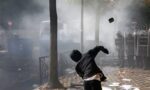
The statement strikes directly at a highly controversial pre-investigative campaign spearheaded by current VJT leadership, which claims that the March 15, 2025 acoustic weapon attack—which left thousands of demonstrators seeking medical evaluation for hearing damage—was entirely fabricated by student groups to destabilize the government.
Inverting Victims and Executioners
Paunović, who previously served within the Belgrade VJT before her retirement, warned that the state is weaponizing the judiciary to run an artificial campaign of psychological intimidation ahead of an upcoming election cycle.
““We are living through a period in Serbia where the state turns citizens into executioners and classifies itself as the victim,”” Paunović stated to the Beta news agency. ““The government’s clear objective is to convince the public that students simulated a sonic cannon—an offense that does not even exist under the criminal code. No matter what hypothetical crime did take place, it cannot be tied to the students; responsibility rests entirely with the authorities.””
The former prosecutor asserted that by aggressively pivoting the blame onto student organizers, the current administration is desperately trying to clear itself of criminal, financial, ethical, and political liability for deploying long-range acoustic devices (LRADs) against peaceful gatherings on Belgrade’s streets.
The Prosecution’s Broadcast Sparks Backlash
The public legal dispute reached a boiling point following a high-profile appearance on the public broadcaster RTS by Deputy Chief Prosecutor Miodrag Marković. Marković announced that the VJT, backed by anti-terrorism and counter-extremism law enforcement units, is pursuing four distinct groups for orchestrating the sonic cannon narrative:
- The Planners: Organizers who supposedly drafted the acoustic weapon scenario in advance.
- The Executioners: Individuals who physically carried out the acoustic performance during the March 15 protest.
- The Media Echo-Chamber: Outlets and social media accounts that distributed and amplified the narrative.
- The Medical Claimants: Citizens who sought official medical documentation for diagnosed hearing injuries, whom Marković accused of joining a synchronized political maneuver.
The "Sonic Cannon" Conflict Profile:
[The VJT Claim]     --> State prosecutors allege a document seized at the Faculty of Philosophy
                        proves "Studenti u blokadi" planned a fake sonic weapon performance.
[The Student Reply] --> Student groups prove the document was written 2 months prior to the rally,
                        simply mapping out safety risks (tear gas, LRADs) of a 24-hour blockade.
[The Medical Fact]  --> Over 3,000 citizens received formal clinical diagnoses for acoustic trauma.
Paunović heavily condemned Marković’s public television appearance, labeling his disclosure of live pre-investigative files as unprofessional, unlawful, and an open weaponization of the judicial office. She noted that the regime’s campaign is already taking a physical toll, pointing to the retaliatory apartment raids and detention of prominent military analyst Aleksandar Radić.
Conflicting Narratives and Historical Contradictions
The independent student organization “Studenti u blokadi” (Students under Blockade) completely rejected the VJT’s claims of a pre-planned simulation. They revealed that the internal minutes seized by police from the Faculty of Philosophy were compiled on January 22, 2025—two full months before the actual March 15 protests at Slavija and Autokomanda were even conceptualized. The text merely evaluated standard security risks and police crowd-control measures, such as tear gas and water cannons.
Furthermore, critics have pointed out glaring timeline discrepancies within the ruling party’s own narrative. While the VJT now maintains the sonic device never existed on Belgrade’s streets, Minister of Internal Affairs Ivica Dačić openly defended its deployment in April 2025, telling state media he told British diplomats that Serbia’s acoustic devices were identical to those purchased by London for the 2012 Olympic Games.
Simultaneously, prominent pro-government media figures, including Informer editor Dragan J. Vučićević, held live broadcasts celebrating the tactical deployment of the device against protestors on the night of the event—contradictions that Paunović argues makes the prosecution’s current “simulation” theory completely untenable in a legitimate court of law.