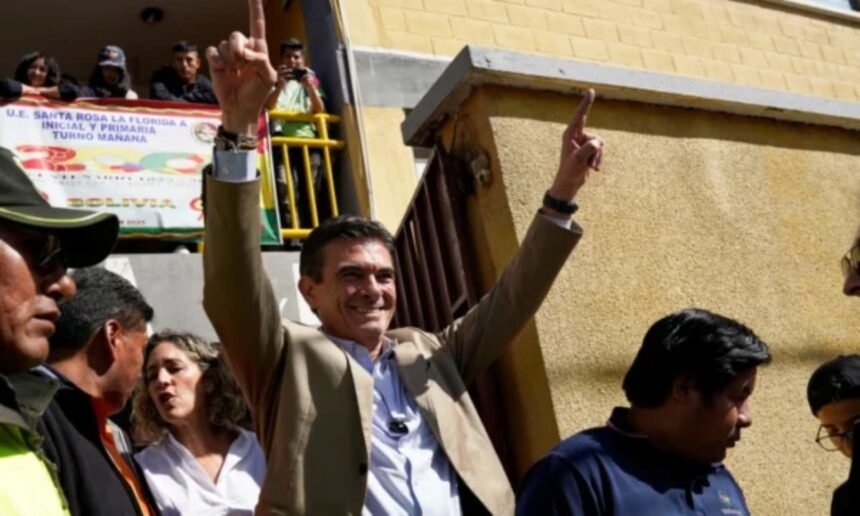
Bolivia’s center-right President, Rodrigo Paz, has issued a stark warning that the Andean nation is approaching a volatile “breaking point” as mass anti-government protests enter their fourth consecutive week. Speaking from the administrative capital, La Paz, President Paz called for an immediate dialogue with protest leaders while simultaneously signaling his readiness to deploy the military under sweeping emergency powers.
“The country needs order… Time is running out,” President Paz declared. “I have constitutional tools. I must find solutions. Those who want to destroy the country will have to deal with me and the full force of the Constitution.”
The current political crisis represents the most severe challenge to President Paz’s administration since he took office last November, inheriting a nation gripped by its worst economic downturn in over four decades.
Economic Paralysis and Escalating Demands
What began as localized labor demonstrations has transformed into a national uprising. Blockades on key highways by farmers, miners, transport workers, and indigenous groups have paralyzed domestic trade and caused severe supply chain shortages.
- Initial Grievances: Protesters originally took to the streets demanding significant wage increases, robust measures to curb inflation, and guaranteed distribution of reliable, high-quality fuel after the government reduced longstanding state subsidies.
- Current Mandate: As supply lines collapsed, leaving major cities like La Paz and El Alto facing critical shortages of food, medicine, and fuel, the core demand of the movement shifted uniformly to the immediate resignation of President Paz.
According to government estimates, the ongoing blockades have already cost the fragile Bolivian economy over $600 million. In a powerful display of solidarity, thousands of indigenous peasant women dressed in traditional Andean attire marched through La Paz, joining striking transport drivers to completely halt public transit systems.
Legislative Maneuvers and the Threat of Force
The political temperature rose sharply following a late-night session in Parliament. Lawmakers voted to repeal a restrictive legal provision that previously set strict parameters and conditions on the executive’s authority to declare emergency rule.
| Political Shift | Former Policy Framework | New Policy Framework |
| Emergency Powers | Executive authority heavily restricted by statutory guardrails and pre-conditions. | Executive can fast-track a State of Emergency declaration to Congress for approval within 72 hours. |
| Civil Liberties | Broadly protected rights to freedom of assembly, protest, and domestic movement. | Suspension of constitutional rights, enabling the deployment of the Armed Forces to clear roadblocks. |
Addressing the security forces directly after the legislative vote, President Paz stated, “For the police and the armed forces: feel secure, your people support you.”
Geopolitical Accusations and Indigenous Backlash
The administration has firmly maintained that the civil unrest is an orchestrated attempt to overthrow the rule of law and dismantle the country’s democratic order. Officials point toward former socialist President Evo Morales (2006–2019) as the primary instigator fueling the crisis. Morales, who faces an active arrest warrant over allegations of statutory trafficking—charges he vehemently denies—remains a highly influential figure among rural and indigenous unions.
However, opposition politicians and human rights advocates warn that unleashing the military could spark widespread civil conflict.
Expressing the growing frustration of the country’s indigenous majority, Congresswoman Sonia Signani of the Aymara party cautioned that aggressive state suppression would backfire catastrophically. The government, Signani remarked, is simply “pouring gasoline on the fire.”