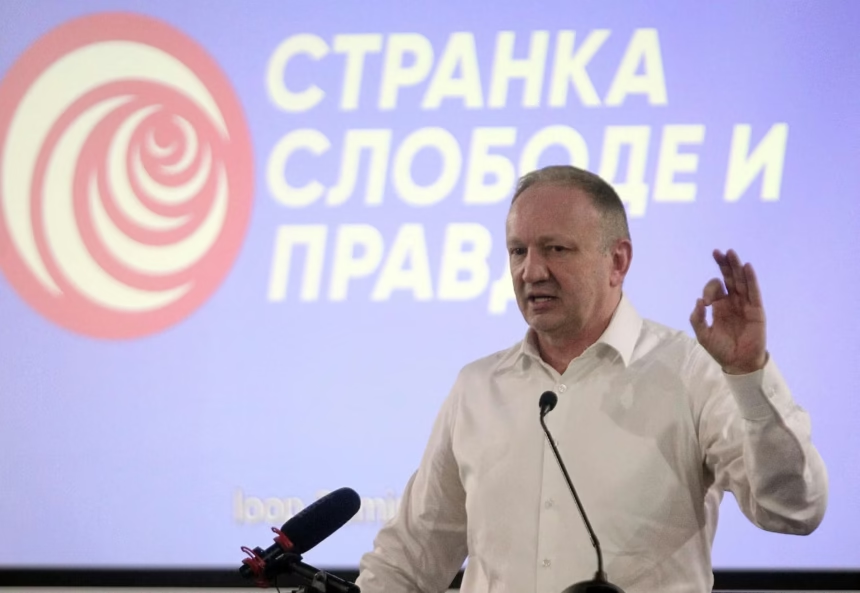
Dragan Đilas, the leader of the Freedom and Justice Party (SSP), has issued a formal appeal to all parliamentary parties in the country to urgently prioritize a draft law that would implement a comprehensive ban on social media for children under the age of 16.
The push for this legislative initiative follows an official announcement from Great Britain, where Prime Minister Keir Starmer confirmed the introduction of an identical restriction. With this move, London joins the rigorous regulatory framework pioneered by Australia months ago. Đilas emphasized that child safety in Serbia must bypass partisan and ideological divides, framing it as an issue of national security and public health.
1. The Global Movement Against Tech Addiction
The European continent is experiencing rapid legislative evolution regarding the digital sphere. According to the SSP leader, Serbia has lagged for months in establishing a protective framework against the predatory designs of major tech platforms.
Legislative Wave Across Europe and the Globe

 [ THE PIONEERING BLUEPRINT ] ──► AUSTRALIA
 • The first nation globally to pass a sweeping ban late last year, enforcing
   a strict age ceiling of 16 for access to all mainstream social media platforms.

 [ EUROPEAN ADVANGARDE ] ──► GREAT BRITAIN
 • Prime Minister Keir Starmer announced a full ban for minors under 16, set to take
   effect early next year, alongside stringent restrictions on gaming and streaming ecosystems.

 [ THE REGULATORY DIALOGUE ] ──► EUROPEAN UNION
 • Similar or identical radical safeguards are currently under active parliamentary
   debate in France, Spain, Norway, Denmark, Poland, and Canada.
2. Addictive Algorithmic Systems vs. Parental Disempowerment
In his formal press release, Đilas directly targeted the predatory algorithmic systems engineered by tech conglomerates to capture and retain the attention of young children at any cost, leaving parents isolated and helpless against the system.
The Chronic Risks of Unregulated Digital Exposure
┌────────────────────────────────────────────────────────────────────────┐
│                                                                        │
│  [ MENTAL HEALTH VS. CORPORATE PROFIT ] ───────────────────────────┐   │
│  • Algorithmic feeds are mathematically optimized to trap children's    │   │
│    attention, frequently exposing them to violent or toxic content.   │
│                                                                        │   │
│  [ DISTORTION OF REALITY ] ────────────────────────────────────────┤   │
│  • Consistent exposure to unrealistic beauty and lifestyle standards   │   │
│    is driving an unprecedented spike in adolescent anxiety and depression.│
│                                                                        │   │
│  [ SEPARATION FROM REAL LIFE ] ────────────────────────────────────┘   │
│  • Excessive screen time displaces sports, academics, and vital real-world │
│    socialization with peers during critical formative years.           │
└────────────────────────────────────────────────────────────────────────┘
“It is our absolute obligation to allow our children to grow up healthy, spending more time playing sports, studying, and engaging in real life, rather than isolated in front of screens that breed fear and loneliness. The health of our children must triumph over the profits of tech giants.”
— Dragan Đilas, President of the Freedom and Justice Party (SSP)
3. Comparative Overview of Implemented Global Measures
The recent British regulatory model goes beyond standard standalone social networks like TikTok or Instagram, intentionally targeting internal chat systems within multiplayer gaming ecosystems where minors frequently interact with strangers.
| Country / Instigator | Minimum Age Threshold | Scope and Legislative Track |
| Australia | Under 16 | Law Enacted; actively utilizing state-level biometric age-verification trials. |
| Great Britain | Under 16 | Legislation Announced; slated to take full effect by early 2027 with heavy financial penalties for non-compliance. |
| SSP (Dragan Đilas) | Under 16 | Proposed to Serbian Parliament; demanding an immediate, non-partisan emergency debate in the National Assembly. |
While the Serbian ruling majority and broader opposition parties have yet to issue a definitive response, global metrics show overwhelming parental approval for these strict measures—with over 90% of polled parents in the UK actively endorsing the 16-year age floor. The National Assembly of Serbia must now decide whether to follow the emerging European protective trend or preserve the current digital status quo.