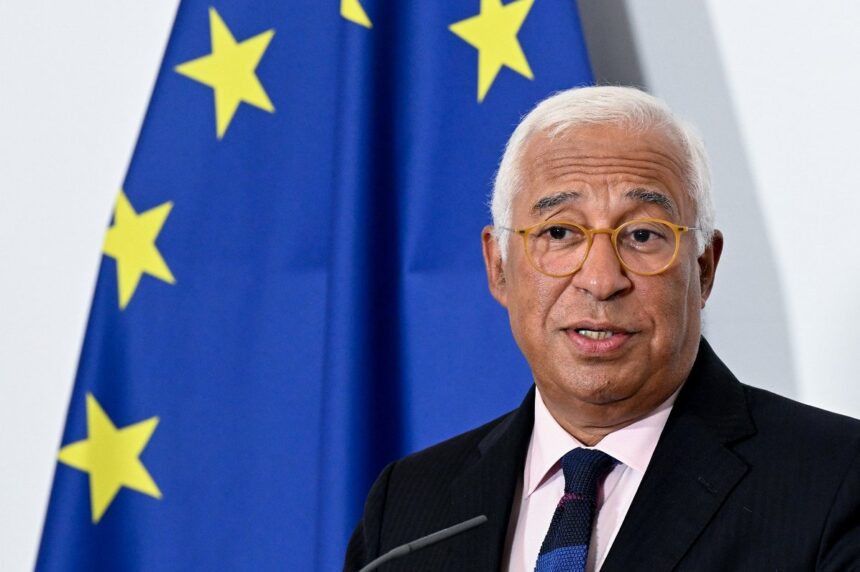
Opening a high-stakes, multi-nation tour across the region, the newly appointed President of the European Council, Antonio Costa, declared on Tuesday, June 2, 2026, that the integration of the Western Balkans into the European Union has shifted from a bureaucratic ideal to an urgent geopolitical necessity.
Speaking to reporters in Sarajevo, Costa emphasized that the primary objective of this week’s continuous diplomatic push is to demonstrate that the window for EU enlargement is “tangible, credible, and real.” Against a backdrop of volatile global instability, economic friction, and aggressive maneuvers by foreign adversaries seeking leverage in Europe’s backyard, Brussels is actively reframing its accession pipeline as a defensive shield.
The Pre-Summit Tour: A United Front Against Foreign Intrigue
President Costa’s diplomatic itinerary serves as a precursor to a major EU-Western Balkans Summit scheduled for Friday, June 5, 2026, in Montenegro. Costa will co-chair the high-level convocation alongside the heads of state of the “Western Balkan Six” (WB6): Albania, Bosnia and Herzegovina, North Macedonia, Kosovo, Serbia, and Montenegro.
                  [The Western Balkans Accession Spectrum]

     Most Advanced Stage                       Early/Intermediate Stage
  ┌─────────────────────────┐               ┌─────────────────────────┐
  │ • Montenegro            │   ─────────>  │ • North Macedonia       │
  │ • Albania               │               │ • Bosnia & Herzegovina  │
  └─────────────────────────┘               │ • Serbia    • Kosovo    │
                                            └─────────────────────────┘
The localized tour and Friday’s subsequent summit follow sharp warnings issued by Western intelligence agencies regarding the systematic expansion of Russian and Chinese soft power, cybersecurity interference, and infrastructure investments across the peninsula.
By intensifying state-level engagement, Brussels aims to counter these rival influence networks and tether the region firmly to Western democratic frameworks.
“Enlargement is a geostrategic interest for Europe,” Costa stated plainly. “It is an investment in the peace, stability, and security of our continent. This tour is a clear sign that the European Union’s commitment to the Western Balkans is absolute. The opportunity for expansion is entirely real.”
Understanding the 35-Chapter Accession Maze
While the political rhetoric coming out of Brussels is highly encouraging, the underlying structural reality for candidate nations remains incredibly rigorous. To secure full legal integration into the single market, each prospective state must align its national legal, economic, and administrative frameworks with EU standards across 35 distinct thematic chapters.
             [The Anatomy of EU Accession Negotiations]

       ┌───────────────────────────────────────────────────┐
       │     THE EUROPEAN ACQUIS (35 Legislative Chapters)  │
       └─────────────────────────┬─────────────────────────┘
                                 │
         +───────────────────────+───────────────────────+
         │                       │                       │
         ▼                       ▼                       ▼
   [Core Cluster]        [Economic Cluster]      [Sectoral Cluster]
   • Judicial Reform     • Financial Control     • Agriculture
   • Fundamental Rights  • Free Movement         • Infrastructure
   • Public Security     • Tax Harmonization     • Maritime/Fisheries
These chapters cover the entire spectrum of sovereign governance, organized into thematic clusters that require deep structural overhauls:
- The Rule of Law and Judiciary (The Core): Demanding independent courts, rigorous anti-corruption mechanisms, and protected human rights legislation.
- Economic Harmonization: Standardizing financial controls, banking regulations, and free-market competition models.
- Sectoral Policies: Aligning highly technical domestic operations, spanning from environmental protections and carbon caps to localized agriculture and maritime fisheries.
The Universal Veto Bottleneck
Beyond the grueling technical task of rewriting thousands of national laws, the greatest hurdle for the candidate states remains entirely political. Under current EU treaties, every single step of the negotiation pipeline requires unanimous approval from all 27 EU member states.
This unanimity rule means that a single member state can unilaterally freeze a candidate country’s entire accession process over localized bilateral disputes—a structural bottleneck that has historically paralyzed the trajectories of North Macedonia and Albania due to historical and cultural vetoes from regional neighbors.
       [The Accession Gauntlet: The Unanimity Bottleneck]

  Candidate Country ──> Satisfies Technical Criteria (All 35 Chapters)
                                     │
                                     ▼
                      [THE COUNCILS OF THE EU VOTE]
                                     │
           +─────────────────────────┴─────────────────────────+
           │                                                   │
           ▼ (26 Approvals, 1 Veto)                            ▼ (Unanimous 27/27 Approvals)
   [TOTAL OPERATIONAL FREEZE] ❌                       [ADMISSION TO EUROPEAN UNION] 🇪🇺
   Accession stalls indefinitely                       Treaty signed; state enters the
   over domestic/bilateral friction.                    Single Market & Schengen Zone.
Currently, Montenegro and Shqipëria are internally recognized as the frontrunners in the queue, having logged the most advanced progress in opening and processing chapters.
However, the geopolitical landscape shifted dramatically following the 2022 invasion of Ukraine, which forced Brussels to fast-track candidate status for Ukraina and Moldavia. As Costa moves across Balkan capitals this week, his underlying message is clear: the historical expansion of the European bloc is no longer an abstract bureaucratic timeline, but a pressing geopolitical buffer that must be executed swiftly to preserve the security architecture of the European continent.