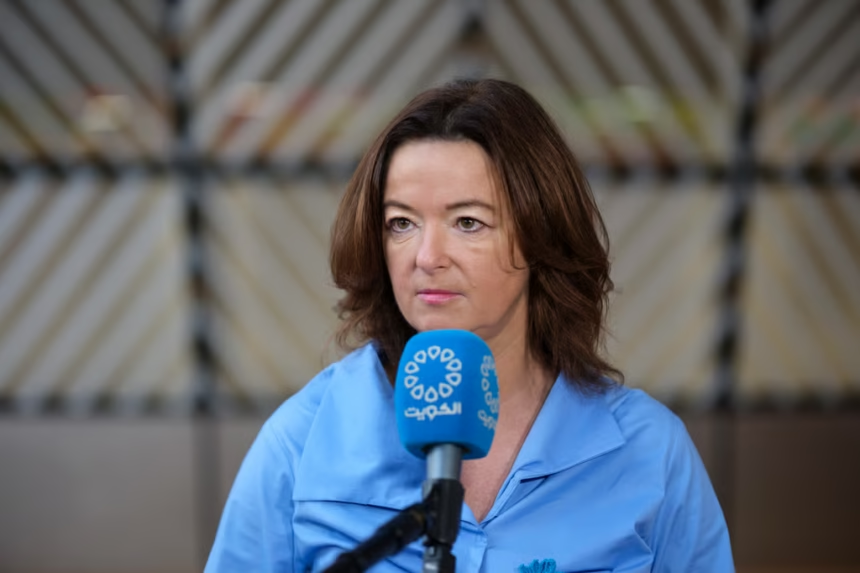
The European Commission has defended the selection process for the European Union’s special envoy to the Sahel, insisting it complied with all procedures despite controversy surrounding the initial nomination of former Slovenian Foreign Minister Tanja Fajon.
Responding to questions from POLITICO, European Commission spokesperson Anouar El Anouni said the recruitment process was conducted “in line with the process.”
Fajon was initially proposed by the European External Action Service (EEAS) to serve as the EU’s Special Representative for the Sahel, according to several sources familiar with the discussions. However, her nomination was later withdrawn after Slovenia’s new government, led by Prime Minister Janez Janša, objected.
Last week, Danish diplomat Birgitte Nygaard Markussen was officially appointed to the position. The role oversees EU relations across the Sahel, a vast region stretching from Africa’s Atlantic coast to the Red Sea that has been heavily affected by armed conflict, terrorism, organized crime, and political instability.
The dispute has intensified political tensions between Brussels and Slovenia’s new government.
Since returning to office in June, Janša has repeatedly criticized the previous Slovenian administration, in which Fajon served as foreign minister. He has claimed that her candidacy was never formally approved by the Slovenian government and alleged she was nominated by an official who reported directly to her.
The Slovenian government has since initiated criminal proceedings over what it describes as procedural irregularities related to the nomination.
Slovenian President Nataša Pirc Musar criticized the government’s actions, warning they could weaken Slovenia’s international representation.
“I am disappointed by the government’s actions,” Pirc Musar said, arguing that blocking Fajon’s appointment may represent “a small victory for a certain political faction, but at the same time a major defeat for the country.”
Commission spokesperson Guillaume Mercier emphasized that EU Special Representatives are appointed by the Council of the European Union upon a proposal from the High Representative for Foreign Affairs and Security Policy, adding that the Commission does not comment on ongoing national legal proceedings.
The dispute underscores growing political friction between the new Slovenian government and EU institutions over appointments to senior international positions.