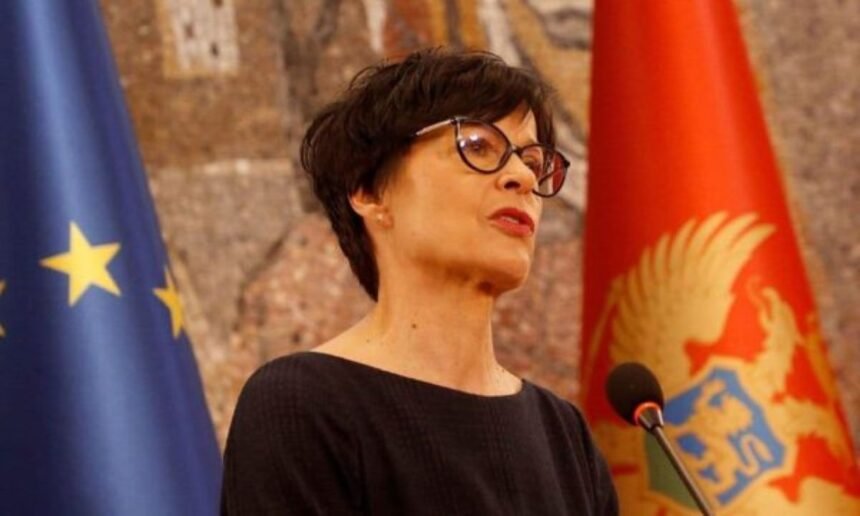
In a historic declaration for the Western Balkans, EU Commissioner for Enlargement Marta Kos revealed that Montenegro is on an accelerated trajectory that could see the country finalize its full European Union negotiation process by the end of the year, specifically during the upcoming Irish Presidency of the Council of the EU.
Speaking to journalists ahead of the EU Foreign Affairs Council meeting in Luxembourg, Kos framed the current diplomatic momentum as an unprecedented breakthrough. The statement comes as Montenegro officially wraps up technical alignments on two more negotiating chapters today, bringing its total number of closed chapters to 16.
1. The Accession Calculus: 16 Chapters and the Irish Horizon
The closure of today’s chapters marks a critical operational tipping point, mathematically pushing Podgorica past a crucial milestone in its legislative integration.
The Montenegrin Accession Status Report

 [ RECENT PROGRESS ] ──► 16 TOTAL CHAPTERS CLOSED
 • With two additional chapters finalized today in Luxembourg, Montenegro has now officially
   completed roughly half of the total technical work required for full EU entry.

 [ TARGET WINDOW ] ──► THE IRISH PRESIDENCY
 • Following high-level consultations in Dublin, Kos confirmed that if the current multi-lateral
   work rate holds, negotiations could wrap up entirely during or by the close of Ireland's term.

 [ TIMELINE EFFICIENCY ] ──► HISTORIC METRIC OVERHAUL
 • Kos emphasized that over the past 16 to 17 months, the EU enlargement apparatus has achieved
   substantially more institutional progress than during the preceding 15 years.
2. A Synchronized Leap: Ukraine and Moldova Open First Negotiation Clusters
While Montenegro sets the pace as the regional frontrunner, Kos highlighted that today represents a historic day of celebration for the broader European neighborhood policy, as both Ukraine and Moldova navigate their most significant integration leaps since gaining candidate status in 2023.
The Eastern Partnership Advancement Matrix
┌────────────────────────────────────────────────────────────────────────┐
│                                                                        │
│  [ GROUP 1 NEGOTIATION OPENING ] ──────────────────────────────────┐   │
│  • Ukraine and Moldova are officially opening their first formal       │   │
│    clusters of negotiation chapters today in Luxembourg.               │
│                                                                        │   │
│  [ THE JULY TARGET LINE ] ─────────────────────────────────────────┤   │
│  • Provided both nations sustain their rapid internal reform pace, the │   │
│    remaining five negotiating clusters are projected to open in July.  │
│                                                                        │   │
│  [ STRATEGIC FOREIGN LEVER ] ──────────────────────────────────────┘   │
│  • The European Commission has re-anchored the enlargement process as the │
│    single most vital, active foreign policy instrument in Brussels' arsenal.│
└────────────────────────────────────────────────────────────────────────┘
“In the last 16 or 17 months, we have achieved more than in the previous 15 years. Today is a day of celebration, but it is also a call to candidate countries to aggressively maintain this negotiation dynamic.”
— Marta Kos, EU Commissioner for Enlargement
3. Geopolitical Shifts in the Enlargement Playbook
The rapid acceleration of Montenegro’s files, alongside the simultaneous processing of Ukraine and Moldova, signals that the European Commission has abandoned its previous, decade-long stagnation approach in favor of a highly dynamic, merit-based geopolitical framework.
| Candidate Country | Active Milestone Achieved Today | Next Strategic Operational Hurdle |
| Montenegro | Closes 2 additional chapters (bringing the total to 16 closed files). | Harmonizing the remaining half of the acquis to close all tracks under the Irish Presidency. |
| Ukraine | Formally opens the first cluster of EU accession negotiations. | Meeting strict judicial and anti-corruption baselines to unlock the remaining 5 clusters in July. |
| Moldova | Formally opens the first cluster of EU accession negotiations. | Strengthening economic and border regulations to match synchronized July goals. |
While Kos called on all candidate nations to capitalize on this unique political window, the message for the Western Balkans is clear: Montenegro has successfully decoupled itself from regional stagnation, placing its future directly inside the European Union legislative chambers by the conclusion of the upcoming institutional cycle.