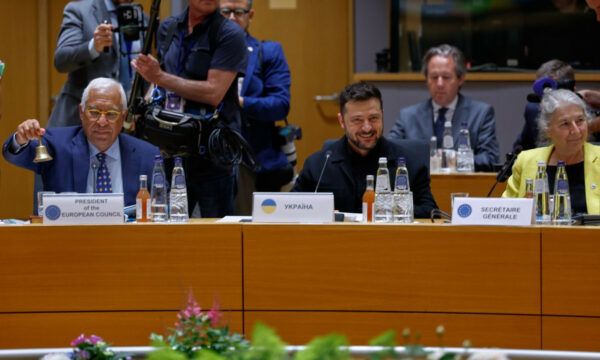
The European Union has officially praised the June 15, 2026, opening of Cluster 1, the critical “Fundamentals” section of accession negotiations with Ukraine. While hailing this development as a historic milestone under the Cypriot rotating presidency, the EU’s 27 heads of state deliberately declined to set any concrete dates or explicit timelines for launching the remaining thematic chapters.
The European Council’s summit conclusions firmly establish that further progression remains strictly merit-based, binding future advancement directly to Ukraine’s tangible domestic institutional reforms.
1. The Accession Framework: A Divided Brussels Unites
The rigid text of the final communique strictly mirrors the pre-summit draft established by the member states’ permanent representatives. This cautious language was maintained despite heavy diplomatic pressure from Ukrainian President Volodymyr Zelensky, who made direct appeals for immediate, fast-tracked entry into both the EU and NATO.
The Geopolitical Consensus Grid

 [ TIMELINE DEADLOCK ]     ──► NO SUMMER ACCELERATION
 • Kyiv and several Eastern European allies pushed to open all remaining
   thematic blocks before the summer recess, which was firmly rejected.

 [ THE ORBÁN FACTOR ]       ──► BALANCING COMPROMISE
 • Diplomatic sources confirmed that omitting a fixed schedule was necessary
   to secure crucial unanimity from Hungarian Prime Minister Viktor Orbán.

 [ HISTORIC ALIGNMENT ]    ──► BREAKING THE STALEMATE
 • The resulting text marks the first fully unified joint position on Ukraine's
   accession track achieved by the 27 member states since March 2025.
2. Deep Dive: The “Fundamentals” Cluster Infrastructure
Under the EU’s updated 2020 enlargement methodology, the Fundamentals Cluster acts as the definitive spine of the integration process. Legally, these chapters are the first to open and the absolute last to close. A candidate nation’s performance here dictates the speed of all other negotiating blocks.
                  ┌────────────────────────────────────────┐
                  │    CLUSTER 1: THE FUNDAMENTALS SPINE   │
                  └───────────────────┬────────────────────┘
                                      │
         ┌────────────────────────────┼────────────────────────────┐
         ▼                            ▼                            ▼
 [ THE CORE RULES ]          [ TECHNICAL METRICS ]        [ THE FINANCIAL GATE ]
 Chapter 23: Judiciary       Chapter 18: Statistics       Chapter 5: Public Procurement
 Chapter 24: Justice & Sec.                               Chapter 32: Financial Control
3. Billions in Aid and the 21st Sanctions Package
Beyond the complex technicalities of expansion, the EU heavily reinforced its immediate security and financial commitments to Kyiv. The bloc announced it anticipates disbursing the first major tranches of its newly approved €90 billion macro-financial and military loan package (spanning 2026–2027) before the end of June.
| Policy Measure | Operational Execution | Intended Strategic Focus |
| Immediate Air Defense | Accelerated delivery of anti-aircraft systems, precision missiles, and long-range drones. | Safeguarding Ukraine’s civilian population and stabilizing vulnerable energy infrastructure. |
| The 21st Sanctions Tier | Targeting Russia’s opaque “Shadow Fleet” and closing existing legal loopholes. | Severely choking Moscow’s lingering energy revenues and isolating its domestic banking networks. |
| European Defense 2030 | Joint procurement initiatives and direct integration with Ukraine’s defense industry. | Building long-term manufacturing parity in early warning, precision strikes, and anti-drone tech. |
“Enlargement is not only a strategic opportunity for Ukraine, it is also a strategic investment in a stronger, more secure, and more united Europe.”
— Marilena Raouna, Cyprus Deputy Minister for European Affairs
The European Council strongly condemned Russia’s escalating asymmetric activities, explicitly calling out violations of member states’ territorial waters, airspace disruptions, and a recent high-profile incident where an explosive-laden Russian drone struck a residential building in Romania. As the EU sets its sights on an aggressive military readiness doctrine by 2030, the “Fundamentals” track signals that while Europe’s wallet remains wide open, its institutional borders will not compromise on rule-of-law standards.