As Kosovo prepares for the certification of the June 7 election results and the constitution of the new Assembly, debate continues over what should come next: the election of a new government or the election of a new president.
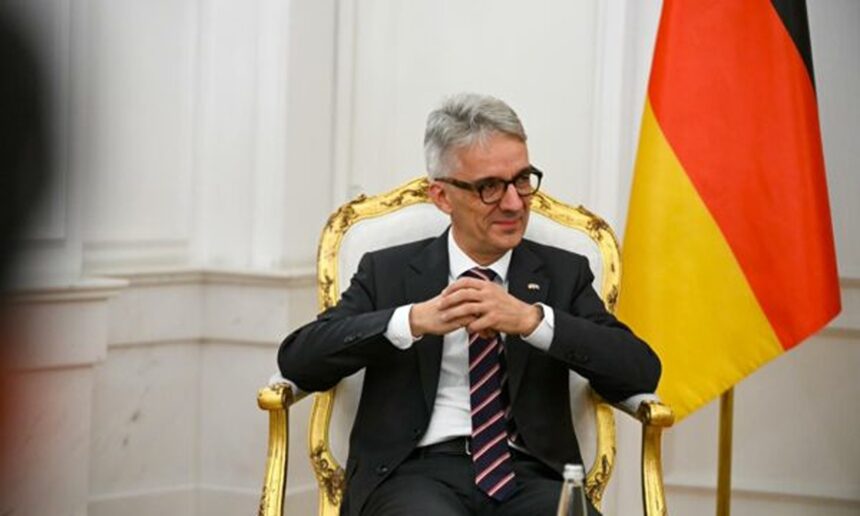
In comments to Gazeta Express, a spokesperson for the German Embassy in Pristina emphasized Berlin’s expectation that Kosovo’s institutions be established promptly and in a manner that ensures political stability.
Embassy of Germany in Kosovo spokesperson Catalina Heine stated:
“We hope that the new institutions will be formed in a timely manner and for a full mandate, so that we can continue working on our shared European agenda with Kosovo.”
Her remarks are being interpreted as support for the creation of institutions capable of serving a complete term, thereby avoiding another round of elections that could result from a failure to elect a president.
Constitutional Debate Continues
Former Constitutional Court President Enver Hasani has argued that immediately after the Assembly is constituted, Kosovo should proceed with the election of a new president.
On the other hand, Arbërie Nagavci indicated that the sequence should be:
- Constitution of the Assembly
- Formation of the Government
- Election of the President
Nagavci stated that Kosovo’s priority should be the rapid establishment of institutions following certification of the election results.
Political Arithmetic
According to preliminary results, Lëvizja Vetëvendosje led by Albin Kurti has secured 53 seats in the 120-member Assembly.
This number would likely be sufficient to form a government with the support of non-Serb minority representatives. However, electing a president requires a broader political consensus and remains a more complicated challenge.
Meanwhile:
- Democratic Party of Kosovo (PDK) won 22 seats.
- Democratic League of Kosovo (LDK) won 18 seats.
Whether Vetëvendosje can reach an agreement with opposition parties regarding the presidency may prove decisive in determining whether Kosovo enjoys a full institutional mandate or faces the prospect of another election cycle.
Why the Presidency Matters
Under Kosovo’s constitutional framework, failure to elect a president after the required voting rounds can trigger the dissolution of the Assembly and new parliamentary elections. This is why many legal experts consider the presidential question central to the long-term stability of the next government.