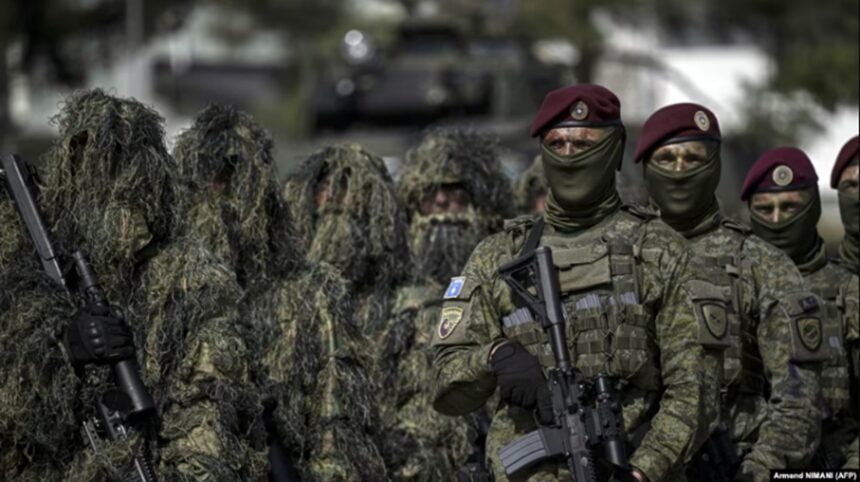
Interest among Kosovo’s youth in pursuing a military career with the Kosovo Security Force (FSK) continues to grow, with 234 applicants competing for only 44 available cadet positions in the latest recruitment cycle. The figures highlight increasing confidence in Kosovo’s security institutions and the growing appeal of military service among the country’s younger generation.
The recruitment competition, organized by the Ministry of Defence and the Kosovo Security Force, remained open from June 1 until today. Successful candidates will have the opportunity to pursue studies at the Centre for University Studies as well as military academies in Türkiye, Albania, Croatia, and North Macedonia.
With more than five candidates competing for every available position, officials describe this year’s selection process as one of the most competitive in recent years.
According to the Ministry of Defence, the strong response demonstrates growing trust in Kosovo’s security institutions and reflects the increasing attractiveness of the military profession. The ministry views the high number of applications as evidence of the commitment of young Kosovars to serve their country and contribute to strengthening the Republic of Kosovo’s defense capabilities.
Security expert and professor Fatmir Çollaku said the rising interest in joining the FSK reflects a broader awareness among citizens regarding the institution’s importance for Kosovo’s security and future.
“This is an indicator of increasing public awareness and willingness among Kosovo’s citizens to join the ranks of the FSK, an important institution that serves as a guarantor of Kosovo’s security. It is also a professional environment where dedication, discipline, and commitment are highly valued,” Çollaku stated.
Meanwhile, security analyst Arben Dashevci described the growing interest as a significant advantage for both Kosovo and future military officers.
“It is a major positive development. Young people should be encouraged to become FSK cadets because the benefits are substantial both for the Republic of Kosovo and for the officers themselves. They are given opportunities to study and train in partner countries such as Croatia, Albania, North Macedonia, and the United Kingdom, where many Kosovo officers have already received professional military education,” Dashevci said.
The continued growth in recruitment interest comes as the Kosovo Security Force advances its modernization efforts and expands cooperation with international partners. Increasing numbers of motivated young recruits are expected to further strengthen the professionalism and operational capabilities of Kosovo’s security institutions in the years ahead.