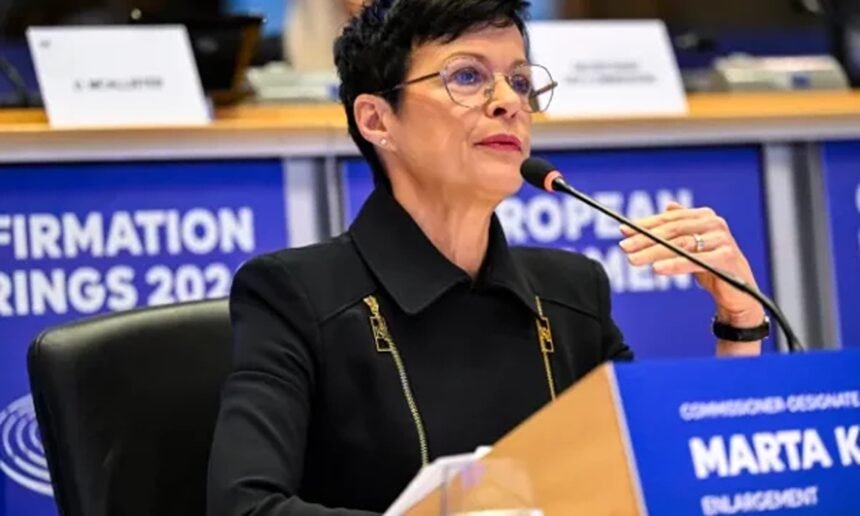
The European Commissioner for Enlargement, Marta Kos, confirmed that Serbia will not receive financial funds from the European Union’s Growth Plan for as long as the disputed judicial laws remain in force.
“At the moment we have suspended all payments from the Growth Plan, because Serbia has regressed in the field of justice, and until it improves this, it will not be able to receive financial support from the EU,” Kos said during a speech at the University of Freiburg in Switzerland.
The disputed laws, known as the “Mërdiq laws,” adopted in January this year, are considered by the EU to represent a step backward in Serbia’s EU integration process.
Kos has previously warned on several occasions that these laws limit the independence of the judiciary.
On April 24, the Venice Commission assessed that the latest amendments to the judicial package in Serbia have removed existing safeguards for the autonomy of the prosecution service.
This expert body of the Council of Europe gave Serbia nine recommendations on how to address the shortcomings.
The European Union is demanding that Serbia fully implement all Venice Commission recommendations related to judicial reforms and simultaneously suspend the application of these laws until they are amended.
Under the Growth Plan funds, Serbia is entitled to a total of €1.588 billion for the 2024–2027 period.
This amount includes grants and loans intended to support reforms, with funds disbursed twice a year based on progress achieved.
In January, Serbia received just over half of the allocated funds from the first installment of the Growth Plan, after it was found to have fulfilled only three out of seven planned reforms.
Instead of the planned €112 million, it received €61.1 million.
Together with pre-financing funds—7% of the total allocated amount—the total Serbia has received so far from the Growth Plan amounts to €167.59 million.
The Growth Plan for the Western Balkans is an EU initiative adopted at the end of 2023, aimed at accelerating the region’s economic convergence with the EU and enabling gradual access to parts of the single market before full membership.
EU institutions have allocated a total of €6 billion for this program for the period 2024–2027.