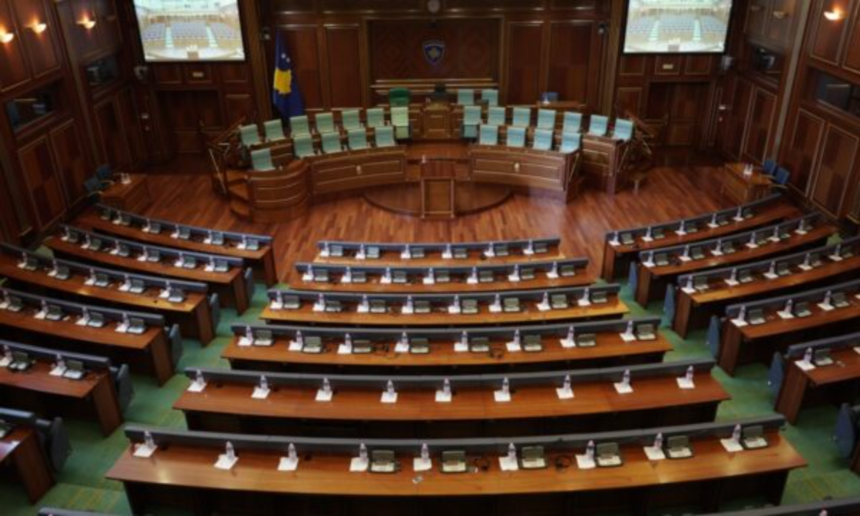
Kosovo’s new parliament has once again failed to complete its constitution, raising the possibility that the country could return to the cycle of parliamentary sessions being reconvened every 48 hours — a pattern seen during last year’s institutional deadlock.
The Constitutional Court had ruled that the constitution of the 11th legislature had to be completed by 11:59 p.m. on August 7. That deadline has now passed without the Assembly being fully constituted.
For the second time, the winning party, the Vetëvendosje Movement (LVV), did not nominate a candidate for speaker of the Assembly.
The failure to meet the deadline has raised questions over whether the political deadlock constitutes a constitutional violation.
Constitutional law expert Ditar Kabashi said the deadline had been exceeded but argued that the failure does not automatically trigger a legal sanction.
“This constitutes an exceeding of the deadline provided by the Constitution, which requires the Assembly to be constituted as soon as possible. However, in practice, it does not constitute a violation for two reasons. First, there are no sanctions stipulating that if the Assembly is not constituted following the certification of the elections, it should be dissolved,” Kabashi said.
According to him, the absence of a specific sanction has created a legal gap that allows the current legislature to continue operating despite failing to complete the constitution process within the prescribed period.
“Currently, there is no sanction that would penalize the Assembly of Kosovo — meaning that the mandate of this legislature would end if the Assembly is not constituted or is not constituted within these 30 days. Unfortunately, this is the legal framework we have,” Kabashi said.
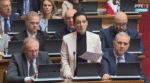
The Assembly met on August 7 in another attempt to elect its speaker and deputy speakers, but the process again failed to move forward.
LVV leader Albin Kurti once again asked acting session chair Avni Dehari for additional time, arguing that further consultations with other political parties were necessary to reach an agreement concerning the election of the president.
The latest developments have revived memories of the prolonged institutional stalemate that followed Kosovo’s previous elections, when parliamentary sessions were repeatedly scheduled at 48-hour intervals as political parties struggled to reach an agreement on the Assembly leadership.
With the constitutional deadline now expired, it remains unclear whether the same procedural pattern will return or whether the Constitutional Court will be asked to clarify what steps should follow.
The continuing deadlock also puts additional pressure on Kosovo’s political parties to reach an agreement, as the failure to constitute the Assembly continues to delay the formation of fully functioning state institutions.