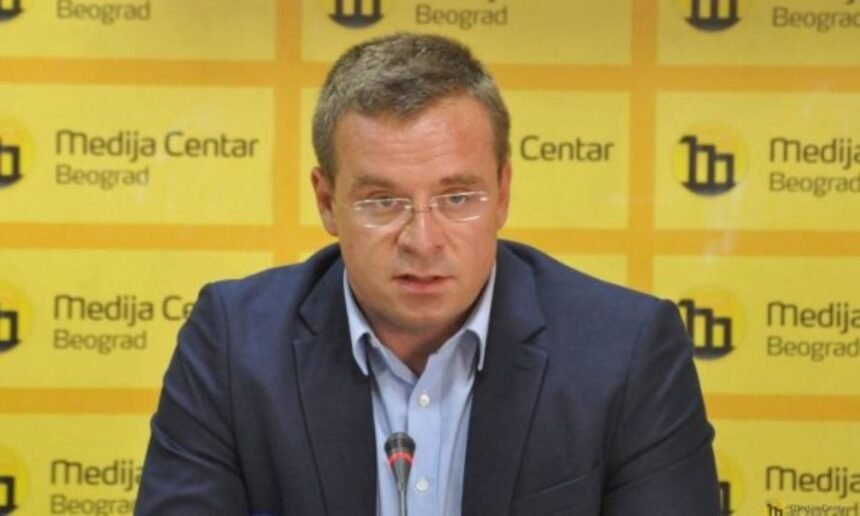
Serbian lawyer Čedomir Stojković has sharply criticized President Aleksandar Vučić over his remarks about potentially altering the course of the Ibër River, accusing the Serbian leader of pursuing a politically motivated plan driven by “revenge” against Kosovo.
Stojković argued that Vučić’s remarks came just one day after Ukrainian President Volodymyr Zelensky’s visit to Serbia, which he described as part of a broader political strategy by the Serbian president.
According to Stojković, Vučić is using closer ties with Zelensky to strengthen his position with Western governments while creating political space to continue his policies in the Balkans.
“It was clear from the beginning that Vučić’s insistence that Zelensky come to Serbia was nothing more than camouflage,” Stojković wrote.
The Serbian lawyer was particularly critical of the idea of changing the course of the Ibër River, arguing that such a move would not affect Kosovo alone but would also have consequences for the Serbian community living along the river.
“Vučić is showing that he does not care about the lives of Serbs in Kosovo, but that he is ready to take their river away from them because ego and revenge are more important to him than the lives of these people,” Stojković said.
He also referred to Vučić’s recent statement that Serbia is currently not in a position to enter into a war with NATO, arguing that the wording could suggest a confrontational approach toward the future.
Stojković further warned that any attempt to alter the Ibër’s course could conflict with a range of international rules and agreements governing the use of transboundary water resources.
He cited the UN Convention on the Law of the Non-Navigational Uses of International Watercourses, the Convention on the Protection and Use of Transboundary Watercourses and International Lakes, as well as the Helsinki Rules.
According to Stojković, these legal frameworks establish principles of equitable and reasonable use of transboundary waters and prohibit actions that could cause significant harm to other states.
He argued that Serbia’s refusal to recognize Kosovo would not eliminate the legal implications of such a project, noting that Kosovo is recognized and treated as a party by other states participating in relevant international mechanisms.
Stojković also said the proposal could face significant obstacles under Serbian domestic law, citing legislation governing water resources, environmental protection, nature conservation and environmental impact assessments.
In his view, altering the course of a major river cannot be justified by political or retaliatory motives and would require a comprehensive assessment of the consequences for the environment and communities dependent on the river.
Stojković described Vučić’s statement as “brutal,” accusing the Serbian president of being prepared to disregard international rules and domestic legislation for political purposes.
He also linked Vučić’s recent rhetoric to the nationalist discourse of the 1990s in the former Yugoslavia, arguing that the Serbian president is once again bringing language of retaliation and confrontation into public debate.
The comments come amid heightened political tensions between Belgrade and Prishtina, with the Ibër River remaining an important source of water and a politically sensitive issue for communities on both sides of the divide.