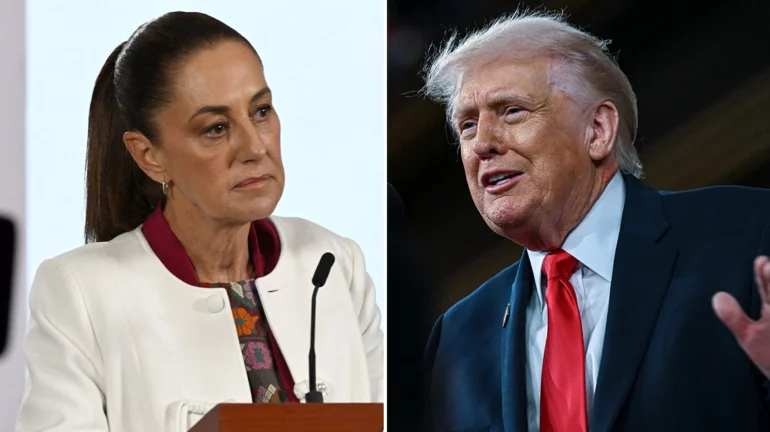
Mexico and the United States officially kicked off formal negotiations on Tuesday for the scheduled review of the United States-Mexico-Canada Agreement (USMCA). The high-stakes talks open against a backdrop of intensifying trade frictions and explicit tariff warnings from President Donald Trump’s administration.
The meetings in Mexico City mark the first official round of joint preparatory negotiations for the mandatory evaluation of the trilateral pact, which also encompasses Canada.
According to Mexico’s Ministry of Economy, the cross-border accord remains the primary lifeblood of the domestic economy. The United States serves as Mexico’s largest trading partner, consuming over 80% of all Mexican exports, largely driven by integrated automotive and manufacturing supply chains.
The Sunset Clause and Regional Pressures
The current talks are dictated by the treaty’s internal “Sunset Clause” (Article 34.6), which mandates a comprehensive joint review every six years. The 2026 cycle represents the first formal check since the USMCA replaced the North American Free Trade Agreement (NAFTA).
[USMCA 6-Year Review Timeline]
├── Late May 2026  --> Round 1: Mexico City (Establishing technical working groups)
├── June 2026      --> Round 2: Washington, D.C. (Addressing automotive rules of origin)
└── July 2026      --> Round 3: Mexico City / Ottawa (Trilateral alignment on third-party tariffs)
The first round of technical talks is scheduled to run through Friday, focusing heavily on establishing the regulatory boundaries for the review. Subsequent high-level iterations are already locked in for June and July, alternating between Washington, D.C., and Mexico City.
Key Points of Friction on the Negotiation Table
While the formal objective is updating the framework, the Trump administration’s aggressive trade posture has introduced significant strategic variables:
- Third-Country Transshipment: Washington is pushing for strict, enforceable mechanisms to block Chinese components—particularly in the electric vehicle (EV) sector—from being routed through Mexico to bypass US tariffs.
- Rules of Origin: US negotiators are looking to tighten domestic content thresholds for steel, aluminum, and advanced automotive manufacturing.
- Tariff Brinkmanship: The talks are heavily colored by recent White House threats to impose sweeping baseline tariffs on Mexican imports if enforcement along the southern border regarding immigration and cargo inspection fails to meet Washington’s metrics.
| Strategic Trade Metrics | Economic Volume / Impact | Core Vulnerability |
| Mexican Export Destination | Over 80% bound for US markets. | Hyper-dependence on US regulatory stability. |
| USMCA Review Schedule | Every 6 years (Article 34.6 requirement). | Failure to agree on an extension triggers a rolling annual review process. |
| Key Sector Risk | Automotive and agricultural supply chains. | Vulnerable to punitive border tariffs or stricter component tracking. |
Despite the political noise, Mexico’s Ministry of Economy maintained an optimistic public tone following the opening session. “The parties have mapped out the next immediate steps to deepen technical discussions, with the explicit goal of achieving concrete results that benefit the entire North American region,” the Ministry noted in a joint statement.
Both delegations confirmed a baseline commitment to preserving the competitiveness of North American supply chains, though analysts note the road to a full treaty extension will require substantial concessions from Mexico City on nearshoring enforcement.